
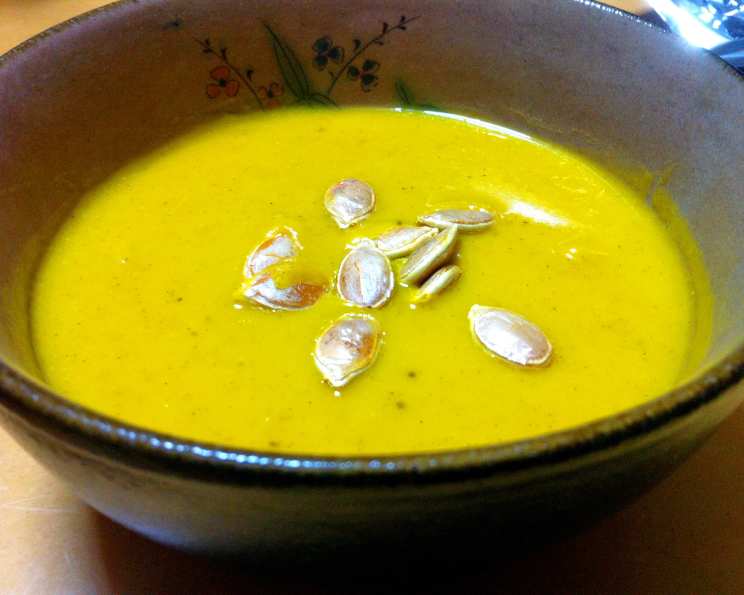
Embracing Autumn’s Embrace: Roasted Kabocha Soup
There’s a certain magic that descends with the crisp air of autumn, a feeling that always calls me to the kitchen with a yearning for warm, comforting flavors. For me, this season is inextricably linked to the humble kabocha squash. I remember one particularly chilly October afternoon, my grandmother’s kitchen filled with the sweet, earthy aroma of roasting kabocha. She’d be carefully tending to the oven, a gentle smile on her face, and later, we’d gather around a steaming bowl of soup, the vibrant orange hue a beacon against the fading light. This soup, in its simplicity, captures the very essence of that season for me – pure, unadulterated comfort.
Recipe Overview
- Prep Time: 40 minutes
- Cook Time: 40 minutes
- Total Time: 1 hour 20 minutes
- Servings: 4-6
- Yield: Approximately 6 cups
- Dietary Type: Vegetarian (can be made Vegan with substitution)
Ingredients
- 1 medium kabocha squash
- 1 teaspoon olive oil
- 1 medium onion, thinly sliced
- 1 tablespoon butter (use vegan butter for vegan option)
- 2 teaspoons chicken bouillon powder (use vegetable bouillon for vegan option)
- 2 cups water
- ½ teaspoon cinnamon
- 1 ⅔ cups milk (use unsweetened plant-based milk for vegan option, like almond or soy)
- Salt and pepper to taste
Equipment Needed
- Baking sheet
- Sharp knife
- Spoon
- Fork
- Large pot or Dutch oven
- Blender (standard or immersion)
Instructions
The transformation of a simple kabocha squash into a velvety smooth soup is a culinary journey that celebrates the season’s bounty. This recipe is designed to coax out the squash’s natural sweetness and create a rich, satisfying dish with minimal fuss.
-
Prepare the Kabocha Squash: Begin by preheating your oven to 350°F (175°C). The first step in unlocking the squash’s potential is to cut it in half. A sharp, sturdy knife is essential here. Once halved, use a spoon to scoop out the seeds and stringy membranes. These can be discarded or, if you’re feeling adventurous, rinsed, dried, and toasted for a delightful garnish (more on that later!).
-
Roast the Kabocha: Next, we’ll give the squash a head start by roasting it. To do this, prick the cut flesh of each kabocha half several times with a fork. This helps to release steam as it bakes, preventing the squash from becoming waterlogged. Lightly brush the cut surfaces with olive oil. Place the kabocha halves face down on a baking dish. This method ensures that the flesh steams slightly in its own juices as it roasts, resulting in a tender, flavorful outcome. Bake for approximately 40 minutes at 350°F (175°C), or until the flesh is fork-tender. You’ll know it’s ready when a fork easily pierces through the skin and into the flesh.
-
Toast the Seeds (Optional but Recommended): While the kabocha is in the oven, take the time to clean and dry the scooped-out seeds as best as you can. For a wonderfully crunchy topping, toast them in a dry pan over medium-high heat for about 5 minutes, or until they turn nicely golden brown. Keep a close eye on them, as they can scorch quickly. Once toasted, set them aside. Alternatively, you can spread the dried seeds on a baking sheet and bake them in the oven for about 10-20 minutes at 400°F (200°C).
-
Sauté the Aromatics: In a large pot or Dutch oven, melt the butter over medium heat. Add the thinly sliced onion and sauté until softened and translucent, which usually takes about 5-7 minutes. This gentle cooking of the onion releases its natural sweetness and forms the flavor base for our soup.
-
Combine Squash and Aromatics: Once the kabocha is tender from roasting, carefully remove it from the oven. Be mindful, as it will be hot! Working with the squash while it’s still warm makes it easier to handle. Scoop the soft flesh out of the skin in chunks and add it directly to the pot with the sautéed onions. If you prefer to wait for the squash to cool slightly, that’s also perfectly fine. You can also choose to roast the squash after peeling it, but roasting it whole with the skin on often yields a more concentrated flavor.
-
Simmer and Infuse: To the pot with the kabocha and onions, add the chicken bouillon powder, water, and cinnamon. Stir everything together to combine. Bring the mixture to a simmer, then reduce the heat to low, cover the pot, and let it simmer gently for about 20 minutes. This simmering period allows the flavors to meld beautifully and the squash to soften further. Covering the pot helps to prevent splattering and ensures the flavors develop evenly.
-
Puree the Soup: After simmering, it’s time to achieve that signature silky smooth texture. Carefully pour the soup mixture into a large bowl. You will then puree the mixture in batches in a blender. It’s crucial to only fill the blender about ¾ full or less to avoid any dangerous overflow. Secure the lid tightly and blend until completely smooth. If you have an immersion blender, this step becomes even easier, as you can puree the soup directly in the pot, saving you an extra step and reducing cleanup. Once pureed, pour the smooth soup back into the pot if you used a standard blender.
-
Finish and Season: Now, stir in the milk and heat the soup gently over low heat, stirring frequently. You want to warm the milk through without letting the soup boil vigorously. This gradual heating helps to maintain the soup’s smooth texture. Finally, mix in salt and pepper to taste. This is your chance to fine-tune the flavor, ensuring it’s perfectly balanced.
-
Serve: Ladle the warm soup into bowls. For a delightful textural contrast and an extra layer of nutty flavor, top with the toasted kabocha seeds you prepared earlier.
Expert Tips & Tricks
- Choosing Your Kabocha: Look for a kabocha squash that feels heavy for its size and has a deep, dark green rind with no soft spots. The rind should be hard and firm.
- Seed Saving: If you plan to toast the seeds, make sure to rinse them thoroughly to remove any clinging bits of squash flesh. Pat them completely dry before toasting or baking to ensure they get nice and crispy.
- The Power of Roasting: Roasting the kabocha is a key step. It concentrates the natural sugars and imparts a deeper, sweeter flavor than boiling or steaming. Don’t skip this!
- Milk Alternatives: For a richer, more decadent soup, consider using half-and-half or heavy cream instead of milk. For a vegan option, unsweetened almond, soy, or oat milk work wonderfully. Coconut milk can also be used, but it will lend a subtle coconut flavor.
- Bouillon Boost: If you don’t have bouillon powder on hand, you can use vegetable broth or chicken broth for the liquid. Adjust the salt accordingly, as broths can vary in saltiness.
- Cinnamon Nuance: The cinnamon in this soup is subtle, offering a warm, autumnal spice that complements the squash without overpowering it. Feel free to add a tiny pinch of nutmeg or ginger for added complexity.
Serving & Storage Suggestions
This Roasted Kabocha Soup is best served immediately, while it’s warm and comforting. A garnish of the toasted kabocha seeds adds a delightful crunch and visual appeal. For a heartier meal, consider serving it with a crusty piece of bread for dipping or a simple side salad.
Leftovers can be stored in an airtight container in the refrigerator for up to 3-4 days. The soup reheats beautifully on the stovetop over low heat, stirring occasionally, or in the microwave. If the soup has thickened considerably upon refrigeration, you can stir in a splash of milk or water when reheating to achieve your desired consistency. Freezing is also an option, though the texture may change slightly upon thawing.
Nutritional Information
This nutritional information is an estimate and can vary based on specific ingredients and portion sizes.
| Nutrient | Amount per Serving | % Daily Value |
|---|---|---|
| Calories | 115 kcal | |
| Total Fat | 7.9 g | 12% |
| Saturated Fat | 4.3 g | 21% |
| Cholesterol | 22 mg | 7% |
| Sodium | 318.6 mg | 13% |
| Total Carbohydrate | 7.7 g | 2% |
| Dietary Fiber | 0.6 g | 2% |
| Sugars | 1.4 g | 5% |
| Protein | 3.9 g | 7% |
Note: Calories from Fat: 71 g, 62%
Variations & Substitutions
- Spicy Kick: For a touch of heat, add a pinch of cayenne pepper or a dash of red pepper flakes along with the cinnamon during the simmering stage.
- Herbal Infusion: Fresh herbs like thyme or sage can be added to the pot while the soup simmers and then removed before pureeing for a more savory profile.
- Coconut Creaminess: For an extra layer of richness and a subtle tropical note, use full-fat coconut milk instead of dairy milk. This also makes the soup naturally vegan and dairy-free.
- Root Vegetable Blend: While kabocha shines here, you can enhance the soup by adding other roasted root vegetables like carrots or sweet potatoes alongside the kabocha. Adjust roasting times accordingly.
FAQs (Frequently Asked Questions)
Q: Why is kabocha squash preferred for this soup?
A: Kabocha squash has a naturally sweet, nutty flavor and a creamy texture when roasted, making it ideal for a velvety soup.
Q: Can I use a different type of squash?
A: Yes, butternut squash or acorn squash can be substituted, though the flavor profile and texture might be slightly different.
Q: How do I avoid a watery soup?
A: Roasting the kabocha squash and ensuring you don’t add too much extra liquid will help maintain a thick, creamy consistency.
Q: Can I make this soup ahead of time?
A: Absolutely! The soup can be made ahead and reheated. It might thicken slightly upon standing, so you may need to add a bit of liquid when reheating.
Q: Is it important to peel the kabocha before roasting?
A: For this recipe, it’s easier to roast the kabocha with the skin on and scoop out the flesh afterward. The skin is edible once roasted, but removing it makes pureeing much simpler.
Final Thoughts
There’s a profound satisfaction in creating a dish that feels both nourishing and deeply comforting, and this Roasted Kabocha Soup is precisely that. It’s a testament to the beauty of simple ingredients allowed to shine. As the days grow shorter and the air chills, I find myself returning to this recipe time and again, a warm hug in a bowl. I hope you discover the same joy and warmth as you create this delightful soup in your own kitchen. Don’t hesitate to experiment with garnishes or share your creations – the culinary journey is always better with a little community. Perhaps pair it with a glass of mulled apple cider for the ultimate autumnal experience.