
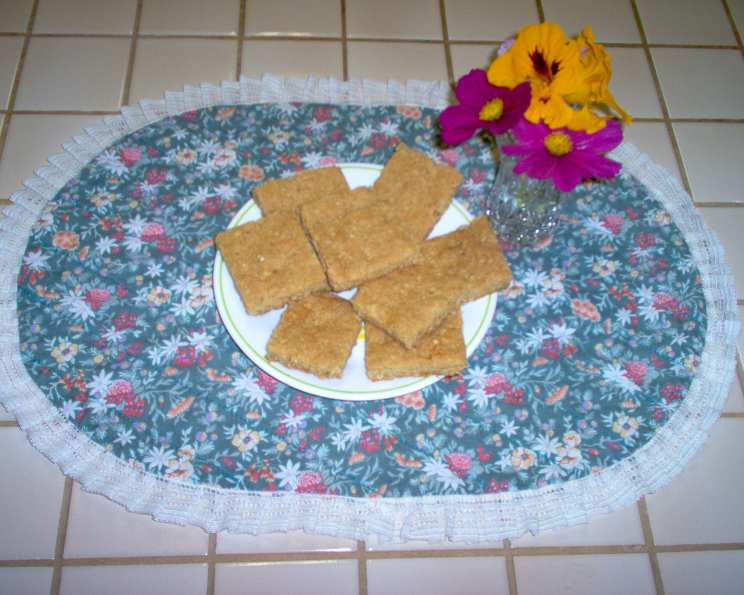
The Enduring Charm of Rolled Oats Shortbread
There’s a particular comfort that comes from baking with recipes passed down through generations, whispers of kitchen memories baked into every bite. For me, this Rolled Oats Shortbread holds that very essence. I first stumbled upon this gem tucked away in an old 1960s cookbook, its pages softened and slightly stained, a testament to years of culinary adventures. I’ve been making these golden, buttery delights a couple of times a year for what feels like nearly 40 years now. Each batch brings back a flood of nostalgia—the crisp snap as you break them, the rich, melt-in-your-mouth butter flavor, and the simple, honest goodness that only a classic shortbread can deliver. They are, quite simply, so good they become a cherished tradition.
Recipe Overview
- Prep Time: 20 minutes
- Cook Time: 20-25 minutes
- Total Time: 40-45 minutes
- Yield: Approximately 28 squares
- Servings: 28
- Dietary Type: Vegetarian
Ingredients
- 1 ¾ cups all-purpose flour
- 1 teaspoon baking powder
- ¼ teaspoon salt
- 1 cup (2 sticks) soft butter, unsalted
- ½ cup packed light brown sugar
- ¼ cup granulated white sugar
- ½ teaspoon vanilla extract
- 1 ½ cups quick oats (the kind that cook in 1 minute)
Equipment Needed
- Large mixing bowl
- Electric mixer (handheld or stand mixer) with a paddle attachment and dough hook attachment
- Measuring cups and spoons
- Sifter or fine-mesh sieve
- Rubber spatula or wooden spoon
- 9″ x 13″ baking sheet with ½-inch sides
- Parchment paper
- Sharp knife or bench scraper for scoring
- Wire cooling rack
Instructions
This shortbread is delightfully straightforward, proving that simple ingredients can yield extraordinary results. The key is to have your butter at the right temperature – softened, but not melted, allowing it to cream beautifully with the sugars.
- Begin by preheating your oven to 350°F (175°C). Line a 9″ x 13″ baking sheet with parchment paper, ensuring the paper extends slightly up the sides to make for easy removal later.
- In a medium bowl, sift together the flour, baking powder, and salt. This aerates the dry ingredients and ensures an even distribution, which is crucial for a tender shortbread. Set this aside.
- In a separate large mixing bowl, cream the softened butter with the brown sugar and white sugar until light and fluffy. This process incorporates air, which contributes to the shortbread’s delicate texture.
- Beat in the vanilla extract and then gradually add the quick oats. Continue mixing until they are well incorporated into the butter and sugar mixture. The quick oats are essential here; their finer texture blends more smoothly than rolled oats, creating a more tender shortbread.
- Now, it’s time to introduce the dry ingredients. Add the sifted flour mixture to the butter and oat mixture.
- Mix on low speed until just combined. As the dough thickens, it will become too stiff for the paddle attachment. At this stage, switch to the dough hook attachment on your stand mixer, or continue mixing by hand with a sturdy spoon if using a handheld mixer. Continue mixing until a stiff dough forms. The dough should be cohesive and pull away from the sides of the bowl.
- Turn the stiff dough onto a lightly floured surface. Knead the dough lightly just a few times to ensure all the ingredients are thoroughly blended. Over-kneading can develop the gluten too much, resulting in a tough shortbread. We want that characteristic tender crumble.
- Instead of rolling out the dough, the easiest and most effective method for this recipe is to pat the dough directly into the prepared 9″ x 13″ baking sheet, ensuring it is evenly distributed and about ½ inch thick. Use your hands or a spatula to press it into a neat rectangle.
- Before baking, use a sharp knife or bench scraper to score the dough into approximately 1 ½ inch squares. This step is vital for creating defined cookies after baking, preventing them from spreading too much and allowing for easy portioning.
- Bake in the preheated oven for 20-25 minutes, or until the edges are lightly golden brown and the center appears set. Keep a close eye on them, as ovens can vary. You’re looking for a beautiful, pale golden hue, not deep brown.
- Once baked, remove the baking sheet from the oven. While the shortbread is still warm, carefully cut along the score lines again to ensure clean breaks.
- Let the shortbread cool completely on the baking sheet before attempting to remove it. This allows it to firm up further. Once cooled, you can break apart the individual squares.
Expert Tips & Tricks
For an even more nuanced butter flavor, consider using a good quality, European-style butter, which typically has a higher fat content. If your butter isn’t quite soft enough, a few seconds in the microwave on 10% power can do the trick, but be careful not to melt it! When creaming the butter and sugar, ensure you scrape down the sides of the bowl periodically to guarantee everything is incorporated for a uniform texture. If you find the dough sticking to your hands while pressing it into the pan, lightly flour your fingertips or use a small offset spatula.
Serving & Storage Suggestions
These Rolled Oats Shortbread squares are divine served simply as they are, perhaps with a cup of hot tea or coffee. They also make a wonderful accompaniment to fresh fruit or a scoop of vanilla ice cream. Store any leftovers in an airtight container at room temperature for up to 5 days. They tend to become even more delicious as the flavors meld. If you need to store them for longer, they can be frozen in a single layer on a baking sheet until firm, then transferred to a freezer-safe bag or container for up to 3 months. Thaw at room temperature before enjoying.
Nutritional Information
| Nutrient | Amount per Serving | % Daily Value |
|---|---|---|
| Calories | 125.2 kcal | |
| Calories from Fat | ||
| Total Fat | 6.9 g | 10% |
| Saturated Fat | 4.2 g | 21% |
| Cholesterol | 17.4 mg | 5% |
| Sodium | 82.3 mg | 3% |
| Total Carbohydrate | 14.5 g | 4% |
| Dietary Fiber | 0.6 g | 2% |
| Sugars | 5.7 g | 22% |
| Protein | 1.6 g | 3% |
(Nutritional values are estimates and can vary based on specific ingredients used.)
Variations & Substitutions
While this recipe is a classic for a reason, feel free to explore its potential. For a hint of citrus, add the zest of one lemon or orange to the wet ingredients. A sprinkle of sea salt flakes on top just before baking can add a delightful sweet-and-salty contrast. If you enjoy a nuttier flavor, you could substitute a small portion of the flour with finely ground almonds or pecans. For those seeking a slightly richer shortbread, you could experiment with using half butter and half a neutral-flavored oil like canola oil.
FAQs
Q: Why should I use quick oats instead of old-fashioned rolled oats?
A: Quick oats have a finer texture that blends more seamlessly into the dough, resulting in a more tender shortbread. Old-fashioned oats can make the shortbread feel a bit chewier or coarser.
Q: My dough seems too dry and crumbly. What should I do?
A: Ensure your butter was properly softened. If the dough is still too dry after mixing, you can add a teaspoon of milk or water at a time until it just comes together, being careful not to overwork it.
Q: How do I prevent my shortbread from spreading too much?
A: Properly creaming the butter and sugar, and ensuring the dough is stiff and well-mixed, helps prevent excessive spreading. Chilling the dough for about 15-20 minutes before pressing it into the pan can also help.
Q: Can I roll out this dough like traditional shortbread?
A: While this recipe is designed for pressing into the pan for ease, you can try rolling it out. You may need to chill the dough first to make it more pliable. Roll it to about ½ inch thickness on a floured surface and then cut into squares.
Q: How can I make this shortbread gluten-free?
A: You can substitute the all-purpose flour with a good quality gluten-free all-purpose flour blend. Ensure your blend contains xanthan gum for binding. You may need to adjust the liquid slightly.
Final Thoughts
There’s a profound satisfaction in creating something so simple yet utterly delicious. This Rolled Oats Shortbread is a testament to that. It’s a recipe that welcomes you into the kitchen, wraps you in comforting aromas, and rewards you with a treat that’s perfect for any occasion—or no occasion at all. I encourage you to try it, to feel the dough in your hands, and to anticipate that first crisp, buttery bite. Share them with loved ones, or savor them in quiet moments of indulgence. I’d be delighted to hear about your baking adventures with this timeless classic.