
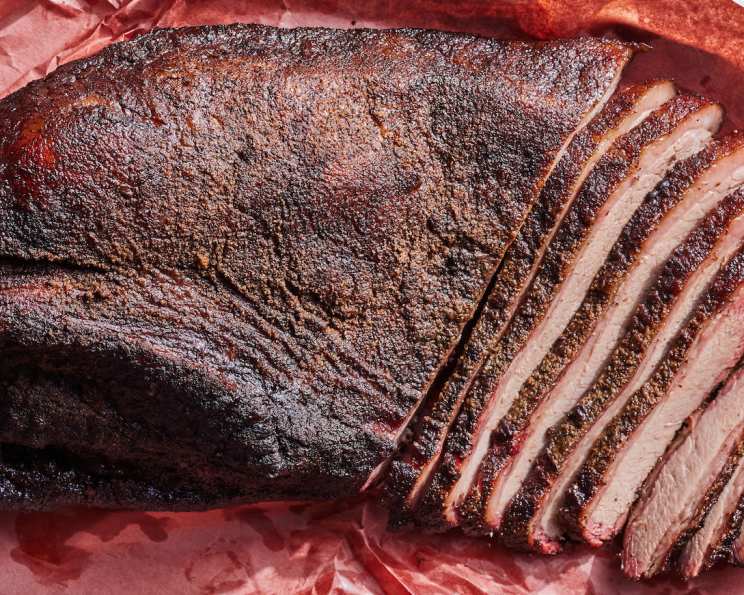
Rock & Roll BBQ Brisket: A Journey to True BBQ Bliss
There’s a certain magic that happens when you dedicate yourself to a truly great brisket. I remember my first foray into serious brisket smoking, a pilgrimage of sorts, guided by whispers of low-and-slow perfection. It wasn’t just about cooking; it was about respecting the meat, understanding the subtle dance of smoke and time. This recipe, the one I’m sharing with you today, is that journey personified. It’s the kind of brisket that silences a room with its rich aroma, the kind that makes you close your eyes and savor every fork-tender, smoky bite. It requires patience, yes, but the reward? Pure, unadulterated BBQ nirvana.
Recipe Overview
- Prep Time: 25 minutes (plus 24 hours for marinating)
- Cook Time: 1.5 hours per pound (variable)
- Total Time: 24 hours 25 minutes + cook time
- Servings: 12
- Yield: 1 large brisket
- Dietary Type: Gluten-Free (verify rub ingredients if necessary)
Ingredients
This brisket is a canvas, and the rub is its vibrant paint. It’s a blend designed to penetrate the meat, offering a complex foundation for the smoky char that will develop.
- 1 (8-14 lb) beef brisket
- 1⁄4 cup paprika
- 1⁄3 cup kosher salt
- 2 tablespoons sugar
- 2 tablespoons brown sugar
- 3 tablespoons cumin
- 2 tablespoons chili powder
- 2 tablespoons ground pepper
- 2 tablespoons cayenne
- 1 tablespoon onion powder
- 1 tablespoon garlic powder
Equipment Needed
- Smoker or grill set up for indirect heat
- Meat thermometer (essential!)
- Large bowl for mixing rub
- Plastic wrap
- Aluminum foil
- Sharp knife for slicing
- Paper towels
Instructions
This is where the real rock and roll happens – the transformation of a humble cut of beef into a masterpiece. Embrace the process; it’s a labor of love that pays dividends.
- Begin by trimming the extreme excess fat from the brisket. Remember, a good amount of fat is your friend here; it’s crucial for keeping the brisket incredibly moist throughout the long cooking process. You’re looking to remove the thick, hard cap of fat, but leave a decent layer to render down.
- Next, rinse the brisket under cool water. Thoroughly pat it dry with paper towels. This step is important for ensuring the rub adheres properly.
- In a large bowl, combine all the dry ingredients for the rub: paprika, kosher salt, sugar, brown sugar, cumin, chili powder, ground pepper, cayenne, onion powder, and garlic powder. Whisk them together until they are thoroughly blended.
- Generously coat one side of the brisket with the prepared rub. “Rub” it in with your hands, really working it into the meat. Don’t be shy; this is a vital step for building flavor.
- Flip the brisket over and repeat the process, ensuring the other side is equally well-coated with the rub.
- Once the brisket is fully seasoned, wrap it tightly in a few layers of plastic wrap. Follow this with a generous layer of aluminum foil.
- Place the wrapped brisket in the refrigerator and let it marinate for approximately 24 hours. This extended marination allows the flavors of the rub to penetrate deep into the meat, setting the stage for an incredibly flavorful result.
- Prepare your smoker for smoking or your grill for indirect heating. The target temperature for your cooking chamber is between 225 and 240 degrees Fahrenheit. Maintaining this consistent, low temperature is key to tender brisket.
- When your smoker or grill has reached the desired temperature, place the brisket directly on the rack. Now comes the hardest part: WAIT! Resist the urge to constantly check or move the meat.
- Smoke the meat for approximately 1 ½ hours per pound. For example, a 10-pound brisket will smoke for roughly 15 hours. You are aiming for an internal temperature of 175 to 185 degrees Fahrenheit in the thickest part of the brisket. A reliable meat thermometer is your best friend here.
- For flavoring, I personally favor Pecan wood chips. However, Hickory, Cherry, or Apple are excellent alternatives. I strongly advise against using Mesquite wood for brisket, as it can overpower the meat’s natural flavor. Crucially, ensure you are not using “green” wood, as this will impart a harsh, unpleasant taste. Add a handful of soaked wood chips to your smoker every 45 minutes for the first 8 hours of cooking.
- Some enthusiasts enjoy “mopping” their brisket. If this is a technique you wish to explore, do so during the second half of the cooking process. There are numerous excellent mop recipes available online if you’d like to experiment.
- Once the brisket reaches its target internal temperature and is tender (it should feel probe-tender, meaning a thermometer probe slides in with very little resistance), remove it from the smoker.
- Wrap the brisket tightly in foil again and let it stand for about 30 minutes before slicing. This resting period is critical for allowing the juices to redistribute throughout the meat, ensuring maximum moisture and tenderness.
- To serve, slice the brisket against the grain. The grain is the direction of the muscle fibers. You can identify it by looking closely at the meat. Serving against the grain will result in much more tender slices. Serve your spectacular brisket with Rock and Roll BBQ sauce, perhaps piled high on soft buns for sliders if you like. I realize this process involves a significant time investment, but for anyone seeking truly authentic, melt-in-your-mouth BBQ, this is the definitive method.
Expert Tips & Tricks
- The thermometer is non-negotiable. Don’t guess; invest in a good digital meat thermometer. It’s the single most important tool for achieving brisket perfection.
- Don’t over-trim. Fat is flavor and moisture. You want to remove the hard, thick external fat cap, but leave a nice ¼-inch layer to render.
- Resting is just as important as cooking. That 30-minute stand time after cooking is not optional. It’s where the magic of rehydrating the meat happens.
- Embrace the smoke. If you’re using a grill, ensure your wood chips are soaked and added strategically to maintain consistent smoke. The type of wood you choose will subtly influence the final flavor profile.
Serving & Storage Suggestions
This Rock & Roll BBQ Brisket is a star on its own, but it also shines when paired with classic BBQ sides like coleslaw, potato salad, or cornbread. Serve it sliced thick or thinly, depending on your preference, with your favorite BBQ sauce on the side.
Leftovers are a treasure! Once cooled, wrap any remaining brisket tightly in plastic wrap and then aluminum foil. It will keep well in the refrigerator for 3-4 days. For longer storage, freeze portions tightly wrapped in foil and then placed in a freezer-safe bag. To reheat, gently warm in a low oven (around 300°F) or on the stovetop with a little extra liquid to help rehydrate the meat. Avoid microwaving, as it can dry out the brisket quickly.
Nutritional Information
| Nutrient | Amount per Serving (approx.) | % Daily Value |
|---|---|---|
| Calories | 511.7 kcal | |
| Calories from Fat | 209 g | |
| Total Fat | 23.3 g | 35% |
| Saturated Fat | 8 g | 39% |
| Cholesterol | 187.5 mg | 62% |
| Sodium | 3407.4 mg | 141% |
| Total Carbohydrate | 9.2 g | 3% |
| Dietary Fiber | 2.1 g | 8% |
| Sugars | 4.8 g | 19% |
| Protein | 63.9 g | 127% |
(Note: Nutritional information is an estimate and will vary based on the exact size and fat content of the brisket.)
Variations & Substitutions
While this recipe is designed for the purist, a few minor adjustments can cater to different tastes.
- Spice Level: If you prefer a milder brisket, you can reduce the amount of cayenne in the rub. Conversely, for those who like it extra hot, a pinch more cayenne or even a touch of smoked ghost pepper powder can be added.
- Wood Smoke: Experiment with different wood types if Pecan, Hickory, Cherry, or Apple aren’t readily available. Just remember to avoid anything too harsh like Mesquite.
- Mop Sauce: The world of mop sauces is vast and delicious. A simple vinegar-based mop can add tang, while a broth-based mop can enhance moisture.
FAQs
Q: Why is it so important to trim the brisket, but not too much?
A: Trimming the excess hard fat prevents an unpleasant texture, while leaving a good layer of fat allows it to render during the long cook, basting the meat and keeping it incredibly moist.
Q: What’s the best way to check if the brisket is done?
A: The most reliable method is to use a meat thermometer inserted into the thickest part of the brisket. You’re looking for an internal temperature between 175°F and 185°F. Additionally, the brisket should feel probe-tender – a thermometer probe should slide in with very little resistance.
Q: I don’t have a smoker. Can I still make this?
A: Absolutely! You can achieve excellent results using a grill set up for indirect heat. The key is to maintain a consistent low temperature (225-240°F) and manage your wood chips to create smoke.
Q: How do I slice brisket against the grain?
A: Examine the cooked brisket closely. You’ll see lines of muscle fibers running in a particular direction. Slice perpendicular (across) these lines. This shortens the muscle fibers, making the meat significantly more tender to eat.
Q: How long can I leave the brisket on the smoker if it’s done early?
A: Once the brisket reaches temperature and is probe-tender, it’s done. It’s better to remove it and let it rest (even if it’s a bit longer than 30 minutes) than to leave it on and risk drying it out.
Final Thoughts
This Rock & Roll BBQ Brisket is more than just a recipe; it’s an experience. It’s about the anticipation, the aroma filling your home, and the sheer joy of sharing something truly special with loved ones. Don’t be intimidated by the time commitment. Each step is a building block towards an unforgettable culinary triumph. So, crank up the tunes, fire up the smoker, and let the good times, and the great brisket, roll! I’d love to hear about your adventures in brisket making – share your triumphs and any Rock & Roll BBQ sauce pairings you discover!