
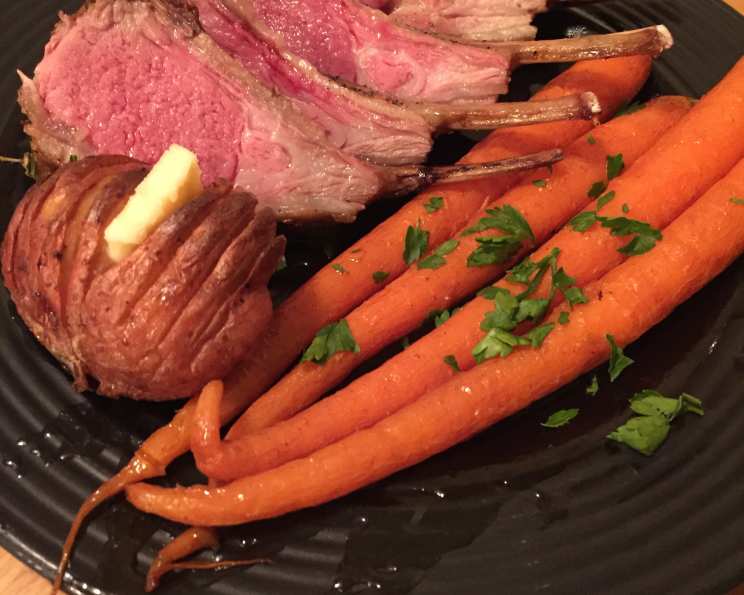
The Regal Rack of Lamb: A Symphony of Herbs and Searing
There’s a certain magic that happens when a rack of lamb hits a screaming hot pan. It’s the sizzle, the immediate release of its rich, primal aroma, and the visual transformation as it develops that perfect, golden-brown crust. I remember the first time I truly mastered this dish. It wasn’t just about following a recipe; it was about understanding the meat, respecting its natural flavors, and allowing simple, fresh ingredients to elevate it to something truly extraordinary. The scent of rosemary and thyme clinging to the seared lamb, promising a succulent, tender bite – it’s a memory that always brings a smile to my face and a rumble to my stomach.
Recipe Overview
- Prep Time: 15 minutes
- Cook Time: 30 minutes
- Total Time: 45 minutes
- Servings: 2-3
- Yield: 1 rack of lamb
- Dietary Type: Gluten-Free, Dairy-Free
Ingredients
This recipe celebrates the inherent quality of the lamb, enhanced by a few potent, aromatic partners.
- 1 lb rack of lamb (any weight will do, though the cooking time may need slight adjustment for significantly larger or smaller racks)
- 3 tablespoons rosemary, finely chopped
- 3 tablespoons thyme, finely chopped
- 1/2 teaspoon salt
- 1/2 teaspoon black pepper
- 1 tablespoon vegetable oil
Equipment Needed
- Large oven-safe skillet (cast iron is ideal)
- Roasting pan
- Aluminum foil
- Tongs
- Sharp knife
- Cutting board
Instructions
The beauty of this method lies in its simplicity and the rewarding contrast it creates between a beautifully seared exterior and a perfectly cooked interior.
- Preheat your oven to 350 degrees F (175 degrees C). This initial temperature is crucial for the gentle, even cooking that will follow the searing.
- Heat your skillet over medium-high heat and add the vegetable oil. Allow the oil to shimmer, indicating it’s hot enough to create a satisfying sear.
- Pat the rack of lamb thoroughly dry with paper towels. This step is paramount for achieving a good sear; excess moisture will steam the meat rather than brown it.
- Coat the lamb on all sides with salt and pepper. Ensure an even distribution to season the meat throughout.
- Carefully add the lamb to the hot skillet, fat-side down. Listen for that immediate, satisfying sizzle – it’s the sound of deliciousness in the making.
- Sear the lamb for 2 minutes on the fat side. This renders the fat and begins the browning process.
- Turn the lamb and cook for another 2 minutes on the opposite side. We are building a beautiful crust, and even cooking is key.
- For the next 10 minutes, rotate the rack every 2 minutes. This ensures that all sides of the lamb develop a rich, golden-brown sear, contributing to both flavor and texture. You may need to adjust the heat slightly if your pan is getting too hot; the goal here is searing, not burning.
- Once seared, transfer the rack of lamb to a foil-lined roasting pan. The foil will catch any drips and make for easier cleanup.
- Place the roasting pan in the preheated oven and cook for 15 minutes. At this point, the lamb is beginning to cook through.
- Loosely place foil over the rack of lamb and continue to cook for another 15 minutes. This step allows the lamb to continue cooking gently, retaining its moisture, while the foil prevents the herbs from burning and helps to trap steam.
- Remove the lamb from the oven and carefully seal the foil tightly around the roasting pan. This is a critical resting period.
- Let the lamb rest for 10 minutes. This resting period allows the juices to redistribute throughout the meat, ensuring a tender and succulent bite. This duration should yield a medium-rare chop.
- To serve, slice the rack of lamb between the ribs. Present this regal cut and enjoy.
Expert Tips & Tricks
- Herb Power: When chopping your rosemary and thyme, aim for a fine mince. This ensures that the herbs adhere well to the lamb and release their fragrant oils effectively during searing and roasting. If you find fresh herbs a bit intimidating, you can use dried herbs, but use about a third of the amount as dried herbs are more potent.
- The Sear is Paramount: Don’t rush the searing process. The browning of the meat is where much of the depth of flavor originates. Ensure your pan is sufficiently hot before adding the lamb, and don’t overcrowd the pan if you’re cooking multiple racks (though this recipe focuses on one).
- Achieving Perfect Doneness: The 15 minutes of covered roasting after the initial sear, followed by a 10-minute rest, is calibrated for medium-rare. For those who prefer their lamb medium, you might add a few extra minutes in the oven. A meat thermometer is your best friend here: aim for an internal temperature of 130-135°F (54-57°C) for medium-rare, and 140-145°F (60-63°C) for medium. Always let the lamb rest after you take it out of the oven.
- Trimming the Fat Cap: If your rack of lamb has a very thick cap of fat, you can carefully trim some of it down to about 1/4 inch before searing. This helps to render the fat more evenly. However, a little fat left on adds incredible flavor.
Serving & Storage Suggestions
A roasted rack of lamb is a showstopper and deserves to be presented as such. Serve it immediately after resting and slicing, allowing the aromas to entice your guests. It pairs beautifully with a vibrant mint sauce or a rich red wine reduction. For a side, consider roasted root vegetables, creamy mashed potatoes, or a simple asparagus sauté.
Leftovers can be stored in an airtight container in the refrigerator for up to 3 days. Reheat gently in a covered pan with a splash of broth or water to prevent drying out, or enjoy it cold in a salad. Freezing is not generally recommended for cooked lamb as it can affect the texture.
Nutritional Information
| Nutrient | Amount per Serving | % Daily Value |
|---|---|---|
| Calories | 853.5 kcal | |
| Calories from Fat | 703 kcal | 82 % |
| Total Fat | 78.2 g | 120 % |
| Saturated Fat | 37.3 g | 186 % |
| Cholesterol | 184.2 mg | 61 % |
| Sodium | 673.3 mg | 28 % |
| Total Carbohydrate | 1.3 g | 0 % |
| Dietary Fiber | 0.8 g | 3 % |
| Sugars | 0 g | 0 % |
| Protein | 34.2 g | 68 % |
Note: Nutritional values are estimates and can vary based on the exact weight and fat content of the lamb rack.
Variations & Substitutions
While this recipe shines in its simplicity, there’s always room for a touch of personalization.
- Herb Blends: Feel free to experiment with other robust herbs like savory or marjoram, or add a pinch of dried oregano for a Mediterranean flair.
- Garlic Boost: For an extra layer of flavor, you can mince a couple of cloves of garlic and add them to the pan during the last minute of searing, being careful not to burn them. Alternatively, you can rub minced garlic all over the lamb along with the herbs and spices.
- Mustard Crust: For a slight tang and a different kind of crust, after searing and before roasting, you can spread a thin layer of Dijon mustard over the herb-coated lamb. This will create a beautiful golden-brown crust when it caramelizes in the oven.
FAQs
Q: Why is it important to pat the lamb dry before searing?
A: Patting the lamb dry removes surface moisture, which is crucial for achieving a good, crispy sear. Moisture will steam the meat rather than allowing it to brown, impacting both texture and flavor.
Q: How can I tell if my rack of lamb is cooked medium-rare?
A: The most accurate way is to use a meat thermometer inserted into the thickest part of the meat, avoiding the bone. For medium-rare, you’re looking for an internal temperature of 130-135°F (54-57°C). The 10-minute rest will also bring the temperature up slightly.
Q: Can I use different oils for searing?
A: Yes, you can use other high smoke point oils like canola oil or avocado oil. Olive oil can be used, but be mindful that extra virgin olive oil has a lower smoke point and can burn at high temperatures.
Q: What if my rack of lamb has a very thick layer of fat?
A: You can trim some of the excess fat down to about 1/4 inch before searing. This helps in rendering the fat more evenly and prevents the lamb from becoming too greasy.
Q: Can I prepare the herb mixture ahead of time?
A: Yes, you can chop your rosemary and thyme a few hours in advance and store them in an airtight container in the refrigerator.
Final Thoughts
There’s a profound satisfaction that comes from creating a dish like a roasted rack of lamb. It’s a testament to the power of quality ingredients and straightforward technique. This recipe is an invitation to experience that satisfaction yourself. It’s a dish that feels celebratory yet is entirely achievable for any home cook. Gather your loved ones, embrace the aroma, and savor every perfectly cooked bite. I’d be delighted to hear about your own culinary adventures with this regal cut!