
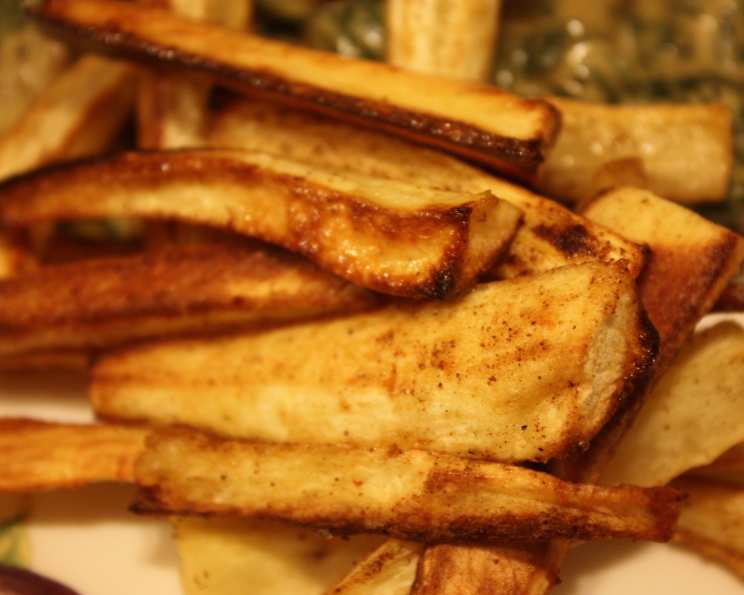
The Sweet Alchemy of Roasted Parsnips
There’s a certain magic that happens when humble vegetables are subjected to the intense, dry heat of the oven. For me, parsnips are the undisputed champions of this transformation. I recall a blustery autumn evening years ago, the kind that whispers of woodsmoke and cozy kitchens, when I stumbled upon a simple recipe for roasted parsnips. It was scribbled down hastily from an online newspaper, a cryptic set of instructions that promised something more than just another side dish. That night, as the parsnips caramelized, filling my small apartment with an intoxicating aroma, I understood their true potential – a delicate sweetness, a nutty depth, and a tender-crisp texture that still makes my mouth water just thinking about it.
Recipe Overview
- Prep Time: 15 minutes
- Cook Time: 20 minutes
- Total Time: 35 minutes
- Servings: 4-6
- Yield: Generous side dish
- Dietary Type: Vegan, Gluten-Free, Dairy-Free
Ingredients
The beauty of this recipe lies in its simplicity, allowing the natural sweetness of the parsnips to truly shine.
- 1 ½ lbs parsnips
- 3 tablespoons olive oil
- ¼ teaspoon salt
- ¼ teaspoon paprika
- Freshly coarse ground black pepper to taste
Equipment Needed
You won’t need much for this straightforward preparation.
- Oven
- Rimmed baking sheet
- Vegetable peeler
- Sharp knife
- Medium-sized bowl
Instructions
This is where the transformation begins, a simple process that yields spectacular results.
- Preheat your oven to 450°F (230°C). It’s crucial to get the oven nice and hot for optimal caramelization.
- Begin by peeling the parsnips thoroughly. You want to remove the outer skin, which can sometimes be a bit tough or slightly bitter.
- Once peeled, cut the parsnips into pieces that resemble french-fry sized sticks. Aim for a uniform thickness so they cook evenly. As you cut, pay attention to the core of the parsnip. If you notice a woody center, be sure to cut it out and discard it. This woody part can be tough and fibrous, detracting from the pleasing texture of the roasted parsnip.
- Place your prepared parsnip sticks into a medium-sized bowl.
- Drizzle the olive oil over the parsnips.
- Add the salt and paprika to the bowl.
- Toss the parsnips gently but thoroughly, ensuring each piece is evenly coated with the olive oil, salt, and paprika. This coating is essential for even browning and flavor distribution.
- Arrange the coated parsnips in a single layer on your rimmed baking sheet. It’s vital not to overcrowd the pan; this allows the parsnips to roast rather than steam, leading to those coveted crispy edges.
- Roast in the preheated oven for approximately 20 minutes, or until the edges begin to brown and the parsnips are tender when pierced with a fork. The exact time will depend on your oven and the thickness of your parsnip sticks. Keep an eye on them during the last few minutes of cooking.
- Once they’ve reached your desired level of tenderness and beautiful browning, remove the baking sheet from the oven.
- Season generously with freshly coarse ground black pepper to taste.
Expert Tips & Tricks
To elevate your roasted parsnips from delicious to divine, consider these chef-approved insights.
- Parsnip Quality Matters: For the sweetest parsnips, look for smaller, firm roots. Larger ones can sometimes be tougher and more fibrous, though the woody core removal helps significantly. If you happen to have parsnips that have experienced a light frost in the ground, they’ve undergone a natural transformation where starches convert to sugars, resulting in an even sweeter flavor.
- The Art of the Single Layer: I cannot stress this enough: do not crowd the pan! This is the golden rule for achieving beautifully caramelized, slightly crisp edges. If your parsnips are piled up, they’ll steam, resulting in a soft, unappealing texture. If necessary, use two baking sheets.
- Even Cutting for Even Cooking: Taking the time to cut your parsnips into uniformly sized sticks ensures that they all cook at the same rate. This prevents some from becoming burnt while others remain undercooked.
- Oven Variance: Ovens can be temperamental. If you know your oven runs hot, start checking your parsnips a few minutes earlier than the suggested 20 minutes. Conversely, if it runs cooler, they might need a couple of extra minutes. The visual cues of browning and tenderness are your best guides.
- The Power of Paprika: While a simple pinch of paprika adds a lovely subtle warmth and a hint of color, don’t be afraid to experiment. A smoked paprika can add a wonderful depth, or a touch of cayenne pepper can introduce a gentle heat.
Serving & Storage Suggestions
These roasted parsnips are incredibly versatile and can be enjoyed in many ways.
Serve them hot, fresh from the oven, as a delightful accompaniment to roasted meats, poultry, or fish. They also make a fantastic addition to a vegetarian or vegan main course, perhaps alongside a lentil shepherd’s pie or a mushroom wellington. For an extra touch of elegance, a sprinkle of fresh chopped parsley or chives just before serving adds a burst of color and freshness.
Leftovers can be stored in an airtight container in the refrigerator for up to 2-3 days. While they are best enjoyed fresh, they can be gently reheated in a moderate oven (around 350°F or 175°C) for a few minutes until warmed through. Avoid microwaving, as this can make them mushy.
Nutritional Information
Below is an approximate nutritional breakdown per serving, assuming 6 servings. Please note that these values are estimates and can vary based on ingredient size and specific products used.
| Nutrient | Amount per Serving | % Daily Value |
|---|---|---|
| Calories | 130 kcal | 7% |
| Total Fat | 7.1 g | 9% |
| Saturated Fat | 1 g | 5% |
| Cholesterol | 0 mg | 0% |
| Sodium | 109 mg | 5% |
| Total Carbohydrate | 16.8 g | 6% |
| Dietary Fiber | 4.8 g | 17% |
| Sugars | 5.6 g | 11% |
| Protein | 1.2 g | 2% |
Variations & Substitutions
While the classic is hard to beat, these roasted parsnips lend themselves beautifully to creative variations.
- Herbaceous Notes: Toss the parsnips with a tablespoon of finely chopped fresh rosemary or thyme along with the olive oil and spices before roasting.
- Citrus Zest: A generous grating of lemon or orange zest added in the last 5 minutes of roasting can impart a bright, refreshing counterpoint to the sweetness.
- Spicy Kick: For those who enjoy a bit of heat, a pinch of red pepper flakes or a dash of your favorite hot sauce can be added to the olive oil mixture.
- Maple Glaze: Towards the end of cooking, drizzle a tablespoon of maple syrup over the parsnips and continue roasting for another 2-3 minutes until lightly caramelized. This is particularly delightful in the fall and winter months.
- Garlic Infusion: Roast a few unpeeled garlic cloves alongside the parsnips. Once roasted and tender, squeeze the sweet, mellow garlic pulp over the parsnips before serving.
FAQs (Frequently Asked Questions)
Q: Why do my parsnips taste woody?
A: This is often due to the woody core inside larger parsnips. Always cut out the woody center before cooking to ensure a tender and pleasant texture.
Q: Can I use a different oil?
A: Yes, while olive oil is excellent, avocado oil or melted coconut oil can also be used. The flavor profile might shift slightly depending on the oil chosen.
Q: How do I make sure the parsnips get crispy?
A: The key is a hot oven and not overcrowding the baking sheet. Ensure the parsnips are in a single layer so they roast rather than steam.
Q: Can I roast other root vegetables with parsnips?
A: Absolutely! Carrots, sweet potatoes, and potatoes can be roasted alongside parsnips, but be mindful of their different cooking times and cut them accordingly.
Q: Are parsnips healthy?
A: Parsnips are a good source of fiber, vitamins (like Vitamin C and K), and minerals, making them a nutritious addition to your diet.
Final Thoughts
There’s a profound satisfaction in taking a simple, unassuming vegetable like the parsnip and, with a little heat and seasoning, coaxing out its inherent sweetness and complexity. This recipe is a testament to that culinary principle – that often, the most exquisite flavors are found in the most straightforward preparations. I encourage you to give these roasted parsnips a try, perhaps alongside your next Sunday roast or as a star on a vibrant vegetarian platter. Don’t hesitate to experiment with the variations; let your palate guide you. And when you find that perfect bite, that moment of sweet, caramelized bliss, I’d love to hear about it. Happy roasting!