
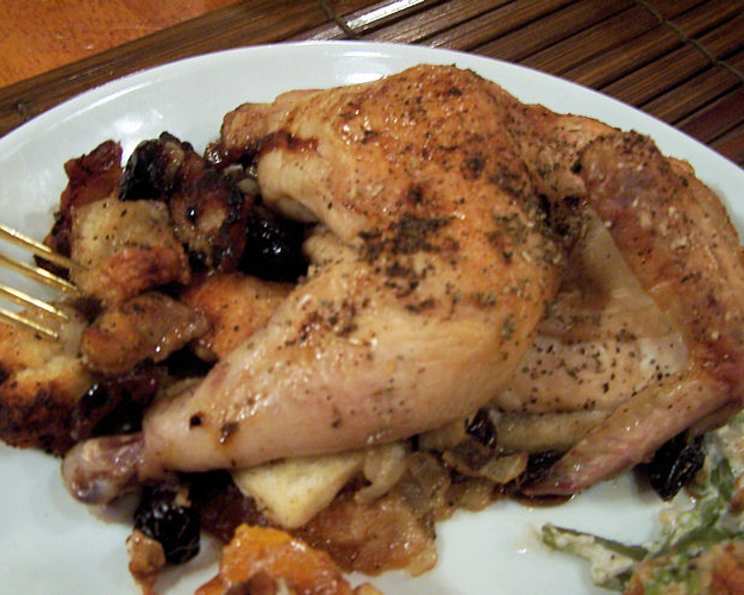
Roasted Cornish Hens with Dried Cherry Stuffing: A Symphony of Autumn Flavors
There’s a certain magic that descends upon the kitchen in autumn, a palpable shift that calls for comforting, deeply flavored dishes. For me, that magic often coalesces around the humble, yet elegant, Cornish hen. I remember one crisp October evening, years ago, when I stumbled upon this recipe in a culinary magazine. The combination of tender, roasted poultry and a sweet-tart dried cherry stuffing immediately captured my imagination. That night, the aroma that filled my home was simply divine – a perfect balance of savory herbs, sweet fruit, and the rich perfume of roasting chicken. It felt like the very essence of the season, bottled and ready to be savored.
Recipe Overview
- Prep Time: 20 minutes
- Cook Time: 45 minutes
- Total Time: 1 hour 5 minutes
- Servings: 4
- Yields: 4 pieces of Hen
- Dietary Type: Not specified
Ingredients
- 1 ½ tablespoons olive oil
- ½ cup onion, diced
- ½ cup celery, diced
- ½ cup dried sour cherries
- ½ teaspoon dried sage
- ½ cup low-sodium chicken broth
- 4 slices white bread, cut into ½-inch cubes
- 1 dash salt, to taste
- 1 dash fresh ground black pepper, to taste
- 2 Cornish hens, split in half
Equipment Needed
To bring this delightful dish to life, you’ll want to have a few essentials on hand:
- A large skillet for sautéing the stuffing base.
- A baking sheet for roasting the hens and stuffing.
- A nonstick cooking spray or parchment paper for easy cleanup.
- A serving platter to present your masterpiece.
Instructions
-
Preheat Your Oven: Begin by preheating your oven to 400°F (200°C). This ensures a hot, consistent environment for perfect roasting.
-
Sauté the Aromatics: In a large skillet, heat the olive oil over medium heat. Add the diced onion and celery. Cook, stirring occasionally, until these vegetables are tender and slightly softened, which should take about 5 minutes.
-
Infuse with Flavor: To the skillet with the softened vegetables, add the dried sour cherries, dried sage, and low-sodium chicken broth. Continue to cook for 2 more minutes, allowing the flavors to meld and the cherries to plump up slightly.
-
Build the Stuffing: Stir in the cubed white bread to the skillet. Season generously with salt and fresh ground black pepper, to taste. Toss everything together until the bread cubes are lightly coated with the moist mixture. Remove the skillet from the heat and set the stuffing aside to cool slightly.
-
Prepare the Hens: Take your Cornish hen halves and season them generously on both sides with salt and fresh ground black pepper. This step is crucial for building deep flavor from the inside out.
-
Assemble and Roast: Spray a baking sheet with nonstick cooking spray or line it with parchment paper for easier removal. Spoon the prepared stuffing mixture and form it into 4 distinct mounds on the prepared baking sheet. Carefully place one half of a Cornish hen on top of each mound of stuffing.
-
Roast to Perfection: Place the baking sheet in the preheated oven. Roast the hens for 45 minutes, or until they are thoroughly cooked and the juices run clear. A meat thermometer inserted into the thickest part of the thigh (without touching bone) should register 165°F (74°C).
-
Rest and Serve: Once the hens are finished roasting, carefully transfer them to a serving platter. Let them rest for about 5 minutes before serving. This resting period allows the juices to redistribute throughout the meat, resulting in a more tender and flavorful experience.
Expert Tips & Tricks
Achieving perfectly roasted Cornish hens and a delightful stuffing is all about attention to detail. Here are a few chef-inspired tips to elevate your dish:
- Bread Choice: While white bread is specified, a good quality sourdough or even a slightly stale challah can add an extra layer of complexity to the stuffing. The key is to use bread that will absorb moisture without becoming mushy.
- Even Browning: If you find your hens aren’t browning as evenly as you’d like, you can carefully baste them with some pan drippings or a little extra olive oil during the last 15-20 minutes of roasting.
- Stuffing Moisture: The amount of broth can be adjusted slightly depending on how moist you prefer your stuffing. If you prefer a drier stuffing, start with ¼ cup of broth and add more only if needed. Conversely, if you like a very moist stuffing, you might need to add an extra tablespoon or two.
- Doneness Test: While the timer is a guide, visually checking for doneness is paramount. The skin should be golden brown and crisp, and when you pierce the thickest part of the thigh with a skewer or fork, the juices should run clear. Avoid overcooking, as Cornish hens can dry out quickly.
Serving & Storage Suggestions
This dish is a showstopper on its own, but it truly shines when presented thoughtfully. Serve the roasted Cornish hen halves nestled atop their savory dried cherry stuffing, allowing the beautiful colors and textures to be the star. A drizzle of pan juices over the top can add an extra touch of richness.
Leftovers can be stored in an airtight container in the refrigerator for up to 3 days. To reheat, gently warm the hen and stuffing in a covered oven-safe dish at 325°F (160°C) until heated through, or use a microwave on a medium power setting. Be mindful not to overheat, as this can dry out the chicken.
Nutritional Information
| Nutrient | Amount per Serving | % Daily Value |
|---|---|---|
| Calories | 265 kcal | 18% |
| Total Fat | 10.1 g | 15% |
| Saturated Fat | 2 g | 9% |
| Cholesterol | 108.8 mg | 36% |
| Sodium | 267.8 mg | 11% |
| Total Carbohydrate | 15.3 g | 5% |
| Dietary Fiber | 1.2 g | 4% |
| Sugars | 2.2 g | 8% |
| Protein | 26.8 g | 53% |
Note: Nutritional values are estimates and can vary based on specific ingredients and portion sizes.
Variations & Substitutions
While this recipe sings with its classic components, feel free to explore its potential for variation:
- Gluten-Free Stuffing: For a gluten-free option, substitute the white bread with gluten-free bread cubes or even crumbled cornbread. Ensure the bread is dry enough to absorb the liquid.
- Herb Variations: Experiment with other complementary herbs. Thyme, rosemary, or a pinch of marjoram would all be delightful additions to the stuffing.
- Nutty Addition: For added texture and richness, consider adding a handful of toasted chopped walnuts or pecans to the stuffing mixture.
- Fruit Swap: If dried sour cherries aren’t readily available, dried cranberries or even finely chopped dried apricots can be used, though they will impart a slightly different sweetness profile.
FAQs
Q: Why split the Cornish hens in half?
A: Splitting the hens allows for more even cooking and ensures that each serving has a good portion of both white and dark meat, along with a generous mound of stuffing.
Q: Can I make the stuffing ahead of time?
A: Yes, you can prepare the stuffing mixture (up to step 4) a day in advance. Store it in an airtight container in the refrigerator. You may need to add a tablespoon or two of extra broth when assembling if it seems too dry.
Q: What if I don’t have dried sour cherries?
A: Dried cranberries or finely chopped dried apricots can be used as a substitute, offering a different but equally delicious fruity note to the stuffing.
Q: How do I know when the Cornish hens are fully cooked?
A: The most reliable method is to use a meat thermometer. Insert it into the thickest part of the thigh, avoiding the bone. The temperature should reach 165°F (74°C). Visually, the juices should run clear when pierced.
Q: Can I use chicken thighs instead of Cornish hens?
A: While the cooking time would need to be adjusted, you could potentially use bone-in, skin-on chicken thighs. You would likely need to reduce the roasting time to accommodate the thicker meat of the thighs.
Final Thoughts
This Roasted Cornish Hen with Dried Cherry Stuffing is more than just a meal; it’s an experience. It’s the kind of dish that brings warmth and joy to the table, perfect for a special occasion or simply a comforting weeknight indulgence. The interplay of the savory hen, the sweet-tart cherries, and the fragrant sage creates a harmonious blend of flavors that truly embodies the best of autumn. I encourage you to gather your ingredients, embrace the season, and let the aromas fill your kitchen. When you take that first bite, I hope you find as much delight in it as I always do. Consider pairing it with a crisp apple cider or a light-bodied Pinot Noir for a truly memorable dining experience.