
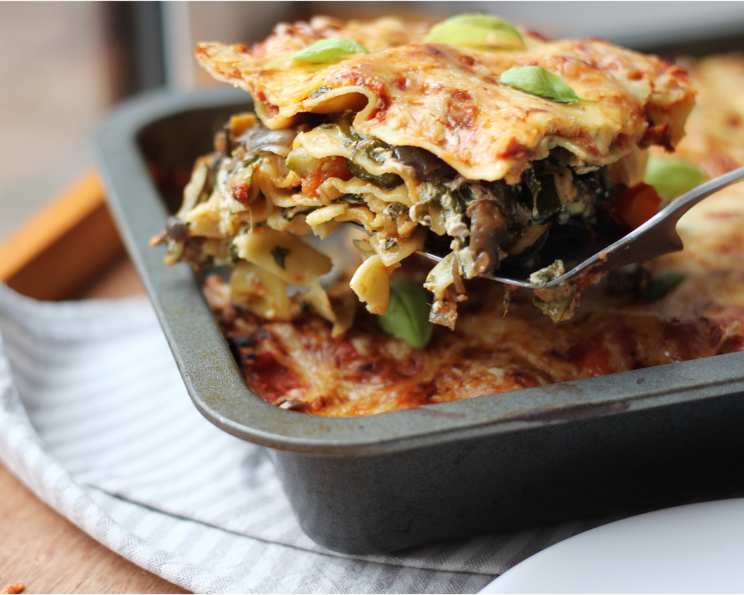
Roast Vegetable Lasagne with Spinach and Ricotta: A Hug in a Dish
There are certain dishes that, for me, encapsulate pure comfort. They’re not just meals; they’re edible embraces, capable of banishing the gloomiest of days with their warmth and familiar flavors. This Roast Vegetable Lasagne is precisely one of those culinary hugs. I remember the first time I truly perfected it, after countless iterations inspired by fragments of recipes and my own adventurous pantry dives. It was a chilly Sunday evening, the kind that begs for something hearty and soul-satisfying, and this lasagne delivered in spades. The aroma that wafted from the oven, a complex bouquet of caramelized vegetables, rich tomato, and creamy cheese, was enough to make the whole house feel cozier. Served with a crisp green salad, it felt like a complete, nourishing feast that even the most dedicated carnivore would adore.
Recipe Overview
- Prep Time: 45 minutes
- Cook Time: 45 minutes (vegetables) + 30-40 minutes (lasagne)
- Total Time: Approximately 1 hour 30 minutes
- Servings: 4-6
- Yield: 1 lasagne dish
- Dietary Type: Vegetarian
Ingredients
For the Vegetables:
- 1 medium carrot, chopped
- 2 medium zucchini, chopped
- 1 cup chopped mushroom
- ½ purple onion, chopped
- 1 green capsicum, chopped
- ½ aubergine, chopped
- 3-4 garlic cloves, whole with base sliced off
- 1 tablespoon olive oil
- 1 tablespoon brown sugar
- 3 leaves of torn fresh basil
- Salt and pepper to taste
For the Spinach and Ricotta Mix:
- 250 g frozen chopped spinach
- 250 g ricotta cheese
- 100 g cubed feta cheese
- 30 g finely grated fresh parmesan cheese
- Salt and pepper to taste
For the Lasagne:
- 400 g fresh lasagne sheets (or dried sheets, pre-boiled according to package directions)
- 750 g pasta sauce (homemade or store-bought)
- 1 ½ cups grated cheddar cheese
- 30 g finely grated fresh parmesan cheese (for topping)
Equipment Needed
- Large roasting dish
- Baking sheet (optional, for catching drips)
- Medium mixing bowl
- Saucepan (if defrosting spinach on stovetop)
- Microwave (for defrosting spinach)
- Spatula
- Large ovenproof lasagne dish (approximately 9×13 inches or similar)
Instructions
-
Prepare the Vegetables for Roasting: Begin by preheating your oven to 180°C (350°F). Take your chopped carrot, zucchini, mushroom, purple onion, green capsicum, and aubergine. Place them all into your large roasting dish. Add the whole garlic cloves, ensuring their sliced bases are facing downwards. Drizzle generously with olive oil, sprinkle with brown sugar, and season well with salt and pepper. Tear the fresh basil leaves and scatter them over the vegetables.
-
Roast the Vegetables: Place the roasting dish into the preheated oven and roast for approximately 45 minutes. You’re looking for the vegetables to become tender and nicely caramelized, with slightly softened edges. The garlic cloves should also be roasted and fragrant.
-
Prepare the Spinach and Ricotta Mix: While the vegetables are roasting, prepare the creamy spinach and ricotta filling. If you’re using frozen spinach, defrost it thoroughly. This can be done quickly in the microwave according to the package instructions, or by allowing it to thaw at room temperature and then gently heating it in a saucepan to remove excess moisture. Once defrosted and any excess water is squeezed out, place the spinach into a medium mixing bowl. Add the ricotta cheese, cubed feta cheese, and 30g of the finely grated fresh parmesan cheese. Stir everything together thoroughly until well combined. Season this mixture with salt and pepper to your liking.
-
Assemble the Lasagne: Once the vegetables are roasted, carefully remove them from the oven. Discard the roasted garlic cloves (or set them aside if you plan to make garlic bread – see Tip below!). Now, it’s time to layer your lasagne.
- Begin by spreading a thin layer of pasta sauce on the bottom of your ovenproof lasagne dish. This prevents the first layer of pasta from sticking and provides moisture.
- Place a layer of fresh lasagne sheets over the sauce.
- Spoon approximately half of the spinach and ricotta mix evenly over the lasagne sheets.
- Add another layer of lasagne sheets.
- Arrange the roasted vegetables (excluding the garlic cloves) over this layer of pasta.
- Add another layer of lasagne sheets.
- Spoon the remaining spinach and ricotta mix evenly over the lasagne sheets.
- Add your final layer of lasagne sheets.
- Pour the remaining pasta sauce over the top layer of pasta, ensuring it’s spread to the edges.
- Generously sprinkle the 1 ½ cups of grated cheddar cheese evenly over the pasta sauce.
- Finally, finish off by sprinkling the remaining 30g of finely grated fresh parmesan cheese over the top of the cheddar. This second amount of parmesan is crucial for creating that wonderful golden-brown, bubbly crust and adding an extra depth of flavor. For good measure, I like to add another dash of freshly cracked pepper to the very top.
-
Bake the Lasagne: Place the assembled lasagne into the preheated oven at 180°C (350°F). Bake for 30 to 40 minutes, or until the top is a beautiful golden brown and the sauce is bubbling around the edges. You can also gently poke a knife through the layers to ensure the pasta is cooked through.
-
Rest and Serve: Once baked to perfection, remove the lasagne from the oven and let it rest for at least 10-15 minutes before slicing and serving. This resting period allows the layers to set, making it much easier to serve neat portions and ensuring the flavors meld beautifully.
Expert Tips & Tricks
- Vegetable Prep: For more even roasting, ensure all your chopped vegetables are roughly the same size. If you find your vegetables are releasing a lot of liquid during roasting, you can carefully drain off any excess before layering them into the lasagne.
- Pasta Sauce Quality: While homemade is wonderful, a good quality store-bought pasta sauce can be a real lifesaver on busy days. Look for one with a rich tomato flavor and minimal added sugar.
- Ricotta Moisture: If your ricotta seems particularly wet, you can drain it slightly by placing it in a fine-mesh sieve lined with cheesecloth or a paper towel for about 30 minutes before mixing it with the spinach and feta.
- Garlic Butter Magic: Don’t discard those roasted garlic cloves! They are incredibly sweet and mellow. Mash them with a fork, mix with a little butter, and you have the most delicious, instant garlic butter for serving with crusty bread alongside your lasagne.
- Make Ahead: The spinach and ricotta mixture can be made a day in advance and stored in an airtight container in the refrigerator. You can also assemble the entire lasagne, cover it tightly, and refrigerate it for up to 24 hours before baking. You may need to add an extra 10-15 minutes to the baking time if cooking from chilled.
Serving & Storage Suggestions
This Roast Vegetable Lasagne is a star on its own, but it truly shines when served with a vibrant, simple green salad. A light vinaigrette, perhaps with a hint of lemon or Dijon mustard, will cut through the richness beautifully. Crusty bread, especially if you’ve made that garlic butter, is also a welcome accompaniment for mopping up any leftover sauce.
Leftovers can be stored in an airtight container in the refrigerator for up to 3 days. To reheat, cover the dish with foil and bake in a preheated oven at 160°C (320°F) for about 20-30 minutes, or until heated through. You can also reheat individual portions in the microwave. This lasagne also freezes exceptionally well. Let it cool completely before portioning and freezing in airtight containers for up to 3 months. Thaw overnight in the refrigerator before reheating as described above.
Nutritional Information (Estimated Per Serving)
This is a rich and satisfying dish, so the nutritional values reflect that. These are estimates and can vary based on specific brands and ingredients used.
| Nutrient | Amount per Serving | % Daily Value |
|---|---|---|
| Calories | 1060.8 kcal | – |
| Calories from Fat | 383 kcal | – |
| Total Fat | 42.6 g | 65% |
| Saturated Fat | 22.7 g | 113% |
| Cholesterol | 115.6 mg | 38% |
| Sodium | 1668.3 mg | 69% |
| Total Carbohydrate | 122.3 g | 40% |
| Dietary Fiber | 14.2 g | 56% |
| Sugars | 30.7 g | 122% |
| Protein | 48.6 g | 97% |
(Note: % Daily Value is based on a 2,000 calorie diet. Individual needs may vary.)
Variations & Substitutions
This lasagne is wonderfully forgiving, making it a perfect canvas for seasonal produce.
- Seasonal Vegetables: Feel free to swap out vegetables based on what’s fresh and in season. Butternut squash, sweet potato, broccoli florets, bell peppers of any color, or even cauliflower florets would all roast beautifully and work well in this dish. Just adjust roasting times if necessary for denser vegetables.
- Spicy Kick: For a little heat, add a pinch of red pepper flakes to the vegetables before roasting, or a finely chopped chili to the pasta sauce.
- Vegan Option: To make this dish vegan, substitute the ricotta cheese with a cashew-based ricotta or a firm tofu blended with nutritional yeast and lemon juice. Use vegan feta and a good quality vegan cheddar cheese alternative. Ensure your pasta sauce and lasagne sheets are also vegan.
- Herb Variations: While basil is classic, other herbs like oregano, thyme, or rosemary can add a different aromatic dimension to the roasted vegetables.
FAQs (Frequently Asked Questions)
Q: Can I use dried lasagne sheets instead of fresh?
A: Yes, absolutely! If using dried lasagne sheets, you will need to boil them according to the package instructions until they are al dente before layering them into the dish. This typically takes a few minutes.
Q: How can I make sure my lasagne isn’t watery?
A: Roasting the vegetables helps to drive off excess moisture. Ensuring the spinach is well-drained after defrosting is also key. If your pasta sauce is particularly thin, you can simmer it for a bit longer to thicken it before using it.
Q: My lasagne is browning too quickly on top. What can I do?
A: If the top of your lasagne is browning too rapidly before the inside is heated through, you can loosely cover it with aluminum foil for the remainder of the cooking time. Remove the foil for the last 10-15 minutes to allow the top to crisp up.
Q: Is it essential to let the lasagne rest after baking?
A: Yes, resting is highly recommended. It allows the layers to settle and firm up, which makes slicing and serving much neater and prevents the dish from becoming a messy pile.
Q: Can I add meat to this lasagne?
A: While this recipe is vegetarian, you could certainly add cooked ground meat (like beef, lamb, or turkey) to the pasta sauce or as a separate layer, if desired.
Final Thoughts
This Roast Vegetable Lasagne is more than just a recipe; it’s an invitation to slow down, savor the process, and indulge in the simple pleasures of home-cooked food. It’s a dish that brings people together, sparks conversation, and leaves everyone feeling nourished and content. I encourage you to gather your ingredients, embrace the wonderful aromas as they fill your kitchen, and create this comforting masterpiece. Share it with loved ones, or simply enjoy a generous slice all to yourself – you’ve earned it. Happy cooking!