
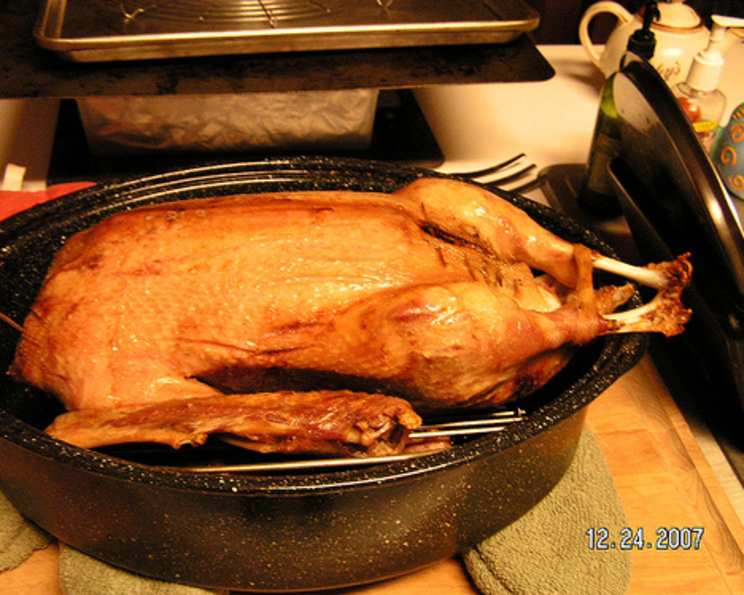
A Feast Fit for Kings: Roast Goose with Jewel-Like Juniper Sauce
There are some dishes that transcend mere sustenance; they become events, anchors for cherished memories. For me, roast goose falls into this hallowed category. I remember a particular winter, the air crisp with the promise of snow, when I first tackled the idea of roasting a whole goose. The sheer size of the bird was intimidating, a culinary Everest I wasn’t sure I was ready to climb. Yet, guided by a recipe that assured me of its relative simplicity, I found myself in my kitchen, the goose glistening under the oven lights. The aroma that filled my home that evening was nothing short of magical, a rich, savory promise that was more than fulfilled. The resulting bird was sublime, a testament to the power of good ingredients and a well-executed plan, and the accompanying juniper sauce was the perfect, ruby-hued counterpoint – a dish that has since become a staple for special occasions.
Recipe Overview
- Prep Time: Approximately 30 minutes (plus overnight drying time for the goose)
- Cook Time: Approximately 2 hours 55 minutes to 3 hours 25 minutes
- Total Time: Approximately 3 hours 25 minutes to 4 hours (plus resting)
- Servings: 6-8
- Yield: 1 Whole Roast Goose
- Dietary Type: Not specified (contains meat)
Ingredients
- 1 14-pound goose, washed thoroughly inside and out, and patted completely dry
- 3 medium onions, peeled and cut into thick segments
- 2 tablespoons olive oil
- 2 tablespoons all-purpose flour
- 2 glasses (approximately 16 fluid ounces or 470 ml) dry Marsala wine
- 3 cups stock (chicken or vegetable) or 3 cups water
- 1 ¼ teaspoons English mustard powder
- 1 tablespoon whole grain mustard
- 12 crushed juniper berries
- 2 tablespoons red currant jam
- Salt and freshly ground black pepper to taste
Equipment Needed
- Large roasting pan
- Fork
- Aluminum foil
- Small saucepan
- Whisk
- Sharp carving knife and fork
- Serving platter
Instructions
The journey to a perfectly roasted goose begins with preparation, and a little foresight goes a long way. For optimal crispness, I highly recommend drying the goose thoroughly inside and out, and ideally, letting it air-dry in the refrigerator, uncovered, overnight. This step is crucial for achieving that coveted crackling skin.
- Preheat your oven to a robust 425°F (220°C). This initial high heat is key to kick-starting the rendering of the goose fat and creating that delightful crispness.
- Prepare the Goose: Carefully remove any lumps of fat from the inside cavity of the goose. Using a fork, prick the goose all over, particularly on the breast and legs. This allows the fat to escape during cooking, leading to a more tender and less greasy bird. Generously rub salt all over the inside and outside of the goose. For the initial roasting period, wrap aluminum foil snugly around the goose legs to prevent them from overcooking.
- Initial Roast: Place the goose, breast-side down, in a roasting pan. Carefully place the pan in the preheated oven. Roast for 25 minutes at 425°F (220°C).
- Reduce Heat and Continue Roasting: After the initial 25 minutes, reduce the oven temperature to 350°F (175°C). Continue to roast for 1 hour.
- Drain Fat and Remove Foil: Once the hour is up, it’s time to carefully pour out the accumulated fat from the roasting pan. Be extremely cautious, as the rendered fat will be very hot. While you’re attending to the pan, remove the aluminum foil from the goose legs.
- Optional Potato Addition: At this juncture, if you desire, you can add parboiled potatoes to the roasting pan around the goose. They will absorb some of the delicious goose drippings as they continue to cook.
- Final Roast: Turn the goose right-side up, so it is now breast-side up. Return it to the oven and roast for another 30 minutes to 1 hour, or until the goose is cooked through.
- Prepare the Juniper Sauce: While the goose is in its final stage of roasting, begin preparing the juniper sauce. In a small saucepan, cook the sliced onions in the olive oil over low heat. Allow them to cook gently for about 30 minutes, stirring occasionally, until they are softened and translucent.
- Thicken the Sauce Base: Stir in the all-purpose flour with the softened onions. Cook for a few more minutes, stirring constantly, to cook out the raw flour taste.
- Build the Sauce Flavors: Now, stir in the dry Marsala wine, scraping up any browned bits from the bottom of the pan. Next, add the stock (or water) and the crushed juniper berries.
- Simmer and Season: Season the sauce with salt and pepper to your liking, and whisk in the English mustard powder. Bring the sauce to a gentle simmer and let it simmer for 20 minutes, allowing the flavors to meld and the sauce to thicken slightly.
- Incorporate Whole Grain Mustard: After 20 minutes of simmering, stir in the whole grain mustard. Continue to simmer for an additional 5 minutes.
- Check for Doneness: To determine if the goose is ready, pierce the thickest part of the thigh meat with a fork or skewer. The juices should run clear. If they are still pink, continue roasting for another 15-20 minutes, checking again.
- Rest the Goose: Once cooked, remove the goose from the oven and let it rest on a carving board, loosely tented with foil, for at least 10 minutes before carving. This resting period is crucial for allowing the juices to redistribute throughout the meat, ensuring a more succulent result.
- Finish the Sauce: Just before you are ready to serve, stir the red currant jam into the prepared juniper sauce. This adds a beautiful gloss and a touch of sweet-tartness that perfectly complements the richness of the goose.
Expert Tips & Tricks
- Achieving Crispy Skin: The key to gloriously crispy goose skin is dryness. Beyond patting the bird dry, consider scoring the skin lightly with a sharp knife in a diamond pattern before roasting. This helps the fat render more effectively.
- Fat Management: Goose fat is incredibly valuable for cooking. Save the rendered fat from the roasting pan! It’s fantastic for roasting potatoes or other vegetables. Strain it into a jar and store it in the refrigerator.
- Herb Infusion: For an extra layer of flavor, consider adding a sprig or two of fresh thyme or rosemary to the cavity of the goose before roasting.
- Checking for Doneness: If you have a meat thermometer, the internal temperature of the thickest part of the thigh (without touching the bone) should register around 175-180°F (80-82°C) when the goose is done.
Serving & Storage Suggestions
To serve, carve the rested goose into generous portions. Arrange the carved meat on a warm platter. Warm the juniper sauce gently if needed and ladle it over the goose or serve it in a separate gravy boat. This roast goose is a magnificent centerpiece and pairs beautifully with roasted root vegetables, creamy mashed potatoes, or a simple green salad.
Leftovers can be stored in an airtight container in the refrigerator for up to 3-4 days. Reheat gently in a low oven (around 300°F or 150°C) or in a covered skillet over low heat with a splash of liquid to prevent drying out.
Nutritional Information
This is an estimate, as exact values can vary based on the size of the goose and specific ingredients used.
| Nutrient | Amount per Serving (approximate, 1/6 of goose + sauce) | % Daily Value |
|---|---|---|
| Calories | 1415.2 kcal | |
| Calories from Fat | 909 kcal | |
| Total Fat | 101 g | 155% |
| Saturated Fat | 30.8 g | 153% |
| Cholesterol | 399.2 mg | 133% |
| Sodium | 336.9 mg | 14% |
| Total Carbohydrate | 7.9 g | 2% |
| Dietary Fiber | 1 g | 4% |
| Sugars | 2.5 g | 9% |
| Protein | 111.4 g | 222% |
Variations & Substitutions
While this recipe sings with goose, if a whole goose is unavailable or too ambitious, you could adapt this sauce for roast duck. The cooking times would need to be adjusted significantly. The Marsala wine can be substituted with a dry sherry or even a robust red wine, though Marsala offers a unique depth. For the stock, chicken or vegetable stock works well, but a rich beef stock could also be an interesting alternative for a deeper savory note.
FAQs
Q: Can I prepare any part of this recipe ahead of time?
A: Yes, the juniper sauce can be made a day in advance and gently reheated before serving. The goose itself is best roasted fresh, but it can be patted dry and left to air-dry in the refrigerator overnight.
Q: My goose skin didn’t get crispy. What went wrong?
A: Crispy skin relies heavily on dryness. Ensure the goose is thoroughly patted dry before cooking and consider scoring the skin lightly. Also, make sure your oven is reaching the correct temperature.
Q: Is it possible to freeze leftover roast goose?
A: Yes, carved leftover goose freezes well for up to 2 months. Ensure it is cooled completely and stored in airtight containers or freezer bags.
Q: What kind of goose should I use?
A: A good quality, free-range goose will yield the best flavor and texture. The size specified is typical, but adjust cooking times proportionally for larger or smaller birds.
Q: What are juniper berries and where can I find them?
A: Juniper berries are the small, dark purple, aromatic cones of the juniper tree. They have a piney, slightly peppery flavor. You can find them in most well-stocked spice aisles of supermarkets or at specialty food stores.
This roast goose with its jewel-toned juniper sauce is a celebration on a plate. It’s a dish that commands attention, fills the room with an unforgettable aroma, and most importantly, delivers an exceptional dining experience. Gather your loved ones, embrace the process, and savor every delicious bite. It’s a true taste of tradition and indulgence, perfect for making any occasion feel extraordinary.