
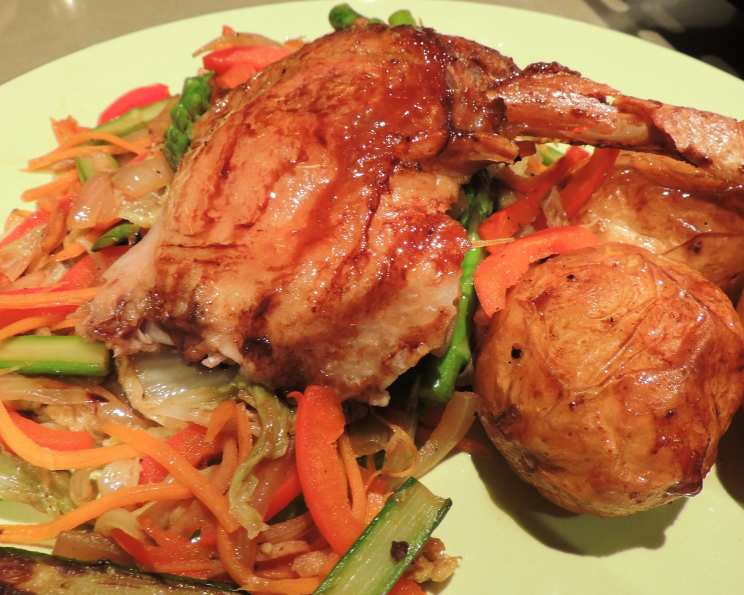
The Allure of Duck: A Symphony of Balsamic, Honey, and Perfectly Roasted Bird
There are certain aromas that, to me, define celebration. The deep, rich scent of a roasting bird, particularly duck, is one that instantly transports me back to holiday gatherings of my youth. I vividly recall my grandmother, a woman whose kitchen was a kingdom of delicious chaos, meticulously preparing a whole duck for our festive meal. The way the skin rendered to a tantalizing crisp, the almost primal satisfaction of carving into such a magnificent creature – it’s a culinary memory etched in my soul. This recipe, with its elegant yet accessible balsamic and honey glaze, captures that same spirit of festive indulgence, making it a truly show-stopping centerpiece for any occasion.
Recipe Overview
- Prep Time: 20 minutes
- Cook Time: 1 hour 30 minutes
- Total Time: 1 hour 50 minutes
- Servings: 4
- Yield: 1 whole roasted duck
- Dietary Type: Gluten-Free
Ingredients
- 1 whole duck, thawed (from Maple Leaf Farms, if possible), giblets removed
- Salt and pepper, to taste
- 10 tablespoons balsamic vinegar
- 1/4 cup honey
- 1/2 teaspoon black pepper, freshly ground
- 2 teaspoons balsamic vinegar (additional)
- 1/2 teaspoon red wine vinegar
Equipment Needed
- Roasting pan
- Sharp meat fork
- Small saucepan
- Kitchen string
- Paper towels
Instructions
-
Begin by preheating your oven to a robust 425°F (220°C). This initial high heat is crucial for kickstarting the rendering process of the duck’s fat and achieving that coveted crispy skin.
-
Carefully remove the thawed duck from its packaging. Rinse the entire bird, inside and out, under cool running water. Pat it thoroughly dry with paper towels. A dry surface is paramount for achieving crispy skin.
-
Season the duck generously with salt and pepper, both inside the cavity and all over the exterior. Don’t be shy; these seasonings are the foundation of flavor.
-
Next, tie the duck’s legs together with kitchen string. This helps the duck cook evenly and maintain a more compact, attractive shape as it roasts.
-
Place the seasoned duck, breast side up, in your roasting pan. Now, it’s time for the first phase of roasting. Roast the duck for 20 minutes at the preheated 425°F.
-
After those initial 20 minutes, carefully remove the duck from the oven. This is a critical step for achieving ultra-crispy skin. Using a sharp meat fork, rake the duck’s skin numerous times all over the bird. Be diligent in this process, but exercise caution to not pierce the meat itself. This technique allows the fat to escape, leading to a wonderfully crisp texture.
-
Return the duck to the oven. Now, continue to roast the duck for 1 hour and 10 minutes. During this extended roasting period, it is essential to frequently baste the duck with the rendered juices that have collected in the bottom of the roasting pan. Spoon these flavorful juices over the duck every 15-20 minutes.
-
While the duck is in its extended roasting period, let’s prepare the exquisite glaze. In a small saucepan, combine 10 tablespoons of balsamic vinegar, the honey, and the freshly ground black pepper.
-
Place the saucepan over high heat and bring the mixture to a rolling boil. Watch it closely as it begins to thicken. Stir constantly as it reduces. You are aiming for a consistency that is very thick and has reduced in volume to approximately 3 tablespoons. This concentrated mixture will be intensely flavorful.
-
Once the glaze has reached the desired thickness, remove the saucepan from the heat. Now, stir in the remaining 2 teaspoons of balsamic vinegar and the 1/2 teaspoon of red wine vinegar. Keep this glaze warm until the duck is ready. If the glaze cools and becomes too thick to brush easily, simply warm it over low heat, stirring continuously.
-
When the duck has finished its total roasting time and is beautifully cooked, remove it from the oven. Use paper towels to gently dry the skin. This is another key step to ensure maximum crispiness.
-
With a pastry brush or spoon, brush the duck with a thick coat of the warm balsamic and honey glaze.
-
Return the glazed duck to the oven for just 1 minute. This brief moment in the oven allows the glaze to caramelize slightly and adhere beautifully to the crispy skin.
-
Remove the duck from the oven and serve immediately. For an extra touch of elegance, garnish with fresh herbs before presenting it to your eager diners.
Expert Tips & Tricks
Achieving that perfect, crispy duck skin is often the elusive goal for home cooks. My grandmother’s technique of piercing the skin is a time-honored method, and this recipe builds upon that by adding a specific basting and final glazing step. Ensure your duck is thoroughly dried after rinsing; any residual moisture will steam the skin rather than crisp it. When making the glaze, be patient and stir constantly once it starts to thicken. Duck fat is precious; don’t discard the rendered fat from the pan after cooking. Strain it, cool it, and store it in the refrigerator. Duck fat is exceptional for roasting potatoes or other vegetables, imparting an unparalleled richness.
Serving & Storage Suggestions
This magnificent Roast Duck with Balsamic Vinegar & Honey Glaze is best served piping hot, straight from the oven. Carve it at the table for a dramatic presentation. It pairs beautifully with a variety of side dishes. Consider classic accompaniments like roasted root vegetables (perhaps roasted in some of that reserved duck fat!), creamy mashed potatoes, or a crisp, seasonal salad.
Leftovers can be stored, once cooled, in an airtight container in the refrigerator for up to 3 days. To reheat, the best method is to gently warm individual portions in a low oven (around 300°F or 150°C) for about 10-15 minutes, or until heated through. This helps to retain some of the crispiness of the skin. Reheating in the microwave can make the skin become unpleasantly rubbery.
Nutritional Information
| Nutrient | Amount per Serving | % Daily Value |
|---|---|---|
| Calories | 1383.5 kcal | – |
| Calories from Fat | 1122 kcal | – |
| Total Fat | 124.7 g | 191% |
| Saturated Fat | 41.9 g | 209% |
| Cholesterol | 240.9 mg | 80% |
| Sodium | 210.5 mg | 8% |
| Total Carbohydrate | 24.9 g | 8% |
| Dietary Fiber | 0.1 g | 0% |
| Sugars | 23.8 g | 95% |
| Protein | 36.7 g | 73% |
Note: Nutritional information is an estimate and can vary based on specific ingredients and portion sizes.
Variations & Substitutions
While this recipe sings with the classic combination of balsamic and honey, feel free to experiment! For a touch of spice, add a pinch of red pepper flakes to the glaze as it simmers. If you prefer a more herbaceous note, finely chopped fresh rosemary or thyme can be incorporated into the glaze in the last few minutes of cooking. For a citrusy twist, a tablespoon of orange zest could be added to the glaze as well. If Maple Leaf Farms duck is unavailable, any good quality whole duck will work, though cooking times may vary slightly.
FAQs
Q: Why is it important to remove the giblets from the duck?
A: The giblets (heart, liver, and gizzards) are typically found inside the duck’s cavity. Removing them ensures a cleaner cavity for roasting and prevents them from overcooking or burning during the long roasting time. They can be used to make a flavorful stock or gravy separately.
Q: How do I know when the duck is fully cooked?
A: The most reliable way to check for doneness is to use an instant-read thermometer inserted into the thickest part of the thigh, avoiding the bone. The internal temperature should register at least 165°F (74°C). You can also check by piercing the thigh with a fork; the juices should run clear, not pink.
Q: Can I make the glaze ahead of time?
A: Yes, the glaze can be made a day or two in advance and stored in an airtight container in the refrigerator. Gently warm it over low heat before brushing it onto the duck.
Q: My duck skin isn’t as crispy as I’d like. What did I do wrong?
A: Crispy skin is often a result of thoroughly drying the duck before roasting, ensuring adequate heat during cooking, and allowing the fat to render. The piercing step is also crucial. Ensure your oven is at the correct temperature.
Q: Can I use a different type of vinegar in the glaze?
A: While balsamic and red wine vinegar are recommended for their specific flavor profiles, you could experiment with other vinegars like apple cider vinegar or sherry vinegar, but be aware that the flavor will be altered.
A Culinary Triumph
This Roast Duck with Balsamic Vinegar & Honey Glaze is more than just a recipe; it’s an experience. It’s the culmination of simple, elegant ingredients transformed through patient technique into a dish that will undoubtedly impress. The glossy, caramelized glaze clinging to the perfectly rendered, crisp skin is a sight to behold, and the rich, succulent meat beneath is a testament to the beauty of well-cooked duck. Serve it with pride, and savor every delicious bite. Don’t forget to share your successes and any delightful variations you discover!