
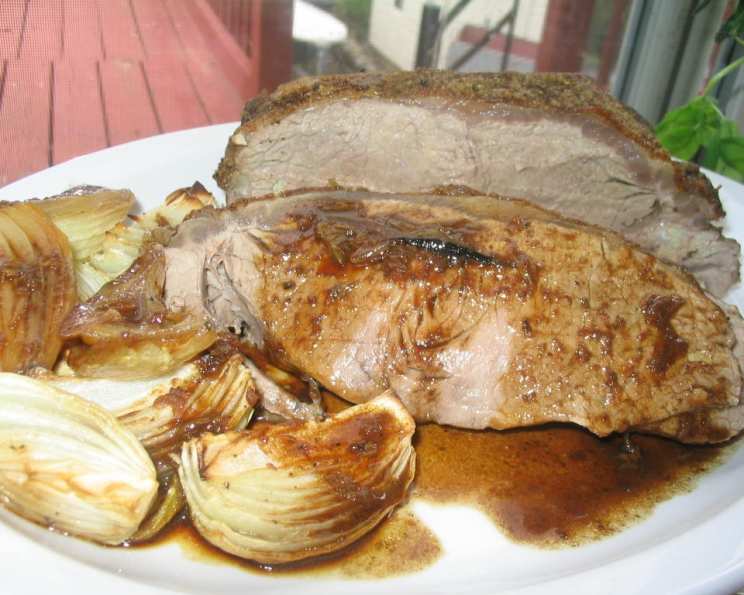
Roast Beef with a Mustard Crust and Traditional Gravy
There are few dishes that evoke a sense of comfort and occasion quite like a perfectly roasted joint of beef. I remember, as a child, the sheer anticipation that built on Sundays as the aroma of roasting meat filled the house. This particular method, with its savory mustard crust and a deeply flavorful gravy made from the pan’s own essence, takes that comforting experience to an entirely new level. It’s the kind of meal that makes you want to gather everyone around the table, to share stories and laughter, all while savoring each tender, juicy bite.
Recipe Overview
- Prep Time: 20 minutes
- Cook Time: Approximately 2 hours 5 minutes (depending on weight)
- Total Time: 2 hours 25 minutes (plus resting)
- Servings: 4
- Yield: 1 roast beef with gravy
- Dietary Type: Can be adapted for dairy-free by ensuring bouillon cube is dairy-free.
Ingredients
For the Roast Beef:
- 1.5 kg sirloin or 1.5 kg rolled rib beef
- 1 beef bouillon cube (e.g., OXO)
- 2 teaspoons plain flour
- 2 teaspoons mustard powder
- 1 onion, quartered
- Freshly ground black pepper
For the Gravy:
- 1 beef bouillon cube (e.g., OXO)
- Reserved juices from the roasting tin
- 1 tablespoon plain flour, heaped
Equipment Needed
- Roasting tin
- Small bowl
- Measuring spoons
- Saucepan
- Wooden spoon
- Carving knife and fork
- Foil
Instructions
The journey to a magnificent roast beef with a beautifully flavored crust begins with understanding your star ingredient. Weigh the beef to establish the correct cooking time, as this is the cornerstone of achieving your desired level of doneness. Once weighed, preheat your oven to a robust 220°C (425°F/Gas Mark 7). This initial high heat is crucial for searing the outside and kickstarting the crust formation.
In a small bowl, crumble 1 Beef OXO cube. To this, mix in the 2 teaspoons of plain flour and the 2 teaspoons of mustard powder. This simple mixture forms the heart of your flavorful crust. Dust this mixture over the fat surface of the beef, ensuring you rub it in gently. Don’t worry if it looks a bit rustic; this will transform into a delightfully crusty and deeply flavorful coating as it cooks. Following the crust, season the beef generously with freshly ground black pepper.
Place the prepared beef in a roasting tin. Around the meat, tuck the quartered onion. The onion will soften and caramelize, contributing its sweetness to the pan juices. Cook for the first 20 minutes at the high temperature.
After this initial blast of heat, it’s time to reduce the oven temperature to 160°C (325°F/Gas Mark 3). Now, the beef will cook slowly. The general guideline is 20 minutes per 450g for medium-rare and 15 minutes per 450g for rare. Remember to adjust this based on your preferred doneness and the specific cut of beef.
As the meat roasts, a vital step for keeping it moist and succulent is to baste it in its own juices. Every so often, tilt the roasting tin and spoon the rendered fat and juices over the beef. This not only adds moisture but also helps to develop the crust further.
Once the beef has reached your desired internal temperature, transfer the cooked meat to a carving plate. Loosely cover it with foil and allow it to rest for 10–15 minutes. This resting period is non-negotiable; it allows the juices to redistribute throughout the meat, ensuring every slice is tender and flavorful.
While the beef is resting, it’s time to make the gravy. Tilt the roasting tin again and carefully spoon off all but 2 tablespoons of the fat. It’s essential to retain the brown juices and the caramelized onion at the bottom of the tin, as these are packed with flavor.
Transfer this mixture of fat, juices, and onion to a saucepan and place it over a gentle heat. Allow the juices to sizzle for a moment. Then, sprinkle in the 1 heaped tablespoon of plain flour and blend to a smooth paste. Cook this paste for a minute or two until it browns slightly. This browning step, known as cooking out the flour, is key to developing a rich color and preventing a raw flour taste in your gravy.
Crumble and stir the remaining 1 Beef OXO cube into 600ml (1 pint) of hot water.
Returning to the saucepan with the flour paste, using a wooden spoon, loosen the tasty crisp brown bits stuck to the bottom of the tin (these are called the ‘fond’) whilst gradually adding the hot stock. Stir briskly as you add the liquid. Continue to stir until the simmering gravy is smooth and thickens. If you prefer a thicker gravy, simply let it bubble and reduce for an additional minute or two.
Carve the rested beef onto warm plates. Serve this magnificent roast with classic accompaniments such as roasted potatoes and Yorkshire puddings, and of course, lashings of hot gravy.
For an extra layer of sophistication, consider the variation: replace 150ml (¼ pint) of the water with a robust red wine for a rich red wine gravy.
Expert Tips & Tricks
- Weighing is Key: Never guess your cooking time. Accurate weighing of the beef joint is paramount for achieving perfect results. Use a meat thermometer for ultimate precision – aiming for 50-55°C (122-131°F) for rare, 55-60°C (131-140°F) for medium-rare, and 60-65°C (140-149°F) for medium.
- Crust Consistency: If your mustard powder seems particularly potent or your flour is very fine, you might find the crust mixture a little dry. A tiny splash of water (just a teaspoon) can help bind it if needed, but be careful not to make it too wet.
- Don’t Discard the Onion: The caramelized onion pieces in the gravy add a wonderful depth of flavor and a lovely sweetness. Ensure you scrape them into the saucepan with the pan juices.
- Gravy Thickening: If your gravy is too thin after simmering, you can create a ‘slurry’ by mixing a teaspoon of cornflour with a tablespoon of cold water, then whisking this into the simmering gravy until thickened. For a thinner gravy, simply add a little more hot stock or water.
- Resting is Ritual: Emphasize the importance of resting the beef. Skipping this step will result in a dry, less flavorful roast, no matter how perfectly it was cooked.
Serving & Storage Suggestions
This roast beef is best served immediately after carving, while it’s still warm and juicy. The accompanying gravy should be piping hot. Traditional accompaniments include crispy roasted potatoes, fluffy Yorkshire puddings, steamed green vegetables (like broccoli or green beans), and perhaps some horseradish sauce or a dollop of cranberry sauce.
Leftovers can be stored in an airtight container in the refrigerator for up to 2-3 days. For the best quality, store the carved beef and gravy separately. To reheat, gently warm the gravy in a saucepan over low heat. The beef can be reheated in a low oven (around 150°C/300°F) for about 10-15 minutes, or sliced thinly and added to sandwiches or salads. Freezing is possible, but the texture of the beef may be slightly altered upon thawing.
Nutritional Information
| Nutrient | Amount per Serving (approx.) | % Daily Value |
|---|---|---|
| Calories | 526 kcal | |
| Calories from Fat | 275 kcal | |
| Total Fat | 31 g | 48 % |
| Saturated Fat | 12 g | 60 % |
| Cholesterol | 170 mg | 57 % |
| Sodium | 700 mg | 29 % |
| Total Carbohydrate | 9 g | 3 % |
| Dietary Fiber | 1 g | 4 % |
| Sugars | 3 g | 3 % |
| Protein | 55 g | 110 % |
Note: Nutritional values are estimates and can vary based on specific ingredients and portion sizes.
Variations & Substitutions
- Herbaceous Crust: For a more complex crust, add finely chopped fresh rosemary, thyme, or parsley to the mustard and flour mixture.
- Garlic Infusion: Rub a clove of garlic over the beef before applying the crust mixture for a subtle garlic undertone.
- Spicy Kick: For those who enjoy a bit of heat, a pinch of cayenne pepper or smoked paprika can be added to the crust mixture.
- Mustard Variations: Instead of dry mustard powder, you could use a good quality Dijon or wholegrain mustard, adjusting the flour quantity slightly to achieve a spreadable consistency.
- Vegetable Accompaniments: Feel free to roast root vegetables like carrots, parsnips, or potatoes in the same tin for the last hour of cooking, allowing them to soak up the beef juices.
FAQs
Q: How do I know when the roast beef is cooked perfectly?
A: The best way is to use a meat thermometer. For medium-rare, aim for an internal temperature of 55-60°C (131-140°F). For medium, it should be 60-65°C (140-149°F).
Q: My gravy seems a bit lumpy. How can I fix it?
A: Lumps in gravy often occur when the flour isn’t fully incorporated or the liquid is added too quickly. You can try whisking vigorously or, if all else fails, carefully straining the gravy through a sieve.
Q: Can I make the gravy ahead of time?
A: Yes, you can make the gravy base ahead of time and reheat it gently when ready to serve. You might need to add a little more liquid if it has thickened too much upon standing.
Q: What can I do if I don’t have beef bouillon cubes?
A: You can use a good quality beef stock or broth instead. Ensure it’s concentrated enough to provide a rich flavor for your gravy.
Q: Is it essential to rest the beef?
A: Absolutely. Resting allows the meat fibers to relax and reabsorb the juices, resulting in a tender and moist roast. Skipping this step will lead to a drier outcome.
Final Thoughts
This Roast Beef with a Mustard Crust and Traditional Gravy is more than just a meal; it’s an experience. It’s the perfect centerpiece for a celebratory gathering, a comforting Sunday dinner, or simply a way to elevate an ordinary weeknight. The simple elegance of the mustard crust, combined with the deeply satisfying, homemade gravy, creates a symphony of flavors that will undoubtedly impress. Don’t hesitate to make it your own by experimenting with herbs or different mustard varieties. Pair it with your favorite red wine – a bold Cabernet Sauvignon or a smooth Merlot would be superb – and enjoy the warmth and satisfaction it brings to your table.