
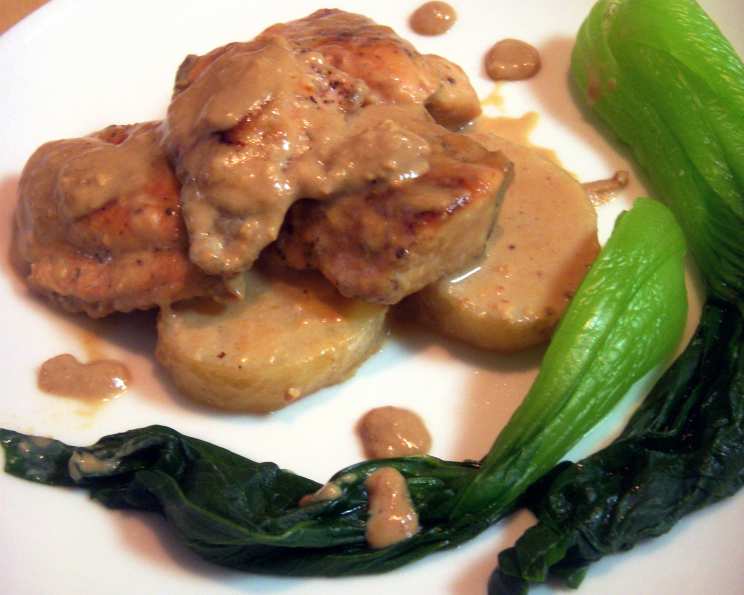
Rich, but Oh-So-Healthy, Salmon With Miso Cream
There are some dishes that simply hum with comfort, the kind that whisper tales of busy weeknights transformed into moments of culinary delight. For me, this Salmon with Miso Cream is one of those dishes. I first encountered a similar preparation years ago in a tiny, unassuming restaurant tucked away in a Kyoto alleyway. The salmon, pan-seared to flaky perfection, was bathed in a silken sauce that was both deeply savory and surprisingly light. It was a revelation, proving that rich flavor and healthy eating were not mutually exclusive. The memory of that umami-rich, melt-in-your-mouth fish, paired with the delicate, almost ethereal miso cream, still makes my mouth water and inspires me to recreate that magic in my own kitchen.
Recipe Overview
- Prep Time: 10 minutes
- Cook Time: 10 minutes
- Total Time: 20 minutes
- Servings: 2
- Yield: 2 portions
- Dietary Type: Gluten-Free (if using gluten-free soy sauce)
Ingredients
- 250 g salmon fillet, skin on or off as you prefer
- Salt, to taste
- Freshly ground black pepper, to taste
- 1 ½ tablespoons all-purpose flour (for dusting)
- 1 ½ tablespoons white wine
- 2 teaspoons white miso paste (or red miso for a more robust flavor)
- 100 ml unsweetened soy milk (ensure it’s plain, not vanilla flavored)
- Vegetables of your choice, for serving (e.g., steamed asparagus, blanched broccoli, wilted spinach)
Equipment Needed
- Non-stick frying pan
- Small bowl
- Whisk
- Spatula or fish slice
- Plate or platter
Instructions
- Begin by preparing your salmon. If your fillet still has skin, you can remove it at this stage if you prefer a softer texture, or leave it on for a delightful crispiness during cooking. Cut the salmon into approximately 1 ½ inch square pieces. This ensures even cooking and makes for elegant presentation.
- Lightly season the salmon pieces with salt and pepper. Be mindful of the salt, as the miso paste can be quite savory.
- Place the flour in a shallow dish or on a plate. Gently coat each piece of salmon in the flour, ensuring a light dusting. Shake off any excess flour. This light coating will help create a beautiful golden crust when searing and will also subtly thicken the sauce later.
- Heat a tablespoon or two of your preferred cooking oil (such as olive oil, grapeseed oil, or a light vegetable oil) in a non-stick frying pan over medium-high heat.
- Carefully place the floured salmon pieces into the hot pan, skin-side down if you’ve left the skin on. Sear the salmon for about 2-3 minutes until it is golden brown and has a nice crust. Then, flip the pieces and sear the other side for another 1-2 minutes until also golden.
- Once both sides are beautifully seared, add the white wine to the pan. It will sizzle and deglaze the pan, picking up all those delicious browned bits. Cover the pan with a lid and cook for an additional 2-4 minutes, depending on the thickness of your salmon, until the salmon is cooked through and flakes easily with a fork. Avoid overcooking at this stage, as it will continue to cook slightly in the sauce.
- Using a spatula or fish slice, remove the cooked salmon from the pan and set it aside on a clean plate or platter. Keep it warm while you prepare the sauce.
- In a small bowl, combine the miso paste and the unsweetened soy milk. If you are using a particularly firm miso paste, you might want to warm the soy milk slightly to help it dissolve more easily. Blend these two ingredients thoroughly until you have a smooth, uniform mixture. It’s important to get rid of any lumps of miso paste.
- Return the frying pan (with any remaining cooking liquid from the salmon) to the stove over medium heat.
- Pour the soy milk and miso mixture into the pan. Heat gently, stirring continuously with a whisk or spatula. The sauce will begin to thicken as it heats. This should take about 2-3 minutes. Take care not to make it too salty! Taste the sauce as it thickens. If it seems too strong or salty, you can adjust it by stirring in a little more soy milk until you reach your desired flavor and consistency. The sauce should be creamy and coat the back of a spoon.
- Arrange your prepared vegetables on serving plates.
- Gently place the salmon pieces on top of or alongside the vegetables.
- Pour the warm miso cream sauce generously over the salmon and vegetables.
- Serve immediately and enjoy the symphony of flavors.
Expert Tips & Tricks
- Miso Matters: The type of miso paste you use will subtly alter the flavor profile. White (shiro) miso is milder and sweeter, perfect for a delicate sauce. Red (aka) miso is more robust and fermented, lending a deeper, umami richness. Experiment with both to find your favorite!
- Don’t Crowd the Pan: When searing the salmon, ensure you don’t overcrowd your frying pan. This will cause the salmon to steam rather than sear, and you won’t achieve that beautiful golden crust. Cook in batches if necessary.
- Sauce Consistency: The sauce will thicken further as it cools. If you find it too thick when you’re ready to serve, a splash more soy milk will loosen it up. Conversely, if it’s too thin, continue to gently simmer it for another minute or two, stirring constantly.
- Reheating Caution: If you happen to have leftovers and need to reheat the salmon and vegetables in the sauce, be extremely cautious. The sauce can quickly thicken and become overly salty on reheating. A gentle warming over low heat, with a little extra soy milk added if needed, is your best bet.
Serving & Storage Suggestions
This Salmon with Miso Cream is best served immediately to appreciate the textural contrast between the flaky salmon, crisp vegetables, and luscious sauce. It pairs beautifully with steamed rice, quinoa, or a light salad.
For storage, allow the dish to cool completely. Store any leftovers in an airtight container in the refrigerator for up to 2 days. As mentioned in the tips, reheating requires care. Gently warm the portion you intend to eat over low heat in a non-stick pan, adding a touch more soy milk to loosen the sauce if needed. Avoid microwaving if possible, as it can sometimes toughen the salmon and make the sauce gummy.
Nutritional Information
| Nutrient | Amount per Serving | % Daily Value |
|---|---|---|
| Calories | 280 kcal | 14% |
| Total Fat | 14 g | 18% |
| Saturated Fat | 3 g | 15% |
| Cholesterol | 75 mg | 25% |
| Sodium | 450 mg | 19% |
| Total Carbohydrate | 7 g | 3% |
| Dietary Fiber | 1 g | 4% |
| Sugars | 2 g | 2% |
| Protein | 30 g | 60% |
| Vitamin D | 15 mcg | 75% |
| Iron | 1 mg | 6% |
| Potassium | 400 mg | 9% |
Nutritional information is an estimate and can vary based on ingredients used and portion sizes.
Variations & Substitutions
- Gluten-Free: Ensure your miso paste is gluten-free and use a gluten-free soy sauce or tamari for a completely gluten-free dish.
- Dairy-Free: While this recipe already uses soy milk, if you have a soy allergy, unsweetened oat milk or almond milk can also be used, though the flavor profile might shift slightly.
- Other Fish: While salmon is ideal, this miso cream sauce would also be delicious with other flaky white fish like cod, haddock, or even pan-seared scallops.
- Miso Depth: For a more intense miso flavor, consider using a blend of white and red miso paste.
FAQs
Q: Can I use red miso paste instead of white miso paste?
A: Absolutely! Red miso paste will give the sauce a deeper, more robust, and slightly saltier flavor. If using red miso, you may want to reduce the initial salt seasoning on the salmon.
Q: How do I prevent the miso sauce from becoming too salty?
A: The key is to taste and adjust as you cook. Start with the recommended amount of miso, and if the sauce tastes too strong, dilute it with more soy milk. It’s easier to add more saltiness than to take it away.
Q: What kind of vegetables are best to serve with this dish?
A: Lightly steamed or blanched vegetables are ideal. Asparagus, broccoli florets, green beans, spinach, or even sugar snap peas work wonderfully, providing a fresh counterpoint to the rich salmon and sauce.
Q: Can I make the miso cream sauce ahead of time?
A: You can prepare the miso and soy milk mixture ahead of time and store it in the refrigerator. However, it’s best to cook the sauce just before serving to achieve the perfect consistency and prevent it from becoming too thick or salty.
Q: Is it essential to dust the salmon with flour?
A: While not strictly essential, dusting the salmon with a light coating of flour helps to create a beautiful golden crust when searing and also aids in thickening the sauce slightly, giving it a more luxurious texture.
Final Thoughts
This Salmon with Miso Cream is a testament to how simple ingredients, prepared with a little care, can create a dish that is both incredibly satisfying and remarkably good for you. It’s a recipe that I return to time and time again, not just for its delightful taste and health benefits, but for the joy it brings to the table. I encourage you to give it a try, experiment with your favorite vegetables, and savor the sophisticated yet comforting flavors. It’s the perfect dish to impress guests or simply to treat yourself to a wonderfully nourishing meal. Happy cooking!