
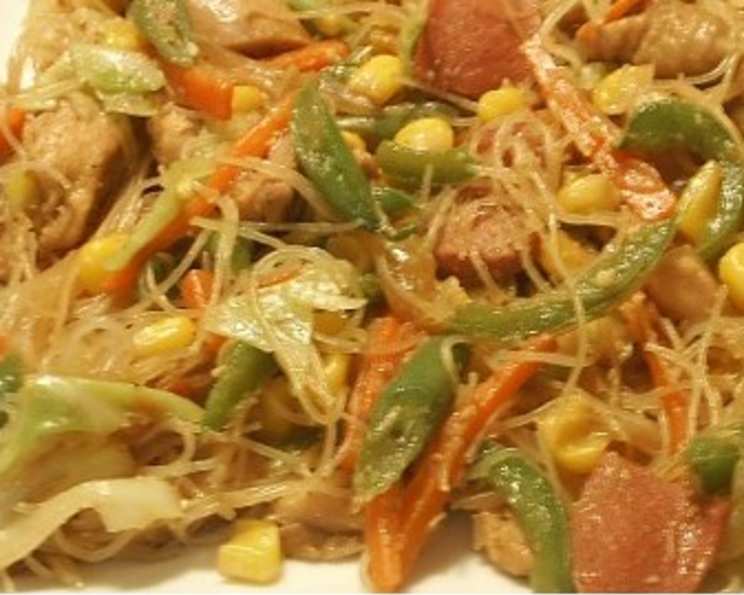
Bihon Guisado: A Symphony of Flavors on Rice Noodles
The aroma of bihon guisado simmering on the stove is an instant portal back to my childhood. It’s a dish that always meant gathering – a quick, flavorful meal brought together with whatever vegetables and proteins were on hand, served with generous portions during family celebrations and casual get-togethers. The magic lies in its adaptability and the way those delicate rice noodles absorb all the savory goodness. Seeing a plate of this disappear without a single leftover was always the highest compliment, a testament to its comforting and universally loved appeal.
Recipe Overview
- Prep Time: 25 minutes
- Cook Time: 25 minutes
- Total Time: 50 minutes
- Servings: 4-6
- Yield: Generous portion for 4-6 people
- Dietary Type: Adaptable (can be made vegetarian/vegan with substitutions)
Ingredients
This dish thrives on a medley of fresh ingredients, each playing its part in the final, harmonious flavor profile.
- 200 grams rice noodles, string variety (Bihon)
- 5 cups water (or more, as needed)
- 1 teaspoon salt
- 1 tablespoon oil (for boiling noodles)
- 1 chicken breast, cut into strips
- 2 chicken hot dogs, sliced diagonally and thinly
- 1 medium carrot, julienned
- 1/4 head cabbage, shredded
- 2/3 cup frozen corn kernels
- 15 pieces baguio beans (green beans), sliced thinly
- 1 green capsicum (bell pepper), cut into strips
- 1 medium onion, sliced thinly
- 2 garlic cloves, crushed
- 1/3 cup chicken broth
- 1/4 cup soy sauce
- 1 teaspoon sugar
- 1/2 teaspoon pepper
- 2 eggs, beaten
- 1 teaspoon sesame seed oil
- 2 tablespoons cooking oil (for stir-frying)
Equipment Needed
- Large pot or wok
- Skillet
- Measuring cups and spoons
- Knife and cutting board
- Colander
Instructions
The process of making bihon guisado is a dance of quick stir-frying and careful seasoning, transforming simple ingredients into a flavorful feast.
- Begin by preparing the rice noodles. In a large pot, combine 5 cups of water, 1 teaspoon of salt, and 1 tablespoon of oil. Bring this mixture to a rolling boil over medium-high heat. Once boiling, add the rice noodles. Cook them for precisely 2 minutes, just until they are pliable but still have a slight bite – they will continue to cook in the wok. Drain the noodles immediately in a colander and set them aside.
- Now, let’s get those delicious add-ins ready. Heat 2 tablespoons of cooking oil in a wok or a large, deep skillet over medium-high heat. Add the thinly sliced chicken hot dogs and stir-fry them for about 1 minute, until they are lightly browned and have rendered some of their flavor. Remove the hot dogs from the wok and set them aside.
- In the same wok, with the remaining oil, add the crushed garlic cloves. Sauté the garlic until it is lightly fragrant and just beginning to turn golden brown. Be careful not to burn it.
- Next, add the thinly sliced onion to the wok. Stir-fry the onions until they become tender and translucent. This usually takes about 2-3 minutes.
- Introduce the chicken breast strips to the wok. Stir-fry the chicken until it is cooked through and no longer pink.
- Add the prepared vegetables to the wok: the julienned carrot, shredded cabbage, frozen corn kernels, sliced baguio beans, and green capsicum strips. Pour in the chicken broth. Stir everything together well and cook until the vegetables are tender-crisp, meaning they retain a slight bite. This step typically takes about 5-7 minutes, depending on how finely you’ve cut your vegetables.
- Season the mixture generously with soy sauce, 1 teaspoon of sugar, and 1/2 teaspoon of pepper. Stir thoroughly to ensure the seasonings are evenly distributed throughout the vegetables and chicken.
- Once the chicken and vegetables are cooked and the sauce is well-seasoned, gently stir in the drained rice noodles. Mix everything together carefully, ensuring the noodles are coated with the flavorful sauce and are evenly distributed with the other ingredients.
- Make a well in the center of the wok by pushing the noodles and vegetables to the sides. Pour the beaten eggs into this well. Allow the eggs to set slightly for about 30 seconds, then gently scramble them with your spatula. As the eggs cook, gradually mix them into the rest of the ingredients until they are fully incorporated and cooked through.
- Turn off the heat. Finally, stir in the 1 teaspoon of sesame seed oil. This adds a wonderful, nutty aroma and depth of flavor that elevates the dish. Toss gently one last time to distribute the sesame oil.
Expert Tips & Tricks
- Noodle Prep is Key: Don’t overcook the noodles when boiling them. They should be just pliable. They will absorb moisture and continue to soften as they cook in the wok, and overcooked noodles can become mushy.
- High Heat, Quick Stir-Frying: For the best texture of your vegetables, use a high heat and stir-fry quickly. This helps them retain their vibrant color and a pleasant crunch.
- Seasoning is a Process: Taste and adjust seasoning as you go. The soy sauce can vary in saltiness, so it’s good to check and add more if needed. A touch of sugar balances the saltiness and enhances other flavors.
- Vegetable Variety: Feel free to customize your vegetables based on what you have on hand. Mushrooms, snow peas, or even broccoli florets can be wonderful additions. Just ensure they are cut to a similar size for even cooking.
- Make it Ahead (Partially): You can chop all your vegetables and proteins ahead of time. Even boiling and draining the noodles can be done a bit in advance, though it’s best to assemble and cook the dish just before serving for optimal texture.
Serving & Storage Suggestions
Serve your bihon guisado piping hot, straight from the wok. It’s a complete meal on its own, but can be beautifully complemented by a side of fresh calamansi or a light vinaigrette salad. For an extra touch of freshness, a sprinkle of chopped scallions or toasted sesame seeds makes a lovely garnish.
Leftovers can be stored in an airtight container in the refrigerator for up to 2-3 days. To reheat, it’s best to do so gently in a skillet over low heat with a splash of water or chicken broth to prevent the noodles from drying out. You can also microwave it, but be mindful of stirring halfway through to ensure even heating.
Nutritional Information
Here is an estimated nutritional breakdown per serving, assuming 6 servings:
| Nutrient | Amount per Serving | % Daily Value |
|---|---|---|
| Calories | 539.5 kcal | |
| Calories from Fat | ||
| Total Fat | 24.6 g | 37% |
| Saturated Fat | 6 g | 30% |
| Cholesterol | 140.9 mg | 46% |
| Sodium | 2085.6 mg | 86% |
| Total Carbohydrate | 60.4 g | 20% |
| Dietary Fiber | 4.2 g | 16% |
| Sugars | 7 g | 28% |
| Protein | 19.7 g | 39% |
(Note: Nutritional values are estimates and can vary based on specific ingredients and portion sizes used.)
Variations & Substitutions
This dish is incredibly versatile. For a vegetarian or vegan version, simply omit the chicken and hot dogs. Replace the chicken broth with vegetable broth and ensure your soy sauce is vegan. You can add firm tofu, tempeh, or a variety of other vegetables like broccoli florets, mushrooms, or snap peas. For those avoiding gluten, ensure you use a gluten-free soy sauce and that your rice noodles are certified gluten-free, as some rice noodle brands may contain wheat.
FAQs
Q: Why do my rice noodles get mushy when I cook them?
A: Rice noodles are delicate. They cook very quickly, and overcooking them even by a minute or two can lead to a mushy texture. It’s best to undercook them slightly in the boiling water, as they will continue to soften in the wok.
Q: Can I use other types of noodles for this recipe?
A: While this recipe is specifically designed for Bihon (thin rice noodles), you can experiment with other types of stir-fry friendly noodles. However, cooking times and water absorption will vary, so adjust accordingly.
Q: How can I make this dish spicier?
A: For a spicy kick, you can add a pinch of red pepper flakes along with the garlic and onions, or incorporate some thinly sliced fresh chilies during the vegetable stir-frying stage. A drizzle of sriracha or chili garlic sauce at the end is also an option.
Q: What is the purpose of the sesame seed oil at the end?
A: Sesame seed oil is a finishing oil. Adding it off the heat preserves its delicate aroma and flavor, which would be diminished by prolonged cooking. It provides a wonderful nutty fragrance that is characteristic of many Asian dishes.
Q: Can I add shrimp or other seafood to this dish?
A: Absolutely! Shrimp or other types of seafood can be a delicious addition. Add them to the wok after sautéing the chicken (if using) and cook until just pink and opaque. Be careful not to overcook them.
Final Thoughts
Bihon Guisado is more than just a recipe; it’s a comforting embrace, a taste of home for many, and a testament to how simple ingredients can be transformed into something truly spectacular. I encourage you to gather your loved ones, embrace the aromas filling your kitchen, and create your own delicious memories with this classic Filipino dish. Don’t hesitate to experiment with the vegetable combinations – it’s a dish that truly shines when personalized. Enjoy every flavorful strand!