
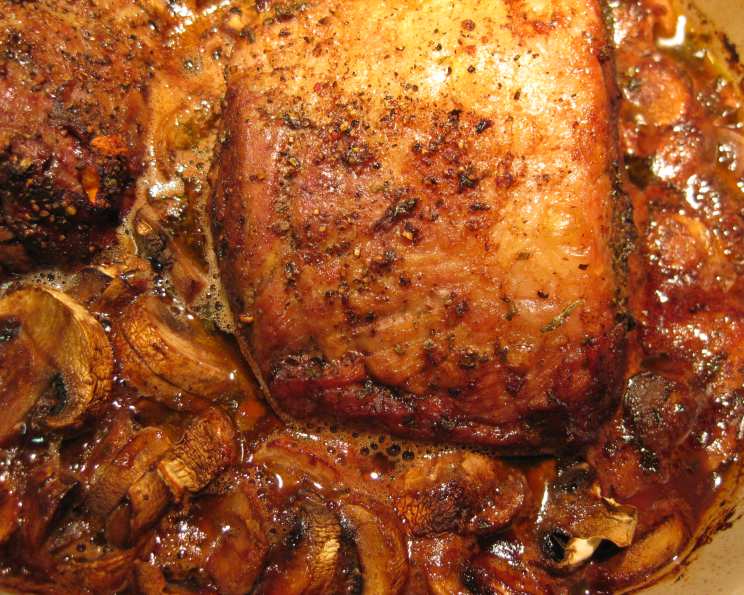
The Heartwarming Embrace of Red Wine Pork
There are certain dishes that, with just one sniff or a single forkful, transport you back in time, wrapping you in a warm embrace of cherished memories. For me, this Red Wine Pork is precisely that dish. It hails from my step-grandmother, a woman whose kitchen was a sanctuary of comforting aromas and love poured into every pot. I remember as a child, the anticipation building as the deep, rich scent of simmering red wine and tender pork wafted from her oven, promising a meal that was both rustic and elegant. The meat, she’d often say, would emerge impossibly tender, bathed in a gravy so flavorful it made even the simplest side dish sing. This recipe isn’t just about ingredients and steps; it’s about a feeling, a legacy of culinary kindness that continues to nourish me, body and soul.
Recipe Overview
- Prep Time: 15 minutes
- Cook Time: 1 hour 30 minutes
- Total Time: 1 hour 45 minutes
- Servings: 8
- Yield: Pork roast
- Dietary Type: Not Specified
Ingredients
Gather these provisions to create your own version of this soul-warming classic:
- 3 lbs pork roast
- 3 tablespoons bacon drippings
- 2 garlic cloves, minced
- 2 carrots, diced fine
- 1 tablespoon parsley, chopped
- 1 bay leaf
- 1 teaspoon salt
- 1 1/2 tablespoons tomato paste
- 1/8 teaspoon pepper
- 1 1/2 tablespoons sugar
- 1 1/2 cups red wine
- 1/4 cup butter
- 16 ounces fresh mushrooms, sliced
Equipment Needed
A few key tools will help you bring this dish to life:
- A heavy-bottomed skillet or Dutch oven for browning the pork.
- A narrow casserole dish, preferably oven-safe, to bake the roast.
- Measuring cups and spoons.
- A sharp knife for dicing vegetables.
Instructions
Embark on this culinary journey with these clear, step-by-step instructions:
- Begin by browning the pork roast on all sides in the bacon drippings in a skillet over medium-high heat. This crucial step builds a beautiful crust and locks in moisture.
- Once the pork roast is well-browned, place it in your narrow casserole dish.
- In the same skillet where you browned the pork, add the remaining ingredients, except for the mushrooms. This includes the minced garlic cloves, diced carrots, chopped parsley, bay leaf, salt, tomato paste, pepper, sugar, and red wine.
- Heat this mixture gently, stirring to incorporate all the flavors.
- Pour this fragrant liquid mixture over the pork roast in the casserole dish.
- Cover the casserole dish and bake in a preheated oven at 325°F (160°C) for 1 1/2 hours.
- During the last half hour of baking, add the sliced fresh mushrooms directly to the casserole dish with the pork and liquid. This allows the mushrooms to absorb the delicious flavors without becoming overcooked.
- Continue baking until the pork roast is exceptionally tender and the gravy has thickened beautifully.
Expert Tips & Tricks
To elevate your Red Wine Pork from delicious to divine, consider these chef-level insights:
- Choosing the Right Cut: While this recipe calls for a general “pork roast,” opt for cuts like a boneless pork shoulder or pork loin for optimal tenderness. The fat marbling in these cuts will render beautifully during the slow cooking process, contributing to the rich flavor and moist texture.
- Deglazing Done Right: Don’t rush the initial browning. Allow the pork to develop a deep, caramelized crust. This not only adds flavor to the pork itself but also creates the fond (those browned bits stuck to the bottom of the pan) that will form the base of your glorious gravy. After removing the pork, be sure to scrape up all that deliciousness when you add the other gravy ingredients.
- Wine Wisdom: The type of red wine you choose will significantly impact the final flavor. A dry, medium-bodied red like a Merlot, Cabernet Sauvignon, or a Côtes du Rhône works wonderfully. Avoid anything too sweet or too tannic, as this can overpower the delicate flavors of the pork.
- Mushroom Magic: Slicing the mushrooms allows them to release their moisture and absorb the flavorful braising liquid. For an extra depth of flavor, you can briefly sauté the mushrooms in a little butter before adding them to the casserole, though the current method ensures they cook in the rich red wine sauce.
- The Power of Patience: This dish truly benefits from slow and low cooking. The extended baking time at 325°F allows the connective tissues in the pork to break down, resulting in that incredibly tender texture. Resist the urge to crank up the heat to speed things along.
- Gravy Enrichment: If, after removing the pork, you find the gravy isn’t as thick as you’d like, you can create a slurry with a tablespoon of cornstarch or flour mixed with a couple of tablespoons of cold water. Whisk this into the simmering gravy and cook for a minute or two until thickened. However, the original recipe’s ingredients and cooking time should naturally yield a luscious sauce.
Serving & Storage Suggestions
This Red Wine Pork is a showstopper on its own, but it truly shines when paired with complementary accompaniments. Serve generous slices of the tender pork, spooning ample amounts of the rich red wine gravy over the top. Creamy mashed potatoes are an absolute classic for soaking up every last drop of that delicious sauce. Alternatively, consider serving it with buttered noodles, polenta, or crusty bread for dipping. A side of steamed green beans or roasted asparagus provides a fresh, vibrant contrast to the richness of the dish.
When it comes to storage, allow the Red Wine Pork to cool completely before refrigerating. Store it in an airtight container in the refrigerator for up to 3-4 days. The flavors often meld and deepen overnight, making leftovers a treat. To reheat, gently warm the pork and gravy in a saucepan over low heat, or in a covered dish in a 300°F (150°C) oven, until heated through. If freezing, ensure it’s well-wrapped in freezer-safe containers for up to 2-3 months. Thaw in the refrigerator overnight before reheating.
Nutritional Information
Here’s an estimated breakdown of the nutritional content for this delectable dish. Please note that these values are approximate and can vary based on the specific ingredients and cuts used.
| Nutrient | Amount per Serving | % Daily Value |
|---|---|---|
| Calories | 402.4 kcal | N/A |
| Calories from Fat | N/A | 174 g |
| Total Fat | 19.4 g | 43 % |
| Saturated Fat | 8.5 g | 42 % |
| Cholesterol | 127 mg | 42 % |
| Sodium | 490.6 mg | 20 % |
| Total Carbohydrate | 7.8 g | 2 % |
| Dietary Fiber | 1.2 g | 4 % |
| Sugars | 4.7 g | 18 % |
| Protein | 39.8 g | 79 % |
Variations & Substitutions
While this recipe is perfect as is, there’s always room for a touch of culinary creativity:
- Herbacious Boost: For a more pronounced herbal note, consider adding a sprig of fresh rosemary or thyme along with the bay leaf during the braising process. Remove before serving.
- A Touch of Tang: A splash of balsamic vinegar added to the braising liquid can introduce a subtle tang and further deepen the complexity of the sauce.
- Vegetable Medley: Feel free to add other hardy root vegetables like parsnips or celery root, diced to a similar size as the carrots, for added flavor and texture.
- Wine Alternatives: If you prefer not to use wine, a rich beef or vegetable broth can be used as a base for the braising liquid, though the depth of flavor will be different. You might consider adding a tablespoon of Worcestershire sauce to the broth to help build back some of that umami.
FAQs
Q: Can I make this dish ahead of time?
A: Absolutely! This dish is an excellent candidate for making ahead. The flavors meld beautifully when the dish sits overnight. Reheat gently on the stovetop or in a low oven.
Q: What if my pork roast is a leaner cut?
A: Leaner cuts might benefit from a slightly shorter cooking time or the addition of a bit more liquid to prevent them from drying out. You can also add a tablespoon of olive oil along with the bacon drippings for extra fat.
Q: How do I know when the pork is done?
A: The pork is ready when it is fork-tender. You should be able to easily pierce it with a fork, and it should yield with little resistance.
Q: Can I use dried mushrooms instead of fresh?
A: Yes, you can rehydrate dried mushrooms (like shiitake or porcini) in hot water, then strain them (reserving the liquid for the sauce) and add them to the casserole during the last half hour.
Q: What kind of casserole dish is best?
A: A narrow, oven-safe casserole dish that allows the pork to sit in the liquid is ideal. A Dutch oven or a deep baking dish would also work well.
This Red Wine Pork is more than just a recipe; it’s an invitation to slow down, to savor the process, and to share something truly special with loved ones. It’s a testament to the fact that some of the most profound culinary joys come from simple ingredients, prepared with care and time. I encourage you to try it, to let its comforting aromas fill your kitchen, and to create your own cherished memories around the table. Serve it with pride, and perhaps a robust glass of the same red wine you used in the cooking, and enjoy the delicious embrace of this timeless classic.