
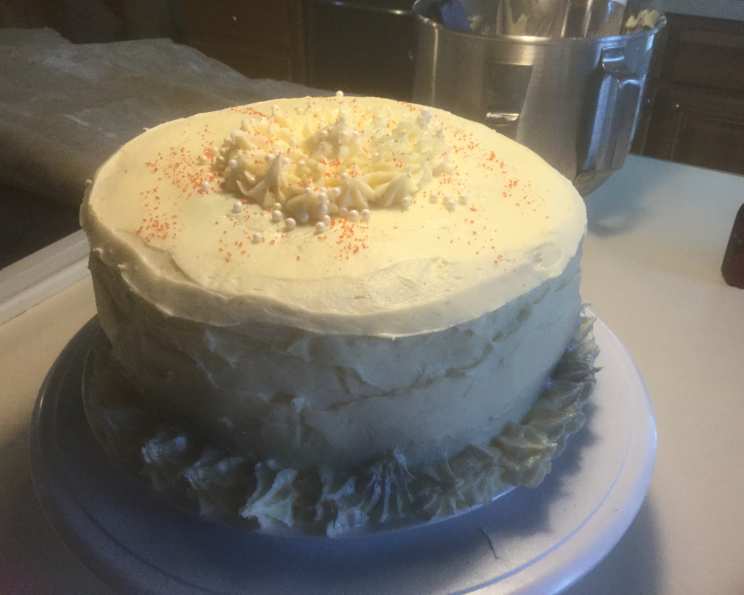
Red Velvet Cheesecake: A Decadent Symphony of Two Beloved Desserts
There are certain dessert combinations that just make sense – peanut butter and chocolate, apple and cinnamon, and for me, the ultimate duo has always been the rich, tangy embrace of cheesecake and the vibrant, cocoa-kissed allure of red velvet cake. I remember the first time I encountered a red velvet cheesecake, it was at a friend’s elaborate birthday party, and I confess, I might have had a slightly unhealthy obsession with that particular slice. The way the deep crimson cake contrasted with the pale, creamy cheesecake layer was visually stunning, but the taste? Oh, the taste was pure magic. It was a dance of textures and flavors – the slightly dense, moist crumb of the red velvet meeting the impossibly smooth, cool cheesecake. From that moment on, I was hooked, eager to recreate that moment of pure dessert bliss in my own kitchen.
Recipe Overview
- Prep Time: 30 minutes
- Cook Time: 45 minutes + 25-30 minutes
- Total Time: 3 hours 30 minutes (including freezing)
- Servings: 12
- Yield: 1 cake
- Dietary Type: Dessert
Ingredients
For the Cheesecake Layer:
- 32 ounces cream cheese, room temperature
- 2 1⁄4 cups sugar
- 1⁄2 tablespoon fresh lemon juice
- 1 1⁄4 teaspoons coarse salt
- 4 large eggs
- 1⁄2 cup sour cream, room temperature
For the Red Velvet Cake Layers:
- 2 1⁄2 cups cake flour
- 1 1⁄2 teaspoons baking soda
- 2 tablespoons cocoa powder
- 1 1⁄2 cups vegetable oil (melted coconut oil is a wonderful substitute here)
- 1 cup buttermilk
- 3 tablespoons red food coloring
- 3 1⁄2 teaspoons vanilla extract
- 1 1⁄2 teaspoons white distilled vinegar
For the Cream Cheese Frosting:
- 12 ounces butter, softened
- 3 cups confectioners’ sugar, sifted
Equipment Needed
To bring this delightful creation to life, you’ll want to have the following tools at your disposal:
- 9-inch springform pan
- Electric mixer (stand or hand mixer)
- Mixing bowls (various sizes)
- Whisk
- Spatula
- Measuring cups and spoons
- Parchment paper
- Foil
- Kettle for boiling water
- Cooling rack
- Serrated knife (optional, for leveling cakes)
- Cake stand or serving plate
Instructions
This recipe is a beautiful layering of techniques, each designed to contribute to the final masterpiece. Don’t be daunted by the number of steps; each one is straightforward and builds towards that incredible final bite.
Preparing the Cheesecake Base
- Begin by preheating your oven to 325 degrees Fahrenheit. Set a kettle of water on to boil for the water bath.
- In a large bowl, using an electric mixer, beat 20 ounces of the cream cheese on medium speed until it’s wonderfully fluffy. Remember to scrape down the sides of the bowl periodically to ensure everything is incorporated evenly.
- Gradually add 3⁄4 cup of the sugar, continuing to beat until the mixture is light and fluffy.
- Next, beat in the fresh lemon juice and 1⁄4 teaspoon of the coarse salt.
- Introduce the two of the large eggs, one at a time, ensuring each is fully incorporated before adding the next. Again, scrape down the bowl as needed.
- Finally, beat in the sour cream.
- Prepare your 9-inch springform pan by spraying it with non-stick spray. Cut a circle of parchment paper to perfectly line the bottom of the pan and spray the parchment paper as well. This will be crucial for easy removal later.
- Wrap the bottom half of the springform pan securely in foil. This is a key step to prevent any water from seeping into the delicate cheesecake during baking.
- Pour the prepared cheesecake batter into the cake pan.
- Place the foil-wrapped springform pan inside a larger, oven-safe baking pan. Carefully pour the boiling water into the outer pan, making sure it comes about halfway up the side of the springform pan. This water bath ensures gentle, even cooking for a smooth, crack-free cheesecake.
- Bake for approximately 45 minutes, or until the cheesecake is just set in the center. It should still have a slight wobble.
- Carefully remove the springform pan from the water bath. Let it cool in the pan for about 20 minutes.
- Once slightly cooled, run a knife around the edge of the cheesecake to loosen it from the pan before continuing to cool completely.
- To facilitate freezing, carefully place a plate on top of the cooled cheesecake layer and invert it onto the plate. Gently remove the parchment paper. Cover the cheesecake securely with plastic wrap and freeze it. This step is essential for creating a firm layer that can be easily handled and placed on the cake.
Crafting the Red Velvet Cake Layers
- Now, preheat your oven to 350 degrees Fahrenheit.
- In a medium bowl, sift together the cake flour, the remaining sugar, baking soda, cocoa powder, and the remaining 1 teaspoon of coarse salt. Sifting ensures a light and airy cake.
- In a large bowl, beat the remaining two large eggs, vegetable oil, buttermilk, red food coloring, 2 teaspoons of the vanilla extract, and the white distilled vinegar with an electric mixer until thoroughly combined. The vinegar reacts with the baking soda to provide lift.
- Add the sifted dry ingredients to the wet ingredients. Beat until smooth, which should take about 2 minutes. Be careful not to overmix.
- Divide the cake batter evenly between two greased and floured 9-inch round cake pans.
- Bake for 25 to 30 minutes, rotating the pans halfway through the baking time. You’ll know they’re done when a toothpick inserted into the center of each cake comes out clean.
- Allow the cakes to cool in their pans for 5 minutes.
- Carefully invert each cake onto a plate, then invert them again onto a wire cooling rack to cool completely.
- If your cake layers aren’t perfectly flat, you can gently level them off with a serrated knife to create a stable base for layering.
Whipping Up the Cream Cheese Frosting
- In a large bowl, beat 12 ounces of the softened cream cheese, the softened butter, and the remaining 1 1⁄2 teaspoons of vanilla extract together with an electric mixer until just combined.
- Add the sifted confectioners’ sugar and beat until the frosting is light and fluffy, which will take approximately 5–7 minutes.
Assembling Your Masterpiece
- Place the first red velvet cake layer on your cake stand or serving plate.
- Remove the cheesecake from the freezer, unwrap it, and carefully place the frozen cheesecake layer on top of the bottom red velvet cake layer.
- If the cheesecake is wider than the cake, allow it to soften for about 10 minutes before using a knife to trim any excess. This makes for a neater presentation.
- Place the top layer of red velvet cake on top of the cheesecake.
- Coat the entire cake generously with a layer of the cream cheese frosting. This initial coating can be a bit rustic, as it will set before the final frosting.
- Refrigerate the cake for approximately 30 minutes to allow the frosting to firm up.
- Once chilled, frost the cake with as much of the remaining cream cheese frosting as necessary, aiming for a smooth and elegant finish.
- Refrigerate the finished Red Velvet Cheesecake until you’re ready to serve.
Expert Tips & Tricks
- Room Temperature is Key: Ensuring your cream cheese and sour cream are at room temperature is vital for a smooth, lump-free cheesecake batter. Cold ingredients will make it difficult to achieve that velvety texture.
- Don’t Overmix the Cheesecake: Overbeating the cheesecake batter can incorporate too much air, which can lead to cracking during baking. Mix just until the ingredients are combined.
- The Water Bath is Your Friend: While it might seem like an extra step, the water bath is crucial for preventing cracks and ensuring even cooking for your cheesecake. Don’t skip it!
- Freezing for Precision: Freezing the cheesecake layer before assembling is a game-changer. It firms it up beautifully, making it easy to handle and layer without distorting the cake.
- Sift Your Dry Ingredients: For both the cake layers and the frosting, sifting your dry ingredients, especially the confectioners’ sugar, will result in a much smoother texture and prevent any little lumps from compromising your final product.
Serving & Storage Suggestions
This Red Velvet Cheesecake is a showstopper and is best served chilled. The contrast of the cool, creamy cheesecake with the moist red velvet cake is truly delightful. For a visually appealing presentation, consider a dusting of cocoa powder or a swirl of extra frosting on top.
Leftovers can be stored in an airtight container in the refrigerator for up to 3-4 days. If you find the cake has become a bit firm after refrigeration, allow it to sit at room temperature for about 15-20 minutes before serving for optimal texture. This cake also freezes beautifully if you’re looking to make it ahead of time. Ensure it’s well-wrapped in plastic wrap and then foil; it should last for up to 2 months in the freezer. Thaw overnight in the refrigerator before serving.
Nutritional Information
| Nutrient | Amount per Serving | % Daily Value |
|---|---|---|
| Calories | 1124.7 kcal | |
| Calories from Fat | 721 kcal | |
| Total Fat | 80.2 g | 123% |
| Saturated Fat | 34.5 g | 172% |
| Cholesterol | 212.1 mg | 70% |
| Sodium | 899.7 mg | 37% |
| Total Carbohydrate | 94.9 g | 31% |
| Dietary Fiber | 0.8 g | 3% |
| Sugars | 70.9 g | 283% |
| Protein | 10.2 g | 20% |
Nutritional values are estimates and can vary based on specific ingredients used.
Variations & Substitutions
While this recipe is a classic for a reason, feel free to experiment! If you’re looking for a gluten-free version, a good quality gluten-free cake flour blend can be used for the cake layers. For a dairy-free option, you could explore dairy-free cream cheese alternatives and a plant-based butter for the frosting, though the texture might vary. Some bakers also enjoy adding a hint of espresso powder to the red velvet cake batter to deepen the chocolate flavor.
FAQs
Q: Why is my cheesecake cracking?
A: Cracking is often caused by overbeating the batter, baking at too high a temperature, or cooling the cheesecake too quickly. Using a water bath and allowing the cheesecake to cool gradually can help prevent this.
Q: Can I make this recipe ahead of time?
A: Yes! The components can be made a day in advance. The cake layers can be baked and cooled, and the cheesecake can be baked and frozen. Assemble the day you plan to serve or the day before.
Q: How do I ensure the cheesecake is fully cooked?
A: The cheesecake is done when the edges are set and the center is still slightly jiggly. It will continue to set as it cools and chills.
Q: What’s the best way to get a smooth frosting finish?
A: Ensuring your butter and cream cheese are at the correct temperature, and sifting your confectioners’ sugar are key. Using an offset spatula and a little patience will help you achieve a smooth exterior.
Q: Can I use regular all-purpose flour instead of cake flour?
A: While you can, cake flour has a lower protein content, which results in a more tender and delicate crumb for the red velvet cake layers. If you must use all-purpose flour, you can remove 2 tablespoons of flour per cup and replace it with 2 tablespoons of cornstarch.
Final Thoughts
This Red Velvet Cheesecake is more than just a dessert; it’s an experience. It’s the culmination of two beloved classics, harmoniously blended into something truly special. It’s perfect for birthdays, holidays, or any occasion that calls for a little extra indulgence. Pour yourself a glass of milk or a rich coffee, slice into this decadent creation, and savor every delightful moment. I’m always eager to hear about your baking adventures, so please share your creations and any personal twists you’ve added!