
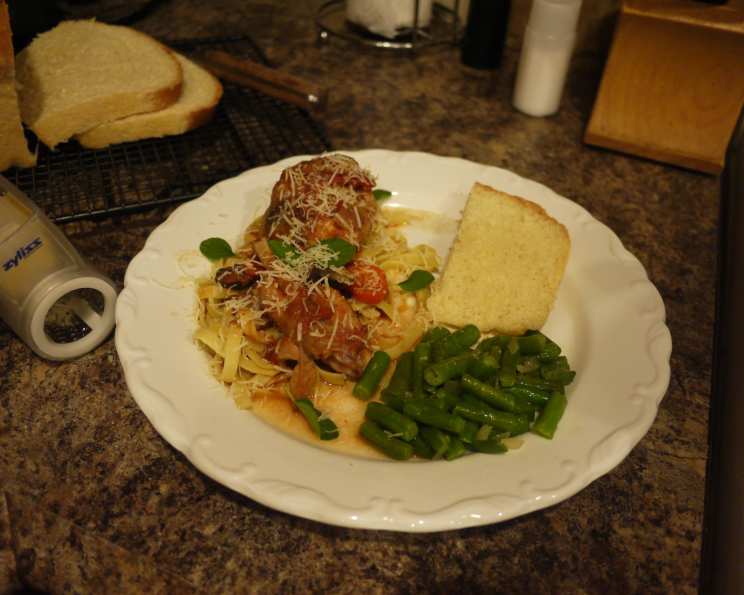
Rabbit Cacciatore: A Tuscan Treasure
There’s a certain rustic charm that emanates from a slow-simmered dish, a comforting aroma that fills the kitchen and whispers tales of generations past. Rabbit Cacciatore, or “hunter-style” rabbit, is one such dish that holds a special place in my culinary heart. I remember the first time I truly tasted a well-made Cacciatore, not as a child picking at a plate, but as an aspiring cook eager to understand the alchemy of humble ingredients. It was a crisp autumn evening, and the rich, earthy notes of the rabbit, mingling with the bright acidity of tomatoes and the fragrant herbs, were an revelation. It spoke of foraging, of simple but profound flavors, and the magic that happens when ingredients are given the time and respect they deserve.
Recipe Overview
- Prep Time: 30 minutes
- Cook Time: 45 minutes
- Total Time: 1 hour 15 minutes
- Servings: 4
- Yield: 4 servings
- Dietary Type: Dairy-Free (ensure wine is vegan-friendly if strict adherence is required)
Ingredients
To bring this classic hunter’s stew to life, you’ll need:
- 1 (3-4 lb) rabbit, cut up
- 6 tablespoons olive oil, divided
- 2 tablespoons butter
- 4 cloves garlic, minced
- 1 large onion, chopped
- 2 carrots, sliced
- 8-10 mushrooms, sliced
- 3 large tomatoes, chopped
- 1 (8 ounce) can tomato sauce
- 1/2 cup dry red wine
- 2 tablespoons minced fresh oregano
- 1 teaspoon sugar (optional, for balancing acidity)
- 1 cup water
- Pepper to taste
Equipment Needed
- Large skillet or Dutch oven with a lid
- Separate skillet for browning the rabbit
Instructions
Crafting Rabbit Cacciatore is a journey of building flavors, step by delicious step:
- Begin by heating 4 tablespoons of the olive oil in a large skillet or Dutch oven over medium heat. This initial infusion of oil will form the aromatic base of our dish.
- Add the minced garlic, chopped onion, and sliced carrots to the skillet. Sauté these aromatics for about 3 minutes, allowing them to soften and release their fragrant oils.
- Introduce the sliced mushrooms to the skillet. Saute them for approximately 2 minutes, just until they begin to soften and release some of their moisture.
- Stir in the chopped tomatoes. Cook for a further 1 minute, allowing them to break down slightly.
- Now, pour in the tomato sauce and dry red wine. Add the minced fresh oregano, the optional sugar (if using to temper the tomato’s acidity), and the water. Season with pepper to your preference. Stir everything together and heat through until the sauce is warm.
- In a separate skillet, melt the butter with the remaining 2 tablespoons of olive oil over medium-high heat. This dual fat approach ensures perfect browning.
- Carefully add the cut-up pieces of rabbit to the hot skillet. Brown the rabbit on all sides until it develops a lovely golden hue. This step is crucial for developing deep flavor and a pleasing texture.
- Once the rabbit is nicely browned, add the rabbit pieces to the simmering sauce mixture in the Dutch oven.
- Cover the Dutch oven tightly and simmer gently over low heat. Allow the rabbit to cook until tender, which typically takes about 35 minutes. Patience here is key to a succulent result.
- Finally, uncover the Dutch oven. Continue to simmer for an additional 5-10 minutes, or until the sauce has slightly thickened to your desired consistency. This reduction concentrates the flavors beautifully.
Expert Tips & Tricks
Rabbit Cacciatore is a forgiving dish, but a few chef’s touches can elevate it from good to truly memorable. When selecting your rabbit, opt for a young, tender fryer for the best results. If you can’t find fresh oregano, dried oregano is a fine substitute; use about 2 teaspoons of dried oregano for every tablespoon of fresh. Browning the rabbit in batches, if necessary, ensures each piece gets a proper sear rather than steaming in the pan. Don’t be afraid to let the sauce reduce a little longer if you prefer a thicker consistency; just keep an eye on it to prevent it from sticking.
Serving & Storage Suggestions
Rabbit Cacciatore is wonderfully versatile. Its rustic nature makes it a perfect companion for a hearty portion of pasta – think pappardelle or tagliatelle – to soak up every last drop of that delicious sauce. For those seeking an alternative, it’s also delightful served over creamy polenta, fluffy rice, or even enjoyed on its own as a rich stew. To serve, ladle generous portions into shallow bowls, ensuring each serving has plenty of tender rabbit and luscious sauce.
Leftovers of Rabbit Cacciatore can be stored in an airtight container in the refrigerator for up to 3 days. The flavors often deepen and meld beautifully overnight. To reheat, gently warm the dish on the stovetop over low heat, stirring occasionally, or microwave until heated through. If the sauce has thickened too much during storage, you can add a splash of water or broth to loosen it up.
Nutritional Information
| Nutrient | Amount per Serving | % Daily Value |
|---|---|---|
| Calories | 797.1 kcal | N/A |
| Calories from Fat | N/A | 51% |
| Total Fat | 45.5 g | 70% |
| Saturated Fat | 12.2 g | 61% |
| Cholesterol | 209.2 mg | 69% |
| Sodium | 524.8 mg | 21% |
| Total Carbohydrate | 18.1 g | 6% |
| Dietary Fiber | 4.6 g | 18% |
| Sugars | 10 g | 40% |
| Protein | 72.3 g | 144% |
(Note: Nutritional information is an estimate and can vary based on specific ingredients and preparation methods.)
Variations & Substitutions
While the classic Rabbit Cacciatore is a masterpiece in itself, feel free to explore its adventurous side. For a touch of Mediterranean flair, consider adding a handful of kalamata olives or capers in the last 10 minutes of simmering. A splash of balsamic vinegar at the end can also add a lovely depth. Some Cacciatore recipes include bell peppers; feel free to add sliced red or green bell peppers along with the onions and carrots for an extra layer of flavor and color.
FAQs
Q: Can I use other types of game meat instead of rabbit?
A: Absolutely! This “hunter-style” preparation is perfect for other game birds like pheasant or chicken. Adjust cooking times as needed for the specific meat you choose.
Q: My sauce seems a bit thin. How can I thicken it?
A: If your sauce is too thin after the initial simmering, uncover and continue to cook over a slightly higher heat for the last 5-10 minutes to allow it to reduce and thicken naturally.
Q: Can I make Rabbit Cacciatore ahead of time?
A: Yes, Rabbit Cacciatore is an excellent make-ahead dish. The flavors tend to improve as it sits. Reheat gently on the stovetop or in the oven.
Q: Is it necessary to use red wine?
A: Red wine adds a wonderful depth and complexity to the sauce. However, if you prefer not to use alcohol, you can substitute with more water or low-sodium chicken broth, though the flavor profile will be slightly different.
Q: How do I know when the rabbit is tender?
A: The rabbit is tender when the meat easily pulls away from the bone with a fork. After the 35-minute simmer, test a piece. If it’s still a little firm, continue simmering and check again.
Final Thoughts
Rabbit Cacciatore is more than just a recipe; it’s an invitation to slow down, to savor the process, and to connect with the heart of rustic cooking. It’s a dish that embodies comfort, flavor, and the enduring appeal of a well-loved classic. I encourage you to gather your ingredients, embrace the aroma as it fills your kitchen, and enjoy the rich, satisfying reward of this Tuscan treasure. It pairs beautifully with a robust Chianti or a crisp Sangiovese, enhancing the earthy notes of the rabbit and the bright, herbaceous sauce. So, pour yourself a glass, gather your loved ones, and let this dish transport you to the rolling hills of Italy. Buon appetito!