
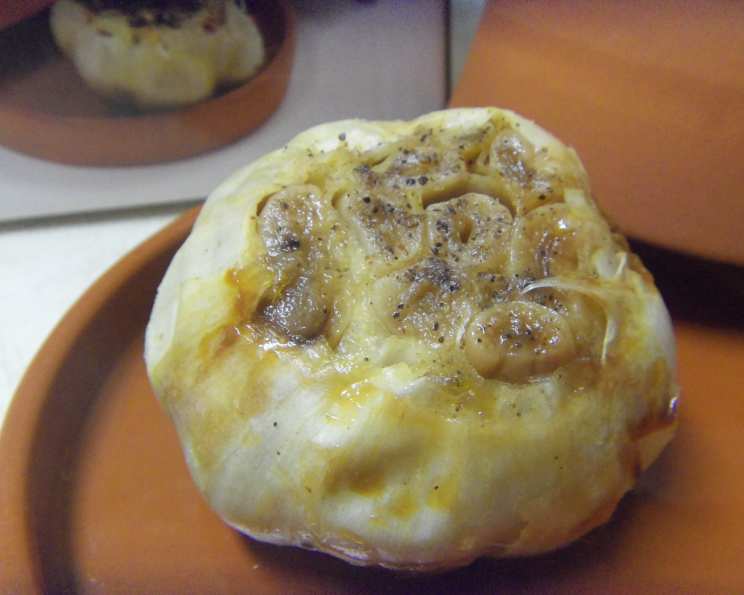
The Alchemical Transformation: Oven Roasted Garlic
There are certain aromas that, to me, are as evocative as a Proustian madeleine. The deep, sweet, almost caramelized scent that begins to waft from the oven when garlic is undergoing its magical transformation is one of them. I remember, as a young apprentice in a bustling restaurant kitchen, being tasked with preparing a mountain of garlic for roasting. The initial sharp, pungent bite of raw cloves quickly gave way to a profoundly comforting perfume as they nestled in their pans. It was a lesson not just in technique, but in patience and the remarkable power of heat to unlock hidden depths of flavor, turning something assertive into something utterly yielding and sublime.
Recipe Overview
- Prep Time: 15 minutes
- Cook Time: 30 minutes
- Total Time: 45 minutes
- Servings: 4-6
- Yield: 1 cup
- Dietary Type: Vegan, Gluten-Free, Dairy-Free
Ingredients
- 4 heads of garlic, with the stem end trimmed by 1/2 inch (exposing the cloves)
- 1 tablespoon olive oil
- 1/2 teaspoon kosher salt
- 1/4 teaspoon freshly cracked black pepper
- 1/4 cup plus 2 tablespoons chicken stock (or 1/4 cup water)
- French bread, for serving (optional)
- Chopped parsley, for garnish (optional)
Equipment Needed
- Oven
- Small sauté pan or baking dish (just large enough to hold the garlic comfortably)
- Paring knife
- Tongs or fork
Instructions
The journey to sublime roasted garlic is a straightforward one, a testament to the power of simple ingredients and a bit of heat. Begin by preheating your oven to a robust 500 degrees F (260 degrees C). This high heat is crucial for achieving that perfect balance of tender interior and lightly caramelized exterior.
Next, take your garlic heads. You want to prepare them by carefully trimming off the stem end by about 1/2 inch. This exposes the individual cloves within, allowing the heat and moisture to penetrate effectively. Be precise, but avoid cutting too deep and exposing the bottom of the cloves.
Now, it’s time to dress these soon-to-be-golden beauties. Gently rub each garlic head with the olive oil, ensuring a light coating covers the exposed surfaces. This oil will help conduct heat and encourage a beautiful browning.
Arrange the prepared garlic heads, cut-side up, in your chosen sauté pan or baking dish. The dish should be snug, holding the garlic close together to facilitate even cooking.
With your garlic heads nestled in place, it’s time for seasoning. Season the garlic generously with the kosher salt and freshly cracked black pepper. These simple additions will enhance the natural sweetness of the garlic.
The final liquid element is key to keeping the garlic moist and tender during its roast. Add the chicken stock (or water, if you prefer a vegetarian or vegan option) to the sauté pan. Pour it around the garlic heads, not directly on top, so it doesn’t wash away the seasonings.
Carefully place the sauté pan into the preheated oven. Allow the garlic to roast for approximately 30 minutes. The exact timing can vary depending on your oven and the size of your garlic heads. You are looking for the garlic to be golden brown on top, and more importantly, the cloves should be so tender that they can be easily pierced with the tip of a paring knife. A little gentle pressure will confirm their doneness.
Once the garlic has reached this state of tender perfection, remove the sauté pan from the oven. It’s tempting to dive in immediately, but allow the garlic to cool in the pan until it’s cool enough to handle. This resting period not only prevents burns but also allows the flavors to meld further.
When the garlic is comfortably cool, the final step is to liberate the luscious paste. Squeeze the roasted garlic out of its skins. You can do this by holding a head in one hand and gently pressing the root end with your thumb, or by using a fork to coax the soft cloves out into a bowl. The result will be a smooth, spreadable, intensely flavored garlic paste.
Serve your magnificent roasted garlic immediately with slices of French bread, perfect for spreading the creamy goodness. A sprinkle of chopped parsley adds a touch of freshness and visual appeal.
Expert Tips & Tricks
For an even richer flavor, consider using a good quality extra virgin olive oil. The subtle fruity notes of a high-quality oil will subtly perfume the garlic as it roasts. If you’re making a large batch, you can do this process in batches or use a larger oven-safe dish. Ensure the dish is not overcrowded to allow for proper air circulation and browning. Don’t be afraid to experiment with different herbs during the roasting process; a sprig of fresh thyme or rosemary laid amongst the garlic can impart lovely aromatic undertones. To check for doneness without poking, gently wiggle one of the outer cloves; it should feel very soft and almost mushy.
Serving & Storage Suggestions
Roasted garlic is incredibly versatile. The most classic way to serve it is, as mentioned, with crusty French bread for spreading. It’s also a magnificent addition to a cheese board, a fantastic base for salad dressings, or a flavorful component in dips and spreads. If you have any leftovers, store them in an airtight container in the refrigerator for up to 5 days. The flavor will intensify as it sits. To reheat, a brief warming in a low oven or a gentle microwave zap will bring it back to its creamy glory. You can also freeze roasted garlic paste in ice cube trays for easy portioning and later use in sauces or sautés.
Nutritional Information
| Nutrient | Amount per Serving | % Daily Value |
|---|---|---|
| Calories | 125 kcal | |
| Calories from Fat | 34 g | |
| Total Fat | 3.9 g | 5 % |
| Saturated Fat | 0.6 g | 2 % |
| Cholesterol | 0.5 mg | 0 % |
| Sodium | 249.8 mg | 10 % |
| Total Carbohydrate | 20.5 g | 6 % |
| Dietary Fiber | 1.3 g | 5 % |
| Sugars | 0.8 g | 3 % |
| Protein | 4.2 g | 8 % |
Note: Nutritional values are estimates and can vary based on specific ingredients and quantities used.
Variations & Substitutions
While classic roasted garlic is hard to beat, there are always opportunities for creative exploration. If you’re avoiding animal products, simply use water in place of chicken stock. For a slightly different aromatic profile, consider adding a clove or two of fresh shallot to the pan alongside the garlic; it will roast to a similar tender sweetness. A small sprig of fresh rosemary or thyme placed in the pan can also infuse a wonderful herbaceous note.
FAQs
Q: Can I roast garlic without trimming the stem end?
A: You can, but trimming the stem end allows for more even cooking and makes it easier to squeeze out the roasted cloves afterward.
Q: My garlic didn’t get very soft. What did I do wrong?
A: This could be due to the oven temperature not being high enough, or the roasting time being too short. Ensure your oven is accurately preheated to 500°F and roast until easily pierced with a knife.
Q: What is the best way to store roasted garlic?
A: Store cooled roasted garlic in an airtight container in the refrigerator for up to 5 days.
Q: Can I use garlic powder or granulated garlic instead?
A: No, roasted garlic relies on the transformation of fresh garlic cloves through slow roasting. Garlic powder and granulated garlic will not yield the same results.
Q: How much roasted garlic does this recipe yield?
A: This recipe yields approximately 1 cup of roasted garlic paste.
Final Thoughts
The humble garlic bulb, when subjected to the transformative power of heat, becomes a culinary jewel. Oven-roasted garlic is more than just an ingredient; it’s a testament to how simple techniques can unlock profound flavors. I encourage you to try this method, to embrace the patience it requires, and to savor the sweet, mellow, and utterly satisfying result. Whether you’re spreading it on toast, whisking it into a vinaigrette, or simply enjoying its pure essence, roasted garlic is a cornerstone of good cooking, and I hope it brings as much joy to your kitchen as it does to mine.