
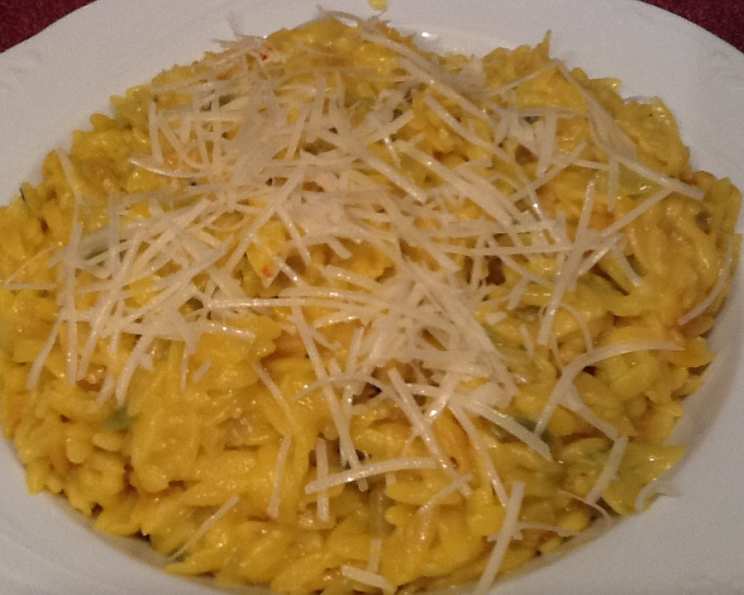
Orzo with Saffron and Romano Cheese: A Taste of Sunshine in Every Bite
There are some dishes that, from the very first spoonful, transport you. This orzo, imbued with the golden glow of saffron and the savory depth of Pecorino Romano, is one of those magical creations for me. I first encountered a version of this on a blustery November afternoon, and the sheer warmth and vibrancy it brought to the table felt like a culinary hug. The recipe, from Sunset Magazine, was good, but I remember thinking, “This needs more saffron!” So, I doubled it, and in that moment, a simple pasta dish bloomed into something truly extraordinary, a sun-drenched masterpiece that still evokes that feeling of pure comfort and joy.
Recipe Overview
- Prep Time: 20 minutes
- Cook Time: 25 minutes
- Total Time: 45 minutes
- Servings: 6
- Yield: Approximately 6 cups
- Dietary Type: Vegetarian
Ingredients
- 1/2 teaspoon crumbled saffron thread
- 1 tablespoon butter
- 1 tablespoon olive oil
- 1/3 cup shallot, finely minced
- 12 ounces dried orzo pasta
- 2 teaspoons fresh thyme leaves
- 2 teaspoons grated lemon peel
- 2 cups chicken stock
- 1/2 cup dry white wine (read NOTE below for non-alcoholic option)
- 2 tablespoons lemon juice
- 1/2 cup grated Pecorino Romano cheese (or 1/2 cup grated Parmesan cheese)
- Salt, to taste
- Fresh ground pepper, to taste
*NOTE: For a non-alcoholic version, substitute an additional 1/2 cup of chicken stock for the white wine.
Equipment Needed
- Small glass measuring cup
- Large sauté pan or Dutch oven
- Measuring spoons
- Measuring cups
- Grater
- Sharp knife
- Cutting board
Instructions
-
In a small glass measuring cup, combine the crumbled saffron thread with 1 cup of hot water. Allow this precious infusion to steep for at least 20 minutes. This step is crucial for coaxing out the saffron’s full color and aromatic essence, creating that signature golden hue and delicate floral notes.
-
Meanwhile, in a sauté pan or a Dutch oven, melt the butter with the olive oil over medium heat. Once the butter begins to foam, indicating it’s reached the perfect temperature, add the finely minced shallots. Sauté them gently, stirring occasionally, until they turn translucent and tender, which should take about 1 minute. Be mindful not to brown them, as this can impart a bitter flavor.
-
Next, introduce the dried orzo pasta to the pan. Add the fresh thyme leaves and the grated lemon peel. Stir everything together to coat the orzo with the shallot mixture. Continue to saute the orzo, stirring frequently, until it becomes a beautiful golden brown. This toasting process, which typically takes about 5 minutes, is key to developing a nutty depth of flavor in the pasta. If you notice the orzo browning too quickly, reduce the heat to prevent burning.
-
Now, it’s time to bring in the liquids. Pour in the chicken stock, the dry white wine (or its substitute), and the steeped saffron water. Give everything a good stir to combine. Increase the heat and bring the mixture to a rolling boil.
-
Once boiling, immediately reduce the heat to low, so that the liquid maintains a gentle simmer. Cover the pan tightly and allow the orzo to cook until the liquid is fully absorbed and the orzo is perfectly al dente. This usually takes about 20 minutes. Resist the urge to lift the lid too often, as this can release steam and prolong the cooking time.
-
Just before you are ready to serve this glorious dish, remove the pan from the heat. Stir in the fresh lemon juice, which will add a bright, zesty counterpoint to the richness. Then, incorporate the grated Pecorino Romano cheese (or Parmesan), allowing it to melt into the orzo, creating a creamy, emulsified sauce. Finally, season generously with salt and freshly ground pepper to your personal taste.
Expert Tips & Tricks
- Saffron Saturation: For an even more intense saffron flavor and color, you can gently warm the 1 cup of water before steeping the saffron threads. Don’t boil it, just warm it to encourage maximum pigment and aroma release.
- Toasting Technique: The toasting of the orzo is a critical step for flavor development. Watch it closely and stir constantly. You’re looking for an even, golden hue, not dark brown. If your pan heats unevenly, try moving the orzo around to ensure consistent toasting.
- Al Dente Perfection: “Al dente” means “to the tooth” in Italian. The orzo should have a slight bite to it, not be mushy. Taste a few grains towards the end of the cooking time to gauge doneness. If the liquid is absorbed but the orzo still needs a minute or two, you can add a tablespoon or two of hot water or stock.
- Cheese Choice: While Pecorino Romano offers a sharper, saltier bite that I adore with saffron, good quality Parmesan is an excellent substitute. For a truly vegetarian option, ensure your Parmesan cheese is made with microbial rennet.
- Herb Harmony: Fresh thyme is wonderful here, but if you don’t have it, finely chopped fresh parsley can add a burst of freshness at the end.
Serving & Storage Suggestions
This Orzo with Saffron and Romano Cheese is best served immediately, piping hot, to fully appreciate its creamy texture and vibrant flavors. Garnish with a sprinkle of fresh parsley or a few extra thyme leaves for a pop of color and freshness. It makes a stunning side dish to grilled chicken, fish, or lamb, or can be enjoyed as a light vegetarian main course.
Leftovers can be stored in an airtight container in the refrigerator for up to 2 days. The orzo may thicken considerably upon chilling. To reheat, gently warm it in a saucepan over low heat with a splash of water or chicken stock to loosen it up. You can also microwave it, stirring every minute or so, until heated through. Avoid overcooking when reheating, as this can lead to a mushy texture.
Nutritional Information
| Nutrient | Amount per Serving | % Daily Value |
|---|---|---|
| Calories | 301.5 kcal | |
| Calories from Fat | ||
| Total Fat | 6 g | 9% |
| Saturated Fat | 1.9 g | 9% |
| Cholesterol | 7.5 mg | 2% |
| Sodium | 137 mg | 5% |
| Total Carbohydrate | 48 g | 15% |
| Dietary Fiber | 1.9 g | 7% |
| Sugars | 3.1 g | 12% |
| Protein | 9.8 g | 19% |
Nutritional values are estimates and can vary based on specific ingredients and preparation methods.
Variations & Substitutions
- Vegetable Boost: For added color and nutrients, consider stirring in a handful of fresh spinach or peas during the last 5 minutes of cooking. Asparagus tips or finely chopped bell peppers, sautéed with the shallots, would also be delightful additions.
- Creamier Texture: If you prefer an even creamier orzo, you can stir in a tablespoon of mascarpone cheese or a dollop of Greek yogurt along with the Pecorino Romano at the end.
- Citrus Twist: Experiment with a touch of orange zest alongside the lemon zest for a more complex citrus profile.
- Spice It Up: A pinch of red pepper flakes added with the orzo during the toasting phase can introduce a subtle warmth.
FAQs
Q: Why is toasting the orzo important?
A: Toasting the orzo before adding liquid develops a deeper, nuttier flavor and helps the pasta hold its shape better, preventing it from becoming mushy.
Q: Can I use a different type of pasta?
A: While orzo is ideal for its small rice-like shape that absorbs sauce well, you could try other small pasta shapes like ditalini or acini di pepe, adjusting cooking times as needed.
Q: How can I ensure the saffron flavor is prominent?
A: Steeping the saffron threads in hot water for at least 20 minutes, as instructed, is key. Doubling the amount, as I sometimes do, will further intensify the flavor and color.
Q: Is it necessary to use white wine?
A: No, white wine adds acidity and complexity, but it can be easily substituted with additional chicken stock for a non-alcoholic and equally delicious result.
Q: Can I make this dish ahead of time?
A: While it’s best enjoyed fresh, you can prepare the orzo up to the point of adding the cheese and lemon juice. Store it, and then gently reheat it with additional liquid and stir in the cheese and lemon juice just before serving.
Final Thoughts
This Orzo with Saffron and Romano Cheese is more than just a recipe; it’s an invitation to savor simple elegance and profound flavor. It’s a dish that proves that with a few high-quality ingredients and a little thoughtful technique, you can create something truly memorable. I encourage you to bring this golden gem into your kitchen and experience its sunshine for yourself. Serve it with a crisp Sauvignon Blanc or a light, floral herbal tea and share the joy with loved ones. I’d be thrilled to hear about your own culinary adventures with this delightful orzo!