
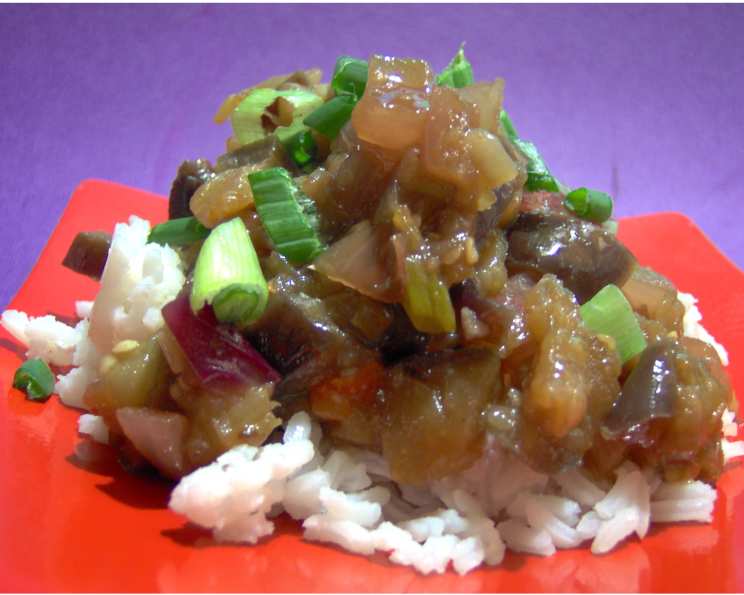
Oriental Braised Eggplant: A Taste of Comfort and Spice
The aroma of ginger and garlic, mingling with the sweet-savory notes of soy sauce and rice wine, can instantly transport me back to my grandmother’s kitchen. It was a place where simple ingredients were transformed into culinary magic, and this Oriental Braised Eggplant, a recipe I first discovered in Nina Simonds’ “A Spoonful of Ginger,” is a perfect example of that alchemy. The way the eggplant, with its spongy texture, soaks up the vibrant flavors, becoming meltingly tender, is a testament to the beauty of braising. It’s a dish that speaks of home, of warmth, and of the profound satisfaction that comes from a truly delicious, yet wonderfully uncomplicated, meal.
Recipe Overview
- Prep Time: 1 hour 15 minutes (includes salting time)
- Cook Time: 20-25 minutes
- Total Time: 1 hour 35 minutes – 1 hour 40 minutes
- Servings: 6
- Yield: Serves 6 as a side dish
- Dietary Type: Adaptable (can be made vegetarian/vegan)
Ingredients
This dish relies on a few pantry staples and fresh aromatics to create its signature flavor profile. The eggplant is the star, but the supporting cast of seasonings is crucial.
- 1 ½ lbs eggplants
- 1 teaspoon salt
- 1 ½ teaspoons chili paste (e.g., Gochujang, Doubanjiang, or Sambal Oelek)
- 1 ½ tablespoons garlic, minced
- 1 ½ tablespoons fresh ginger, minced
- 1 ½ cups chicken broth (or vegetable broth for a vegetarian/vegan option)
- 2 ½ tablespoons soy sauce (use tamari for gluten-free)
- 1 ½ tablespoons rice wine (such as Shaoxing wine) or 1 ½ tablespoons sake
- 1 tablespoon Chinese black vinegar or 1 tablespoon Worcestershire sauce (note: Worcestershire sauce is not vegetarian/vegan)
- 1 tablespoon sugar
- 1 teaspoon cornstarch
- 1 tablespoon canola oil
- 2 cups red onions, cut into ½-inch dice
- 1 medium red pepper, cored, peeled, seeded, and cut into ½-inch dice
- 2 tablespoons scallions, green parts only, minced
Equipment Needed
- Large baking sheet
- Paper towels
- Sharp knife
- Cutting board
- Large flame-proof casserole or Dutch oven with a lid
- Small bowl
- Whisk or fork
- Serving platter
Instructions
The process for this Oriental Braised Eggplant is thoughtfully designed to coax the best texture and flavor out of the humble eggplant. It involves a crucial first step of salting to draw out excess moisture, which ensures the eggplant becomes tender and not waterlogged.
- Prepare the Eggplant: Begin by trimming the ends of the eggplants. Then, cut them lengthwise into ½-inch thick slices.
- Salt the Eggplant: Arrange the eggplant slices in a single layer on a baking sheet lined with paper towels. Sprinkle both sides generously with salt.
- Rest and Dry: Let the salted eggplant sit for 1 hour. This step is essential for drawing out moisture and any potential bitterness. After an hour, pat the eggplant slices thoroughly dry with fresh paper towels. Once dry, cut the slices into 1 ½-inch-long pieces.
- Sauté Aromatics and Chili Paste: Heat a large flame-proof casserole or Dutch oven over high heat. Add the canola oil and heat until it is shimmering and hot. Carefully add the chili paste and stir-fry for just 5 seconds over high heat. This brief stir-fry blooms the chili paste, releasing its vibrant aroma and flavor.
- Add Remaining Seasonings: Immediately add the minced garlic and minced fresh ginger to the pot. Stir-fry until fragrant, which should take about another 10-15 seconds. Be careful not to burn the garlic or ginger.
- Sauté Vegetables: Add the diced red onions to the pot and sauté for about 1 ½ minutes, stirring frequently, until they begin to soften. Next, add the diced red pepper and sauté for another minute, allowing them to slightly soften.
- Add Eggplant: Now, add the prepared eggplant pieces to the pot. Stir-fry the eggplant with the onions and peppers for 2 to 3 minutes, ensuring the pieces are coated in the aromatic mixture.
- Introduce the Braising Liquid: In a small bowl, whisk together the chicken broth (or vegetable broth), soy sauce, rice wine (or sake), Chinese black vinegar (or Worcestershire sauce), and sugar.
- Simmer and Braise: Pour this braising liquid over the eggplant and vegetables in the pot. Bring the mixture to a boil over high heat. Once boiling, reduce the heat to medium, cover the pot tightly, and cook for approximately 12 to 14 minutes, or until the eggplant is wonderfully tender when pierced with a fork.
- Reduce the Sauce: Uncover the pot and increase the heat to high. Continue to cook, stirring occasionally, until the sauce has reduced to a rich glaze that coats the eggplant beautifully. This should take a few minutes.
- Finish and Serve: Transfer the Oriental Braised Eggplant to a serving platter. Sprinkle the minced scallion greens over the top just before serving for a burst of fresh flavor and color.
Expert Tips & Tricks
To elevate your Oriental Braised Eggplant from good to spectacular, consider these chef-tested insights:
- The Importance of Salting: Don’t skip the salting step! It’s not just about reducing bitterness; it also helps the eggplant absorb more of the delicious braising liquid without becoming mushy. Patting it thoroughly dry afterward is key.
- Chili Paste Choice: The type of chili paste you use will significantly impact the flavor. For a milder, slightly sweet heat, use gochujang. For a more robust, fermented chili flavor, consider doubanjiang. Sambal oelek offers a straightforward chili kick. Experiment to find your favorite!
- Doneness Test: The eggplant is done when it’s fork-tender but still holds its shape. If it feels too firm, continue braising with the lid on for a few more minutes. If it’s too soft, you may have overcooked it.
- Achieving the Glaze: The final reduction step is critical for a luscious sauce. Keep a close eye on it during this stage, as the sauce can thicken quickly, and you don’t want it to burn. Stirring constantly will help.
- Make-Ahead Potential: The eggplant can be salted and cut ahead of time and stored in an airtight container in the refrigerator for up to 24 hours. The entire dish can also be made a few hours in advance and gently reheated on the stovetop over low heat, adding a splash more broth if needed to loosen the sauce.
Serving & Storage Suggestions
This Oriental Braised Eggplant is incredibly versatile and pairs beautifully with a wide array of dishes.
- Serving: It shines as a flavorful side dish alongside steamed rice, stir-fried noodles, grilled meats, or fish. The rich, glossy sauce is perfect for spooning over fluffy white rice. Garnish with fresh cilantro or toasted sesame seeds for an extra touch of elegance.
- Storage: Leftovers can be stored in an airtight container in the refrigerator for up to 3-4 days. The flavors tend to meld and deepen overnight, making leftovers often even more delicious.
- Reheating: Gently reheat on the stovetop over low heat, stirring occasionally. If the sauce seems too thick, add a tablespoon or two of broth or water to loosen it. Avoid microwaving if possible, as it can sometimes make the eggplant textures less appealing.
Nutritional Information
Here’s an estimated nutritional breakdown per serving, based on the ingredient quantities provided. Please note that these are approximate values and can vary based on specific ingredient brands and preparation methods.
| Nutrient | Amount per Serving | % Daily Value |
|---|---|---|
| Calories | 109 kcal | – |
| Total Fat | 3 g | 4% |
| Saturated Fat | 0.3 g | 1% |
| Cholesterol | 0 mg | 0% |
| Sodium | 1003 mg | 41% |
| Total Carbohydrate | 17.5 g | 5% |
| Dietary Fiber | 5.2 g | 20% |
| Sugars | 8.3 g | 33% |
| Protein | 4 g | 8% |
Note: Calories from Fat are approximately 25% of total calories.
Variations & Substitutions
While the recipe as written is fantastic, feel free to explore these variations:
- Vegetarian/Vegan: As mentioned, substitute vegetable broth for chicken broth. Ensure your chosen chili paste is also vegetarian/vegan.
- Spicier Kick: If you enjoy more heat, increase the amount of chili paste or add a pinch of red pepper flakes along with the chili paste.
- Sweetness Adjustment: The sugar amount can be adjusted to your personal preference. You might find you need a little less or a little more depending on the saltiness of your soy sauce and the sweetness of your chili paste.
- Mushroom Addition: Sliced shiitake mushrooms, added along with the onions and peppers, would be a welcome addition, adding an extra layer of umami.
- Vinegar Swap: If you don’t have Chinese black vinegar, a good quality balsamic vinegar can be used in a pinch, though it will lend a slightly different flavor profile.
FAQs
Q: Why do I need to salt the eggplant for an hour?
A: Salting the eggplant draws out excess moisture and can help reduce any bitterness, leading to a more tender texture and better absorption of flavors without becoming waterlogged.
Q: What if I can’t find Chinese black vinegar?
A: Rice vinegar or even apple cider vinegar can be used, though they will offer a slightly different tang. Worcestershire sauce is also a viable alternative mentioned in the recipe.
Q: Can I use different types of chili paste?
A: Absolutely! Gochujang, doubanjiang, or sambal oelek are all excellent choices, each offering a unique flavor profile and heat level.
Q: My sauce isn’t reducing to a glaze. What should I do?
A: Ensure your heat is set to high during the final reduction step. You may need to cook it a few minutes longer, stirring frequently, to achieve the desired syrupy consistency.
Q: How can I make this dish gluten-free?
A: Use tamari instead of soy sauce, and ensure your chili paste and any other added ingredients are certified gluten-free.
Final Thoughts
This Oriental Braised Eggplant is more than just a recipe; it’s an invitation to slow down, savor the process, and enjoy the incredibly rewarding outcome. The way the humble eggplant transforms into something so succulent and flavorful is truly remarkable. Serve it as a centerpiece to a simple meal or as a vibrant accompaniment, and watch as it disappears from the table with appreciative murmurs. I encourage you to try this dish, perhaps with a crisp, slightly acidic white wine or a light herbal tea, and discover its comforting charm for yourself. I’d love to hear about your experience making it!