
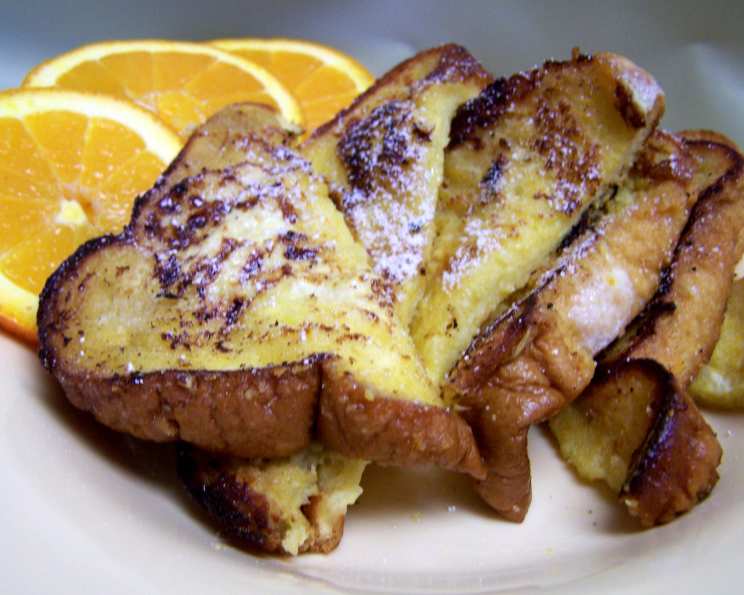
Orange-Vanilla French Toast: A Sunrise Symphony
There are some breakfasts that aren’t just meals, but rather moments. My fondest memories of Orange-Vanilla French Toast are tied to early mornings in my grandmother’s kitchen, the air already thick with the scent of citrus and something warm and toasty. The soft glow of the sun would stream through her lace curtains, illuminating the gentle steam rising from the pan, and the whole house would feel like it was waking up with a comforting sigh. It was a dish that spoke of love, patience, and the simple joy of starting the day right, a ritual that always felt a little bit magical.
Recipe Overview
- Prep Time: 15 minutes
- Cook Time: 30 minutes (grill) or 13-15 minutes (bake)
- Total Time: 6 hours 10 minutes (including refrigeration)
- Servings: 4
- Yield: 1 loaf of French toast
- Dietary Type: Vegetarian
Ingredients
This recipe is built on humble ingredients, elevated by the magic of time and a touch of citrus. For the most delightful results, I always recommend using a slightly stale loaf of French bread or Italian bread. The day-old bread absorbs the custard beautifully without becoming too mushy.
- 1 loaf French bread (approximately 10 ounces) or 1 loaf Italian bread, unsliced (approximately 10 ounces)
- 6 large eggs
- 3/4 cup orange juice (freshly squeezed is always best!)
- 1/2 cup whipping cream (unwhipped)
- 2 tablespoons sugar (or to taste)
- 1 tablespoon vanilla extract
- 1-2 teaspoons grated orange rind (zest)
- 1/4 teaspoon salt
- 2 tablespoons butter or 2 tablespoons margarine
- Orange slice, for garnish
- Powdered sugar, for sprinkling
Equipment Needed
The equipment for this recipe is pretty standard for most home kitchens. However, having the right tools ensures a smooth and successful preparation.
- A good quality bread knife for slicing
- A large mixing bowl for the custard
- A whisk for thoroughly combining the custard ingredients
- A 15×10-inch jellyroll pan or a large baking sheet
- A skillet or flat grill (if grilling)
- Foil (if baking)
- A spatula for flipping
- Measuring cups and spoons
Instructions
The beauty of this Orange-Vanilla French Toast lies in its make-ahead nature. Allowing the bread to soak in the fragrant custard is the secret to its unparalleled tenderness and flavor.
-
Begin by slicing the French bread or Italian bread into 3/4-inch thick slices. Aim for even thickness so they cook uniformly.
-
Next, arrange the bread slices in a single layer within a well-greased 15×10-inch jellyroll pan. Ensure there’s a little space between each slice; you don’t want them overlapping.
-
In a medium bowl, beat the eggs, sugar, orange juice, whipping cream, grated orange rind, vanilla, and salt together. Use your whisk to blend them until they are well combined and the mixture is smooth and homogenous. This is your luscious custard.
-
Pour this glorious custard mixture over the bread slices in the pan. Gently turn each bread slice to ensure it’s thoroughly coated on all sides.
-
Now comes the crucial step for texture and flavor: cover the pan tightly with plastic wrap or foil. Refrigerate for at least 6 hours. This extended soak allows the bread to absorb all the wonderful citrus and vanilla notes, transforming it into an incredibly tender base for your French toast. You can even leave it overnight for maximum flavor infusion.
-
Once the soaking period is complete, it’s time to cook! You have two delightful options: grill or bake.
- To Grill: Melt the butter or margarine in a large skillet or on a flat grill over medium heat. Carefully add the soaked bread slices to the hot skillet or grill, working in batches if necessary to avoid overcrowding. Cook until each side is beautifully golden brown and heated through. This usually takes about 3-5 minutes per side.
- To Bake: Preheat your oven to 350 degrees Fahrenheit (175 degrees Celsius). Cover a large baking sheet with foil and grease it lightly. Place the soaked bread slices on the prepared foil in a single layer. Bake for 13-15 minutes, turning the slices after about 10 minutes to ensure even browning.
-
Once cooked to perfection, garnish each serving with a fresh orange slice and sprinkle generously with powdered sugar.
Expert Tips & Tricks
To elevate your Orange-Vanilla French Toast from good to absolutely extraordinary, consider these chef-tested secrets:
- Bread Choice is Key: While French or Italian bread are ideal, a good quality challah or brioche can also work beautifully. Just ensure it’s not too fresh; a day or two old is perfect. If your bread is very fresh, you can lightly toast the slices before soaking to give them a bit more structure.
- Zest is Best: Don’t skip the orange rind! The zest contains the essential oils of the orange, providing a more vibrant and intense citrus aroma and flavor than just the juice alone. Use a microplane for the finest zest.
- Custard Consistency: If you find your custard a bit thin, a tiny bit more whipping cream can help, but the 6-hour soak is usually sufficient to create a wonderfully saturated bread.
- Gentle Handling: When flipping the bread slices, be gentle. They will be quite soft and delicate after soaking. A wide spatula is your best friend here.
- Batch Cooking for Grilling: If you’re grilling, don’t overcrowd the pan. Cook in batches, keeping the cooked portions warm in a low oven (around 200°F/95°C) if you’re making a large batch.
Serving & Storage Suggestions
Orange-Vanilla French Toast is best served immediately, fresh off the grill or out of the oven, when it’s warm and fragrant. A dusting of powdered sugar and a bright orange slice are classic garnishes, but feel free to get creative.
For serving, consider a dollop of whipped cream, a drizzle of maple syrup (though the orange flavor is quite dominant, so use sparingly if you prefer to let that shine), or a scattering of fresh berries.
Storage: If you happen to have any leftovers (which is rare in my house!), you can store them in an airtight container in the refrigerator for up to 2 days. To reheat, gently warm them in a skillet over low heat or in a toaster oven until heated through. Avoid microwaving, as this can make them rubbery.
Nutritional Information
Please note that this nutritional information is an estimate and can vary based on the specific ingredients and brands used.
| Nutrient | Amount per Serving | % Daily Value |
|---|---|---|
| Calories | 630 kcal | |
| Calories from Fat | 249 kcal | |
| Total Fat | 27.7 g | 42% |
| Saturated Fat | 13.6 g | 67% |
| Cholesterol | 373.3 mg | 124% |
| Sodium | 993.9 mg | 41% |
| Total Carbohydrate | 71.9 g | 23% |
| Dietary Fiber | 3.5 g | 14% |
| Sugars | 11.5 g | 46% |
| Protein | 20.4 g | 40% |
Variations & Substitutions
While this recipe is wonderfully satisfying as is, here are a few ideas to customize it:
- Citrus Swap: If you’re not a fan of oranges, try using grapefruit juice and grapefruit zest for a more tart and complex flavor profile. Lemon juice and zest could also work, though they might be a bit too sharp for some palates.
- Spice it Up: A pinch of cinnamon or nutmeg in the custard can add a lovely warmth, especially during cooler months.
- Boozy Brûlée: For an adult twist, add a tablespoon or two of Grand Marnier or Cointreau to the custard mixture.
- Gluten-Free: While it requires a bit more care, you could experiment with a good quality gluten-free bread, ensuring it’s dense enough to hold up to the custard.
- Dairy-Free: For a dairy-free version, you could try using a rich, unsweetened non-dairy milk like coconut milk or oat milk in place of the whipping cream. You’ll also need to ensure your butter substitute is dairy-free.
FAQs (Frequently Asked Questions)
Q: Why does the recipe emphasize refrigerating for 6 hours?
A: This extended soaking time is crucial. It allows the bread to absorb the custard fully, resulting in a French toast that is incredibly tender, moist, and deeply flavorful throughout.
Q: Can I skip the orange rind?
A: While you can, you’ll be missing out on a significant depth of orange flavor. The zest contains the flavorful essential oils of the orange peel, providing a brighter and more aromatic citrus note than juice alone.
Q: What happens if I don’t have unsliced bread?
A: If you only have pre-sliced bread, it will still work, but it might not absorb the custard as evenly or as deeply as unsliced bread. You might also find that thinner slices become too soft.
Q: How can I tell if my French toast is cooked through?
A: When grilling, the edges should be golden brown and slightly crisp, and the center should be set and no longer liquidy. When baking, the edges will appear golden, and the center should feel firm to the touch.
Q: Can I make this without eggs?
A: This recipe fundamentally relies on eggs for its custard base. For an egg-free alternative, you would need to seek out a dedicated vegan French toast recipe, which would use different binding and flavoring agents.
Final Thoughts
This Orange-Vanilla French Toast is more than just a breakfast; it’s an experience. It’s the kind of dish that makes a weekend morning feel truly special, a gentle awakening for the senses that promises a beautiful day ahead. So, take a little time, gather your ingredients, and let the magic of citrus and vanilla infuse your kitchen. I have a feeling you’ll find yourself creating your own cherished memories with every golden bite. Enjoy it with a cup of freshly brewed coffee or a delicate tea, and savor the moment.