
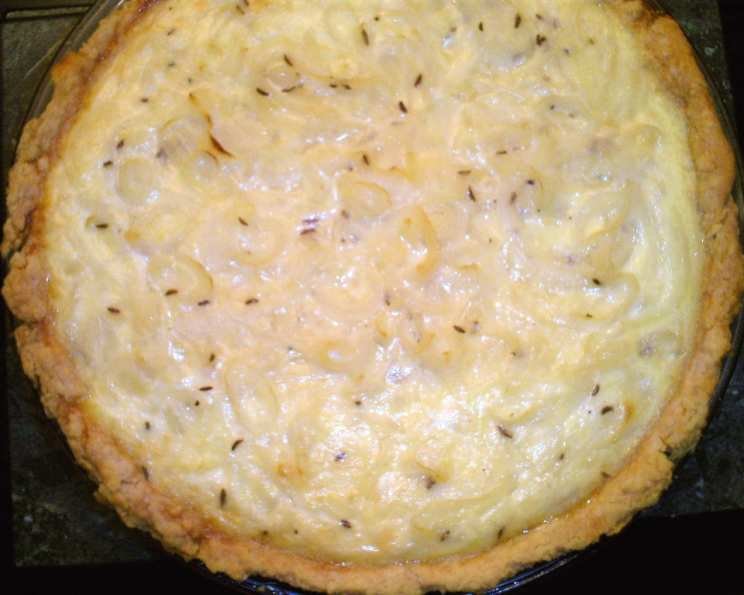
The Unassuming Majesty of Onion Pie
There’s a certain quiet magic that happens when humble ingredients are coaxed into something extraordinary. My earliest culinary memories are steeped in the scent of simmering onions, a fragrance that still evokes a profound sense of home and comfort. My Swiss grandmother, a woman of few words but infinite wisdom in the kitchen, would occasionally surprise us with an onion pie. It wasn’t a dessert, though its name might suggest so. Instead, it was a savory revelation, a testament to the sweet, caramelized depths that onions can achieve. Each slice was a warm embrace, the tender onions melting into a custardy, rich filling, all cradled within a crisp, buttery crust. It was simple, honest food, and the memory of that pie remains a touchstone of pure, unadulterated deliciousness.
Recipe Overview
- Prep Time: 45 minutes
- Cook Time: 1 hour
- Total Time: 1 hour 45 minutes
- Servings: 8
- Yield: 1 pie
- Dietary Type: Vegetarian
Ingredients
This recipe relies on the transformation of a few core ingredients, proving that culinary artistry doesn’t always require complexity. The sweetness of the onions is paramount, so selecting good quality ones is the first step to success.
For the Onion Filling:
- 6-7 medium onions
- 3 large eggs
- ½ cup flour
- 1 teaspoon salt
- 1 teaspoon caraway seed
- Freshly ground pepper, to taste
- 2 cups milk
For the Crust:
- 1 unbaked pie shell (store-bought or homemade, about 9 inches in diameter)
Equipment Needed
To bring this savory delight to life, you’ll need a few essential kitchen tools:
- A large skillet for sautéing the onions.
- A sharp knife and cutting board for slicing.
- A large mixing bowl for combining the filling ingredients.
- A whisk to ensure a smooth, homogenous batter.
- A 9-inch pie dish for baking.
- An oven, preheated to the correct temperature, of course!
- A cooling rack to allow the pie to set up beautifully.
Instructions
The beauty of this onion pie lies in its straightforward preparation. Each step builds upon the last, transforming simple components into a harmonious and satisfying dish.
-
Prepare the Onions: Begin by slicing the onions. Aim for thin, even slices, which will ensure they cook uniformly and caramelize beautifully. You can achieve this with a sharp knife, or for speed and consistency, a mandoline slicer can be a great tool.
-
Sauté the Onions: Place a large skillet over medium heat. Add a bit of butter or oil if your onions are prone to sticking, though many onions release enough moisture to cook in their own juices. Add the sliced onions to the skillet. Sauté them gently, stirring occasionally, until they are cooked until tender and translucent, but not browned. This is a crucial step; we want their inherent sweetness to develop, not the slightly bitter notes that come with browning. This process can take anywhere from 20 to 30 minutes, depending on the size of your pan and the heat level. Patience here will reward you with a much richer flavor.
-
Combine the Filling Ingredients: While the onions are sautéing, or once they are cooked and set aside to cool slightly, you can prepare the custard base. In a large mixing bowl, whisk together the eggs, flour, salt, caraway seed, and pepper until thoroughly combined and smooth.
-
Incorporate the Milk: Gradually whisk in the milk into the egg and flour mixture. Continue whisking until the batter is smooth and lump-free.
-
Add the Cooked Onions: Once the onions are tender and have cooled for a few minutes (you don’t want to cook the eggs prematurely), gently fold them into the milk and egg mixture. Ensure the onions are evenly distributed throughout the filling.
-
Assemble the Pie: Carefully pour the onion mixture into the unbaked pie shell. Try to get an even distribution of onions within the shell.
-
Bake the Pie: Place the assembled pie onto a baking sheet (this helps catch any potential drips and makes it easier to get in and out of the oven). Bake in a preheated oven at 350 degrees Fahrenheit (175 degrees Celsius) for approximately 1 hour. The pie is done when the filling is set and has a slight wobble in the center, and the crust is golden brown.
-
Cool the Pie: Once baked, remove the pie from the oven and place it on a cooling rack. Allow the onion pie to cool for at least 15-20 minutes before slicing and serving. This resting period is essential for the filling to fully set, ensuring clean slices.
Expert Tips & Tricks
- Onion Consistency is Key: For the most uniform cooking and distribution, aim for consistently sized onion slices. If some are much thicker than others, they won’t soften at the same rate.
- Don’t Overcook the Onions: While you want them tender, avoid browning. Browning adds a different, more robust flavor that isn’t the goal for this specific pie. Gentle sautéing over moderate heat is your best friend here.
- The “Wobble” Test: When checking for doneness, the center of the pie should still have a slight jiggle. It will continue to set up as it cools. If it’s completely firm, it might be overbaked and could become rubbery.
- Blind Baking (Optional but Recommended): For an extra-crisp bottom crust, you can blind bake your pie shell for about 10-15 minutes before adding the filling. This prevents a soggy bottom, which can be a common issue with custard-based pies.
- Caraway Seed Nuance: If you’re new to caraway seed, start with ½ teaspoon and increase if you enjoy its distinct anise-like flavor. It pairs wonderfully with onions.
Serving & Storage Suggestions
This onion pie is a versatile dish, excellent served warm as a hearty appetizer, a light lunch, or a unique side dish to roasted meats or poultry. For a more substantial meal, consider pairing it with a crisp green salad dressed with a light vinaigrette.
- Serving: Allow the pie to rest for at least 15-20 minutes before slicing. This allows the filling to firm up, making for neater servings. Garnish with a sprinkle of fresh chives or parsley for a touch of color and freshness.
- Storage: Leftover onion pie can be stored, covered tightly, in the refrigerator for up to 3 days. It can also be frozen for up to 1 month, though the texture might be slightly altered upon thawing.
- Reheating: To reheat, gently warm individual slices in a moderate oven (around 300°F / 150°C) or in a covered skillet over low heat until warmed through. Microwaving is also an option, but be mindful that it can sometimes affect the texture of custard-based dishes.
Nutritional Information
Here’s an estimated breakdown of the nutritional content per serving. Please note that these values are approximate and can vary based on specific ingredient choices (e.g., type of milk, fat content of eggs).
| Nutrient | Amount per Serving | % Daily Value |
|---|---|---|
| Calories | 241.9 kcal | N/A |
| Calories from Fat | 105 kcal | |
| Total Fat | 11.7 g | 17% |
| Saturated Fat | 3.9 g | 19% |
| Cholesterol | 78.3 mg | 26% |
| Sodium | 467.6 mg | 19% |
| Total Carbohydrate | 27 g | 9% |
| Dietary Fiber | 2.5 g | 10% |
| Sugars | 3.6 g | 14% |
| Protein | 7.5 g | 15% |
Note: % Daily Value is based on a 2,000-calorie diet. Your daily values may be higher or lower depending on your calorie needs.
Variations & Substitutions
While this recipe is beautifully classic as is, a few thoughtful adjustments can cater to different tastes and dietary needs.
- Dairy-Free Option: For a dairy-free version, you can substitute the milk with an unsweetened, plain non-dairy milk like soy milk or oat milk. Ensure your unbaked pie shell is also dairy-free.
- Herbal Infusions: Experiment with adding other herbs alongside or instead of the caraway seed. Freshly chopped thyme, rosemary, or sage can add delightful aromatic dimensions.
- Cheese Addition: For a richer, more decadent pie, a ½ cup of grated Gruyère, Parmesan, or cheddar cheese can be stirred into the filling along with the onions.
- Sweet Onion Varieties: If you have access to them, using sweeter onion varieties like Vidalia or Walla Walla can enhance the natural sweetness of the pie even further.
FAQs (Frequently Asked Questions)
Q: Why are my onions not cooking down properly?
A: Ensure your skillet is adequately heated and that you are using medium heat. Don’t overcrowd the pan; sauté onions in batches if necessary to allow them to steam and soften rather than just fry.
Q: Can I use pre-sliced onions from the grocery store?
A: While convenient, pre-sliced onions might have a different moisture content and texture. For the best results, slicing fresh onions yourself is recommended.
Q: What’s the best way to ensure a non-soggy crust?
A: Blind baking the pie crust before adding the filling is the most effective method. Additionally, making sure the filling isn’t excessively wet can also help.
Q: My pie is taking longer than an hour to bake. What should I do?
A: Oven temperatures can vary. If your pie isn’t set after an hour, continue baking in 10-15 minute increments, checking for doneness. The baking time is an estimate.
Q: Can I make this onion pie ahead of time?
A: Yes, the pie can be baked completely and then gently reheated before serving. It also stores well in the refrigerator and can be enjoyed cold, though it’s best served warm.
Final Thoughts
The humble onion pie is a testament to the power of simple ingredients and patient cooking. It’s a dish that speaks of heritage, of comfort, and of the deep satisfaction that comes from creating something truly delicious from scratch. I encourage you to embrace its unpretentious charm and experience the delightful transformation of onions into this savory custard. Serve it with a dollop of crème fraîche or a side of crisp pickles, and savor every warm, comforting bite. If you try this and find yourself captivated by its unique flavor, do share your experience – that culinary connection is what makes the kitchen such a special place.