
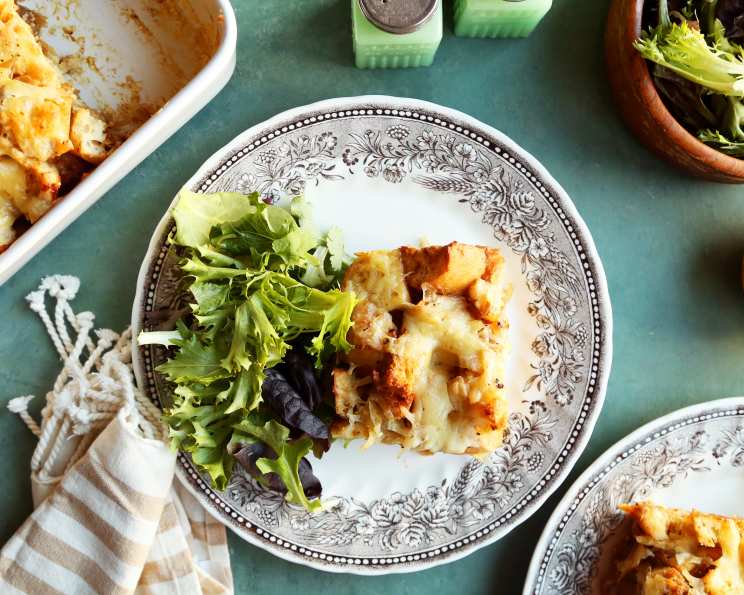
The Soulful Comfort of Savory Onion Bread Pudding
There’s a certain magic that happens in the kitchen when the humble onion is coaxed into transforming from its sharp, pungent state into a meltingly sweet, deeply caramelized treasure. My most cherished memories of onion bread pudding are tied to crisp autumn evenings, the scent of woodsmoke in the air, and this dish warming our home. It’s the kind of food that wraps you in a warm hug, a testament to how simple ingredients, treated with care, can yield extraordinary results. This bread pudding, with its layers of tender bread, impossibly sweet onions, and nutty Gruyère, isn’t just a side dish; it’s a comforting embrace, perfect alongside a Sunday roast or, as I often prefer, as the star of its own show with a crisp green salad.
Recipe Overview
- Prep Time: 25 minutes
- Cook Time: 55 minutes
- Total Time: 1 hour 20 minutes
- Servings: 6
- Yield: 1 (1 1/2-quart) casserole
- Dietary Type: Vegetarian
Ingredients
This recipe celebrates the inherent sweetness of onions, amplified by slow caramelization and brought together with the richness of eggs and dairy, all bound by chunks of hearty French bread and the nutty allure of Gruyère cheese.
- 8 tablespoons butter, divided
- 1 tablespoon corn oil or 1 tablespoon vegetable oil
- 8 cups thinly sliced onions (about 4 large onions)
- 1/4 cup dry vermouth
- 1 garlic clove, split
- 6 ounces stale crusty French bread, cut into 1-inch chunks (about 6 cups)
- 2 cups grated Gruyère cheese (or 2 cups Swiss cheese)
- 3 large eggs
- 2 cups half-and-half
- Salt, to taste
- Freshly ground black pepper, to taste
Equipment Needed
To bring this delightful bread pudding to life, you’ll need a few essential kitchen tools:
- A heavy-bottomed pot or Dutch oven for caramelizing the onions
- A sharp knife for slicing onions and bread
- A wooden spoon for stirring
- A 1 1/2-quart shallow round casserole dish
- A whisk
- A spatula
Instructions
Embarking on the creation of this onion bread pudding is a journey of flavor development, beginning with the patient caramelization of onions and culminating in a golden, bubbly masterpiece.
- Preheat your oven to 350°F (175°C).
- In a heavy pot, melt 4 tablespoons of butter along with the corn oil (or vegetable oil) over medium heat.
- Add the thinly sliced onions to the pot. Cover and steam over low heat for 15 minutes. This initial steaming helps to soften the onions, setting the stage for deep caramelization.
- Uncover the pot, raise the heat to medium, and cook, stirring occasionally, until the onions are deeply browned and caramelized. This is the most crucial step for developing that signature sweet, rich flavor. Be patient; this can take 30-45 minutes or even longer, depending on your stove and pot. Scrape the bottom of the pot as you stir to prevent sticking and to incorporate those flavorful browned bits.
- Once the onions are beautifully caramelized, pour in the dry vermouth. Boil, scraping the bottom of the pot with a wooden spoon to loosen any browned bits, until the liquid cooks away completely. This deglazing step adds another layer of complex flavor.
- Prepare your casserole dish: Choose a shallow round 1 1/2-quart casserole dish. Rub the inside of the dish thoroughly with the cut sides of the split garlic clove. This infuses a subtle hint of garlic without overpowering the delicate onion flavor. Discard the garlic clove.
- In a large bowl, toss the bread chunks and the caramelized onions together.
- Spread the bread and onion mixture evenly into the prepared casserole dish.
- Melt the remaining 4 tablespoons of butter and pour it evenly over the bread and onion mixture.
- Sprinkle the grated Gruyère cheese (or Swiss cheese) evenly over the top.
- In a separate medium bowl, beat the eggs slightly. Then, beat in the half-and-half, salt, and freshly ground black pepper. Season generously with salt and pepper, as these flavors will permeate the bread pudding.
- Pour the egg and half-and-half mixture evenly over the bread and cheese in the casserole dish.
- Use a spatula to gently press down the bread into the liquid, ensuring all the bread pieces are moistened and begin to absorb the custard.
- Optional Make-Ahead Step: The dish may be covered and refrigerated overnight. If you refrigerate it, bring it to room temperature before baking to ensure even cooking.
- Bake for 30 to 40 minutes, or until the bread pudding is puffed and golden brown on top and a knife inserted into the center comes out clean.
- Serve at once. This dish is best enjoyed piping hot, straight from the oven.
Expert Tips & Tricks
- The Art of Caramelization: The key to a truly spectacular onion bread pudding lies in the patience you exercise during the onion caramelization process. Don’t rush it! Low and slow is the mantra. If the onions start to scorch, reduce the heat further and add a tablespoon of water or broth to help them along.
- Stale Bread is Your Friend: Using stale bread is essential for bread pudding. It absorbs the custard without becoming mushy, providing a delightful texture. If your bread is fresh, you can lightly toast the chunks in a 300°F oven for about 10-15 minutes until they are dry.
- Cheese Choices: Gruyère offers a wonderfully nutty and complex flavor that pairs beautifully with onions. However, Swiss cheese is a fantastic and readily available substitute that provides a similar tang. A blend of both can also be delightful.
- Vermouth Alternative: If you don’t have dry vermouth on hand, a dry white wine or even a splash of sherry can be used. If you prefer not to use alcohol, a tablespoon of balsamic vinegar added with a little water can offer a similar depth of flavor.
- Achieving Golden Perfection: If your bread pudding is browning too quickly on top before the center is set, you can loosely tent it with aluminum foil for the remainder of the baking time.
Serving & Storage Suggestions
This savory onion bread pudding is a versatile dish. It shines as a sophisticated side to roasted meats like beef tenderloin, roast chicken, or pork loin. It also makes a magnificent vegetarian main course when paired with a vibrant salad tossed with a sharp vinaigrette, or a bowl of hearty soup.
When serving, a sprinkle of fresh chives or parsley can add a touch of color and freshness.
Storage:
Leftovers can be stored in an airtight container in the refrigerator for up to 3 days. The texture will soften slightly upon refrigeration.
Reheating:
To reheat, place a portion in a preheated 325°F (160°C) oven for 15-20 minutes, or until heated through and the top is crisp again. You can also gently reheat individual portions in a microwave, though the crust will lose some of its crispness.
Nutritional Information
Here’s an estimated nutritional breakdown per serving. Please note that these values are approximate and can vary based on specific ingredients used.
| Nutrient | Amount per Serving | % Daily Value |
|---|---|---|
| Calories | 608 kcal | |
| Calories from Fat | 361 kcal | |
| Total Fat | 40.1 g | 61% |
| Saturated Fat | 23.4 g | 117% |
| Cholesterol | 203.2 mg | 67% |
| Sodium | 479.5 mg | 19% |
| Total Carbohydrate | 40.2 g | 13% |
| Dietary Fiber | 4.3 g | 17% |
| Sugars | 10.2 g | 40% |
| Protein | 22.1 g | 44% |
Note: Daily values are based on a 2,000-calorie diet.
Variations & Substitutions
- Herbs: Infuse the custard with fresh herbs like thyme or rosemary by adding a sprig or two to the half-and-half mixture while it warms, then remove before pouring.
- Cheesy Delight: For an even more decadent version, add a layer of shredded Parmesan cheese along with the Gruyère, or even mix some into the bread and onion mixture.
- Bacon or Pancetta: For a non-vegetarian twist, crisp up some finely diced bacon or pancetta and add it to the caramelized onions in the last few minutes of cooking.
- Mushroom Magic: Sautéed mushrooms, such as cremini or shiitake, can be a delightful addition. Cook them separately until golden brown and then toss them in with the onions and bread.
FAQs
Q: Why should I use stale bread for bread pudding?
A: Stale bread has less moisture, allowing it to absorb the custard evenly without becoming soggy, resulting in a better texture.
Q: Can I use yellow onions instead of thinly sliced onions?
A: Yes, you can use yellow onions. The key is to slice them thinly enough to ensure even caramelization.
Q: How do I know when the bread pudding is done?
A: The bread pudding is ready when it is puffed and golden brown on top, and a knife inserted into the center comes out clean, indicating that the custard has set.
Q: What if I don’t have half-and-half?
A: You can substitute with a combination of whole milk and heavy cream. For instance, use 1 cup of whole milk and 1 cup of heavy cream for a similar richness.
Q: Can I make this recipe ahead of time?
A: Absolutely! The dish can be assembled up to a day in advance, covered, and refrigerated. Be sure to bring it to room temperature before baking for even cooking.
Final Thoughts
There’s a profound satisfaction that comes from creating a dish that feels both comforting and sophisticated. This Savory Onion Bread Pudding embodies that perfectly. It’s a recipe that rewards your attention to detail with layers of deep, savory-sweet flavor and a beautifully tender texture. Whether you’re hosting a dinner party or seeking a deeply comforting meal for yourself, this bread pudding is sure to impress. Gather your ingredients, embrace the gentle art of caramelization, and prepare to be delighted by the humble onion’s transformative power. I encourage you to share your creations and any delightful variations you discover!