
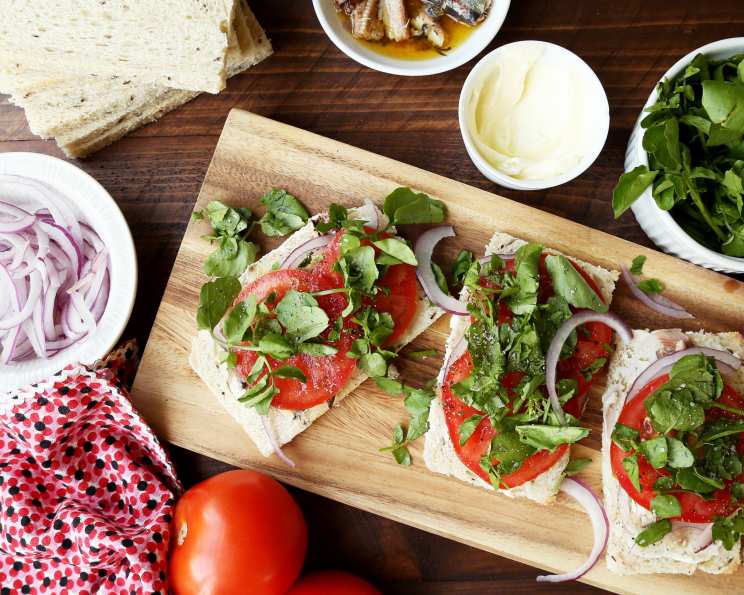
Smørrebrød: An Ode to the Humble Herring and Onion Sandwich
The aroma of brine and the sharp, clean bite of onion – it’s a combination that, for some, might seem a little daring. But for me, it’s a direct line back to bustling Danish markets, to sun-drenched afternoons spent with family, and to the pure, unadulterated joy of simple, honest food. My first true smørrebrød experience wasn’t in a Michelin-starred restaurant, but at a quaint seaside cafe in Copenhagen. The open-faced sandwich, a vibrant canvas of flavors and textures, was an immediate revelation. This particular iteration, the classic Onion and Herring Smørrebrød, is a masterclass in how humble ingredients, treated with respect and artfully arranged, can create something truly extraordinary. It’s a taste of tradition, a whisper of the sea, and a celebration of the everyday.
Recipe Overview
- Prep Time: 15 minutes
- Cook Time: 0 minutes
- Total Time: 15 minutes
- Servings: 4
- Yield: 8 sandwiches
- Dietary Type: Pescatarian
Ingredients
The beauty of smørrebrød lies in its simplicity, and this onion and herring version is no exception. Each component plays a vital role, so using quality ingredients will elevate your creation.
- 4 teaspoons butter, softened
- 4 slices Danish pumpernickel bread or 4 slices rye bread, crusts removed
- 1 (8 ounce) jar herring fillets, in wine sauce, drained and fillets cut into 1-inch strips
- 1 medium sweet onion, cut into thin rings
- 2 tomatoes, sliced thinly (yielding approximately 8 thin slices)
- Watercress or parsley sprigs, for garnish
Ingredient Notes:
- Bread: The foundation of any good smørrebrød is the bread. Danish pumpernickel or a good quality, dense rye bread is ideal. These hearty breads stand up well to the moist toppings and offer a lovely earthy counterpoint to the fish. Crucially, ensure you remove the crusts for a more refined presentation and texture, unless you are using a particularly tender French bread, though that is not recommended for this specific smørrebrød.
- Herring: Look for good quality herring fillets packed in a wine sauce. This sauce often lends a subtle sweetness and acidity that complements the herring beautifully. Ensure you drain them well before using.
- Onion: A sweet onion, like Vidalia or Walla Walla, is perfect here. Their mild, sweet flavor won’t overpower the delicate herring. The rings provide a visual appeal and a fresh, crisp element.
- Tomatoes: Ripe, flavorful tomatoes are essential. Slicing them thinly ensures they don’t overwhelm the sandwich with too much moisture or bulk.
- Garnish: Watercress offers a peppery, slightly bitter note and a beautiful green contrast. Parsley is a classic, milder alternative.
Equipment Needed
While this recipe requires no cooking, a few basic tools will ensure a smooth preparation and an artful presentation.
- Butter knife or offset spatula
- Sharp knife
- Cutting board
Instructions
Crafting a smørrebrød is more an assembly than a cooking process, and the key is in the careful layering and arrangement. This method ensures that each bite is perfectly balanced and that the bread remains wonderfully intact.
- Prepare the Bread: Begin by taking your four slices of Danish pumpernickel bread or rye bread. Using a sharp knife, carefully remove the crusts from each slice. This step is crucial for the traditional smørrebrød experience, creating a more refined and easier-to-handle sandwich.
- Butter the Bread: Take your softened butter and, using a butter knife or offset spatula, spread 1 teaspoon of butter evenly over each slice of bread. It is imperative to ensure the butter covers the entire surface of each piece of bread, right to the edges. This acts as a barrier, preventing any moist ingredients from seeping through and making the bread soggy. This is a fundamental step for maintaining the integrity of your smørrebrød.
- Halve the Bread: Next, cut each buttered slice in half crosswise. This will create 2 (4-by-2-inch) pieces from each original slice, resulting in a total of eight smaller, more manageable pieces for your smørrebrød.
- Layer the Herring: Now, it’s time to add the star of the show. Take your drained herring fillets, which you’ve already cut into approximately 1-inch strips. Top each piece of bread with one-eighth of the herring. Arrange the herring strips smoothly, ensuring the more attractive, smooth-side is facing upwards for a visually appealing presentation. Distribute the herring evenly across the eight bread pieces.
- Add the Onion Rings: On top of the herring, artfully arrange several sweet onion rings. Don’t be shy, but also aim for a balanced distribution that complements the herring.
- Place the Tomato Slices: Following the onion rings, place one tomato wedge on each smørrebrød. You should have about one slice per piece of bread. The bright red of the tomato adds a burst of color and a fresh, juicy element.
- Garnish: Finally, to complete your exquisite smørrebrød, garnish each with a sprig of fresh watercress or parsley. This adds a touch of freshness, a hint of color, and a final flourish of professional presentation.
Expert Tips & Tricks
The magic of smørrebrød isn’t just in the ingredients, but in the thoughtful execution. Here are a few pointers from my kitchen to yours:
- Butter Barrier is Key: I can’t stress enough the importance of the butter layer. Ensure it’s spread completely to the edges. This is non-negotiable for preventing a soggy base, no matter how quickly you plan to eat it.
- Artful Arrangement: While the instructions are clear, don’t be afraid to let your creative side shine. Think of each piece of bread as a miniature canvas. Overlap the herring slightly, arrange the onion rings in a pleasing pattern, and ensure the tomato slice is visible and vibrant. Presentation is a significant part of the smørrebrød experience.
- Herring Quality Matters: The jarred herring in wine sauce is a classic for a reason, but its quality can vary. Choose a brand that has firm, well-shaped fillets and a pleasant, not overly sharp, wine sauce.
- Onion Thinness: When slicing the onion, aim for paper-thin rings. This ensures they are mild and slightly crisp rather than overwhelmingly pungent or tough. If you find raw onion too strong, you can very briefly soak the rings in ice water for 10-15 minutes, then drain them thoroughly. This will mellow their bite.
Serving & Storage Suggestions
Smørrebrød are best enjoyed immediately after assembly to preserve the texture of the bread and the freshness of the toppings. Serve them as a light lunch, a starter for a more elaborate meal, or as part of a Scandinavian-themed buffet.
- Serving: Present your smørrebrød on a platter or individual plates. Traditionally, they are eaten with a knife and fork due to their open-faced nature. Pair them with a crisp, cold lager, a shot of aquavit, or a refreshing glass of iced water with lemon.
- Storage: Smørrebrød are not designed for long-term storage. If you must prepare them slightly in advance, assemble all components except the butter and bread. Keep the butter chilled, and assemble just before serving. Once assembled, they are best consumed within an hour or two. If you have any unassembled components, they can be stored in airtight containers in the refrigerator for a day or two.
Nutritional Information
Here’s an approximate nutritional breakdown for this Onion and Herring Smørrebrød. Please note that these values can vary based on the specific brands and sizes of ingredients used.
| Nutrient | Amount per Serving (approx.) | % Daily Value (approx.) |
|---|---|---|
| Calories | 109.9 kcal | – |
| Calories from Fat | – | 41% |
| Total Fat | 5 g | 7% |
| Saturated Fat | 1.9 g | 9% |
| Cholesterol | 22.1 mg | 7% |
| Sodium | 151 mg | 6% |
| Total Carbohydrate | 9.5 g | 3% |
| Dietary Fiber | 1.5 g | 5% |
| Sugars | 1.1 g | 4% |
| Protein | 6.8 g | 13% |
(Note: The % Daily Value is based on a 2,000 calorie diet. Your daily values may be higher or lower depending on your calorie needs.)
Variations & Substitutions
While this classic combination is perfection, there’s always room for a touch of personalization.
- Herring Type: If you can’t find herring in wine sauce, herring in dill sauce or even pickled herring (rinsed very well and chopped) can be used, though the flavor profile will change.
- Bread Options: For a gluten-free version, use a sturdy gluten-free rye or pumpernickel-style bread. Ensure it’s dense enough to hold the toppings.
- Vegetable Additions: Thinly sliced radishes can add a lovely peppery crunch. Capers, sprinkled sparingly, can offer a briny counterpoint. A dollop of crème fraîche or a very thin spread of horseradish can also be intriguing additions.
- Herb Variations: Fresh dill is a natural partner for herring and can be used as a garnish or mixed into the herring strips before placing them on the bread.
FAQs
Q: Why is it important to remove the crusts from the bread?
A: Removing the crusts creates a more refined texture and makes the smørrebrød easier to eat with a knife and fork, aligning with traditional Danish presentation.
Q: Can I use a different type of fish instead of herring?
A: While herring is traditional, you could experiment with other oily fish like smoked mackerel or even pickled salmon, though the flavor profile will differ significantly.
Q: How do I prevent the onion from being too strong?
A: Using a sweet onion and slicing it thinly is key. For an even milder flavor, briefly soak the onion rings in ice water before draining thoroughly and using.
Q: Is smørrebrød a meal or an appetizer?
A: Smørrebrød can be both! It’s commonly enjoyed as a light lunch or supper, but smaller portions can also serve as elegant appetizers.
Q: Can I make the smørrebrød ahead of time?
A: It’s best to assemble smørrebrød just before serving. However, you can prepare all the individual components in advance and assemble them quickly when ready to eat.
Final Thoughts
The Onion and Herring Smørrebrød is more than just a sandwich; it’s an experience. It’s a testament to the power of fresh, high-quality ingredients and the beauty of simplicity. It’s a dish that speaks of heritage, of thoughtful preparation, and of the sheer delight found in uncomplicated, delicious food. I encourage you to gather your ingredients, embrace the process, and savor each artfully constructed bite. Perhaps share it with friends, accompanied by a cool drink and good conversation, and let the flavors transport you. Enjoy the taste of tradition!