
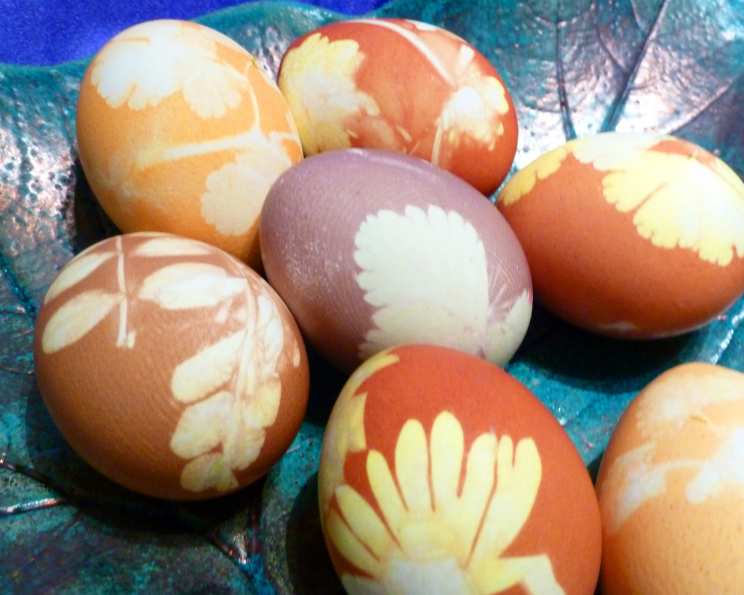
Unveiling Nature’s Palette: Onion and Herbs Dyed Easter Eggs
There’s a particular magic to Easter morning, a quiet hum of anticipation that always takes me back to my grandmother’s kitchen. Long before the pastel plastic eggs filled with questionable candy, my sister and I would be tasked with a more ancient, more beautiful form of egg decorating. The air would be thick with the earthy scent of boiling onion skins, a fragrance that to this day, I associate with the joy of creating something truly special from the simplest of ingredients. Watching those humble brown skins transform into a rich, warm dye, and then seeing the delicate patterns emerge from beneath the leaves, felt like a culinary alchemy, a secret whispered from generations past.
Recipe Overview
- Prep Time: 30 minutes (plus time for dye steeping)
- Cook Time: 15 minutes simmering + steeping time
- Total Time: Approximately 1 hour 15 minutes (plus overnight steeping for richer color)
- Servings: 6 eggs
- Yields: 6 decorated eggs
- Dietary Type: Vegetarian, Naturally Dyed
Ingredients
- 6 large eggs
- Dried onion skins from 4 large onions (red and yellow onion skins yield different shades)
- Fresh herbs, leaves, and small flowers for decoration (e.g., parsley, dill, clover, violets, rose petals)
- Optional: Wax for an alternative resist technique
Equipment Needed
- Medium saucepan
- Fine-mesh sieve or cheesecloth
- Small bowls or containers for dye
- Slotted spoon or tongs
- Paper towels or clean kitchen towels
- Small scissors
- Old, clean nylons (pantyhose)
- Twist ties or string
Instructions
The art of dyeing Easter eggs with natural ingredients is a beautiful, almost meditative process. It connects us to the earth and to the traditions that have shaped celebrations for centuries. We’ll be using the humble onion skin, a pantry staple, to create a stunning reddish-brown hue, and employing a clever resist technique with fresh leaves to craft intricate patterns.
-
Prepare the Reddish-Brown Dye: Begin by collecting the dried skins from approximately 4 large onions. The more skins you have, the deeper and richer your color will be. Place these onion skins into a medium saucepan. Cover them with water – enough to generously submerge the skins. Bring the water to a boil over medium-high heat. Once boiling, reduce the heat to low, cover the saucepan, and simmer for 15 minutes. After simmering, remove the saucepan from the heat. Allow the onion skin and water mixture to steep. For a good color, let it steep for at least 30 minutes, or until the water has taken on a rich reddish-brown hue. For even deeper, more vibrant colors, you can leave this to steep overnight at room temperature.
-
Prepare the Yellow Dye (Optional but Recommended for Variety): If you wish to introduce a sunny yellow to your palette, prepare a separate dye solution. In a small bowl or saucepan, combine 1 teaspoon of turmeric powder with 3 cups of water. Bring this mixture to a boil, then immediately remove it from the heat and set it aside.
-
Prepare the Eggs for Decoration: While your dyes are steeping, prepare your eggs. It’s best to use hard-boiled eggs for this process. You’ll need to carefully clip your chosen herbs, leaves, and flowers into small lengths or individual pieces. Dampen each egg slightly with a little water. This slight moisture will help the leaves and herbs adhere more firmly to the surface of the egg. Arrange a sprig of herbs or a few leaves onto the damp surface of an egg, pressing them gently into place. The aim here is to create a barrier, blocking the dye from reaching the areas covered by the leaves.
-
Create the Resist Pattern with Nylons: Take one foot of an old, clean nylon stocking. Stretch this piece of nylon around an egg that has herbs or leaves attached. Carefully tie it tightly at one end with a knot or a twist tie, ensuring the leaves are held securely in place against the egg. Once tied, carefully snip the excess nylon away, leaving a little bit of slack around the knot. Repeat this process with another section of the nylon for the open end of the stocking, tying off the nylon securely around the other side of the egg. This creates a snug casing that will hold your decorative elements in place during the dyeing process. Tie another knot at the open end of the empty nylon leg, and then cut off the excess nylon. Repeat this entire nylon wrapping process for each egg, ensuring each one is well-secured.
-
Dye the Eggs: By this time, your onion skin dye should be at a warm, not hot, temperature. Gently load the prepared eggs into the saucepan with the onion skin dye. The eggs should be completely covered with the dye liquid. If they are not fully submerged, add just enough water to cover them. If you are using the turmeric dye, you will need a separate pot for these eggs.
-
Boil and Steep: Bring the dye water with the eggs in it to a boil over medium-high heat. Once it begins to boil, cover the saucepan and immediately remove it from the heat. Allow the eggs to soak in the warm dye until the dye water cools down to warm room temperature. For the deepest color, you can leave them to steep for several hours, or even overnight, in a cool place. The longer they soak, the more intense the color will become.
-
Reveal the Designs: Once the dye water has cooled, carefully remove the eggs from the saucepan using a slotted spoon or tongs. Gently snip off the knots on the nylons. Carefully peel away the nylons and the herbs or leaves. Rinse the eggs gently under cool water to remove any residual dye or plant matter. Discard the nylons and the used herbs.
-
Dry and Shine: Pat the eggs gently dry with paper towels or a clean kitchen towel. To enhance the beautiful, deep reddish-brown color and give them a lovely sheen, rub each egg with a small amount of vegetable oil.
Expert Tips & Tricks
- Color Intensity: The intensity of the color is directly related to the amount of onion skins used and the duration of steeping. For very deep colors, simmer the skins for longer initially, and then steep the eggs overnight in a cool place.
- Varied Onion Skins: Using a mix of red and yellow onion skins can yield a beautiful spectrum of browns and russets.
- Leaf Selection: Experiment with different types of leaves for unique patterns. Delicate fern fronds, flat parsley leaves, or even the veins of larger leaves can create distinct designs.
- Wax Resist: For a truly classic approach, you can use wax. Melt some beeswax or a mixture of beeswax and paraffin. Use a stylus, a toothpick, or a fine brush to draw patterns directly onto the egg. Once the wax is dry, dye the egg as usual. After dyeing, gently rub the wax off with a soft cloth to reveal the underlying color. This technique can be combined with the leaf resist for layered designs.
- Hard-Boiling is Key: Ensure your eggs are hard-boiled thoroughly to prevent them from cracking during the dyeing process. Cool them completely before decorating.
Serving & Storage Suggestions
These beautifully dyed eggs are a feast for the eyes and can be enjoyed in several ways. They are perfect as decorative centerpieces for your Easter table, nestled in a decorative basket or a bed of fresh greens. If you’ve used hard-boiled eggs, they can be peeled and enjoyed as part of your Easter meal or as a nutritious snack.
For storing, ensure the eggs are completely dry before placing them in an airtight container. Hard-boiled and dyed eggs will keep in the refrigerator for up to 7 days. It is advisable to keep them refrigerated to maintain freshness and safety, especially if they have been dyed with natural ingredients that could potentially spoil over time at room temperature. Avoid storing them in direct sunlight, as this can fade the colors.
Nutritional Information
While these eggs are primarily decorative, when consumed, their nutritional value is similar to that of a standard hard-boiled egg, with the added natural pigments from the dyes.
| Nutrient | Amount per Egg (approx.) | % Daily Value |
|---|---|---|
| Calories | 70 kcal | – |
| Total Fat | 5 g | 6% |
| Saturated Fat | 1.5 g | 8% |
| Cholesterol | 185 mg | 62% |
| Sodium | 60 mg | 3% |
| Total Carbohydrate | 0.6 g | 0% |
| Dietary Fiber | 0 g | 0% |
| Sugars | 0.6 g | 1% |
| Protein | 6 g | 12% |
(Note: Nutritional values are approximate and can vary based on egg size and specific ingredients used.)
Variations & Substitutions
The beauty of natural dyeing lies in its versatility. While onion skins provide a gorgeous reddish-brown, don’t hesitate to explore other natural colorants:
- Yellow: As mentioned, turmeric powder is a fantastic and readily available source of vibrant yellow.
- Blue/Purple: Red cabbage (shredded and simmered) yields a beautiful blue, which can turn purple with the addition of a touch of vinegar.
- Maroon/Pink: Beets (chopped and simmered) will create a lovely maroon or pinkish hue.
- Brown: A strong brew of coffee or black tea can produce various shades of brown.
- Green: Simmered spinach leaves or parsley can lend a subtle green tint.
- Bluish-Gray: Blueberries, mashed and simmered, can result in a muted bluish-gray.
- Rust Color: Paprika can create a warm, rusty orange.
Feel free to combine these dyes to create a spectrum of colors on your Easter eggs. You can also use different types of leaves or even small flower petals for an even more intricate and personalized design.
FAQs
Q: Can I use fresh onion skins instead of dried?
A: While dried onion skins are preferred for their concentrated color, fresh ones can be used. You may need to use more of them and simmer them for a bit longer to extract sufficient pigment.
Q: How do I ensure the leaves stick to the egg properly?
A: Dampening the egg slightly with water before applying the leaves is key. The moisture helps them adhere, and the nylon casing then secures them firmly in place.
Q: What if the egg cracks while dyeing?
A: A small amount of vinegar (about 1 tablespoon per cup of dye) can be added to the dye bath. This helps to strengthen the egg shell and prevent cracking. Also, ensure your eggs are fully hard-boiled and have cooled before dyeing.
Q: Can I reuse the dye?
A: Yes, you can strain the dye liquid and store it in the refrigerator for future use, though the color may become less vibrant with each reuse. For optimal color, it’s best to use fresh dye each time.
Q: Are these eggs safe to eat after dyeing?
A: As long as you use food-grade natural ingredients like onion skins, turmeric, beets, and herbs, and you hard-boil the eggs properly, they are safe to eat. Ensure the eggs have been stored in the refrigerator.
Final Thoughts
There is a profound satisfaction in creating something beautiful from the earth’s bounty. These Onion and Herbs Dyed Easter Eggs are not just a craft project; they are a connection to nature, a nod to tradition, and a celebration of mindful creation. They remind us that even the most ordinary ingredients possess extraordinary potential. I encourage you to gather your family, collect those colorful onion skins, and embark on this wonderfully rewarding dyeing adventure. The delicate patterns that emerge will surely bring a touch of natural magic to your Easter celebration, a testament to the artistry that can be found in the simplest of kitchens.