
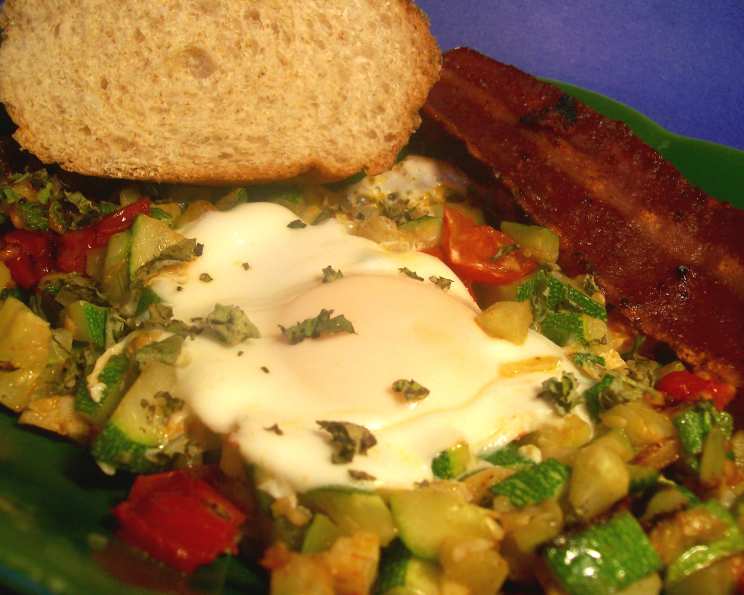
One-Pan Summer Eggs: A Sun-Kissed Symphony of Garden Bounty
Summer, for me, is a sensory explosion. It’s the sticky sweetness of perfectly ripe strawberries on a sun-drenched afternoon, the buzzing symphony of bees in a lavender bush, and, most deliciously, the overwhelming generosity of my (or a friend’s) garden. There’s a particular joy in facing a cascade of zucchinis and a riot of cherry tomatoes, a bounty that practically begs to be transformed into something simple yet sublime. This one-pan wonder, a recipe I first discovered tucked within the pages of BBC Good Food Magazine many summers ago, quickly became my go-to for harnessing that peak-season magic, turning garden surplus into a vibrant, satisfying meal with minimal fuss.
Recipe Overview
- Prep Time: 10 minutes
- Cook Time: 10 minutes
- Total Time: 20 minutes
- Servings: 2
- Yield: 1 dish
- Dietary Type: Vegetarian
Ingredients
- 1 tablespoon olive oil
- 2 large zucchini, chopped into chunks
- 7 ounces cherry tomatoes, halved
- 1 garlic clove, crushed
- 2 eggs
- 5 fresh basil leaves, to serve
- A little seasoning (salt and freshly ground black pepper)
Equipment Needed
- A non-stick frying pan (ideally with a lid)
- A sharp knife
- A cutting board
- A spoon or spatula for stirring
Instructions
This dish celebrates simplicity and speed, making it perfect for those languid summer mornings when you want a delicious meal without a mountain of washing up.
- Begin by heating the olive oil in a non-stick frying pan over a medium heat. You want the oil to shimmer slightly, indicating it’s ready for the vegetables.
- Add the chopped zucchini to the hot pan. Fry for approximately 5 minutes, stirring every so often. The goal here is to encourage the zucchini to begin softening and develop a touch of golden color, coaxing out its natural sweetness.
- Next, introduce the halved cherry tomatoes and the crushed garlic clove to the pan. Continue to cook for a few minutes more. The tomatoes will start to soften and burst, releasing their juicy sweetness, while the garlic will become fragrant, infusing the entire mixture with its characteristic aroma.
- Now, stir in a little seasoning. I recommend a good pinch of salt and a generous grind of freshly ground black pepper to enhance the natural flavors of the vegetables.
- To create the elegant nests for your eggs, make two distinct gaps within the vegetable mixture. Carefully crack one egg into each of these gaps.
- Cover the frying pan with a lid or, if you don’t have one, a sheet of foil to create a steamy environment. This is the key to perfectly cooking the eggs. Let them cook for 2 to 3 minutes. The exact time will depend on your preference for egg doneness. You’re aiming for whites that are set but still have a slight wobble, and yolks that remain wonderfully runny, ready to coat the vegetables with their creamy richness.
- Finally, scatter a few fresh basil leaves over the top just before serving. The peppery, slightly sweet aroma of fresh basil is the perfect counterpoint to the cooked vegetables and eggs.
Expert Tips & Tricks
The beauty of this dish lies in its adaptability and the inherent freshness of its ingredients. However, a few chef’s whispers can elevate it even further. When selecting your zucchini, opt for smaller, younger ones; they tend to be less watery and have a more tender texture. If your cherry tomatoes are particularly large, giving them a quick quartering can ensure they soften more evenly and release their juices beautifully. Don’t be shy with the seasoning at step 4; summer vegetables love a bit of coaxing with salt and pepper to truly sing. For that perfect runny yolk, watch the eggs closely during the final cooking stage. If you prefer them more set, simply extend the cooking time by a minute or two, but be mindful not to overcook them, which can lead to a rubbery texture.
Serving & Storage Suggestions
This One-Pan Summer Eggs dish is a delightful celebration of spontaneous cooking and is best enjoyed immediately, right from the pan. Serve it hot, perhaps with a side of warm, crusty bread to soak up any of those delicious runny yolks and vegetable juices. It’s a complete meal in itself, perfect for a leisurely brunch, a light lunch, or even a quick and satisfying dinner.
Leftovers, while not ideal for this particular dish due to the nature of the eggs, can be stored. Carefully transfer any remaining cooked mixture into an airtight container. It will keep in the refrigerator for up to 1 day. Reheating can be done gently in a non-stick pan over low heat, or very cautiously in the microwave, ensuring you don’t overcook the eggs further. However, I highly recommend making just enough for one meal to fully appreciate the fresh textures and flavors.
Nutritional Information
| Nutrient | Amount per Serving | % Daily Value |
|---|---|---|
| Calories | 205.4 kcal | N/A |
| Calories from Fat | 112 kcal | N/A |
| Total Fat | 12.5 g | 19% |
| Saturated Fat | 2.6 g | 13% |
| Cholesterol | 211.5 mg | 70% |
| Sodium | 107.7 mg | 4% |
| Total Carbohydrate | 15.7 g | 5% |
| Dietary Fiber | 4.8 g | 19% |
| Sugars | 8.6 g | 34% |
| Protein | 11.2 g | 22% |
(Note: Nutritional values are estimates and can vary based on specific ingredients and quantities used.)
Variations & Substitutions
While this recipe shines in its original form, it’s a fantastic canvas for culinary creativity. If you find yourself with an abundance of other summer squash, feel free to swap out one of the zucchinis for some pattypan squash or even thinly sliced eggplant, adjusting the initial cooking time as needed for tenderness. For a touch of heat, a pinch of red pepper flakes added with the garlic can be a welcome addition. If you’re not a fan of basil, a sprinkle of fresh parsley or chives can offer a different, yet equally delightful, herbaceous note. For a more robust meal, consider adding a handful of spinach or kale wilting them down with the tomatoes, or even some pre-cooked chorizo or feta cheese sprinkled over before covering to cook the eggs.
FAQs
Q: Can I use frozen vegetables for this recipe?
A: While fresh vegetables are highly recommended for the best texture and flavor, you could technically use frozen zucchini and tomatoes. Ensure they are thawed and well-drained of excess moisture before adding them to the pan to avoid a watery dish.
Q: What if I don’t have a lid for my frying pan?
A: A sheet of aluminum foil works perfectly as a makeshift lid. Ensure it’s sealed around the edges of the pan to trap the steam effectively.
Q: How do I know when the eggs are cooked to my liking?
A: For runny yolks, look for the egg whites to be fully set but still shimmering. For firmer yolks, cook a minute or two longer, checking the consistency as you go.
Q: Can I make this recipe ahead of time?
A: This dish is best prepared and eaten fresh. The vegetables can be prepped and stored in the refrigerator for up to a day, but the eggs should be cooked just before serving to ensure the best texture.
Q: What kind of pan is best for this recipe?
A: A good quality non-stick frying pan is ideal. It ensures the vegetables and eggs don’t stick, making for easier cooking and cleanup.
A Taste of Summer’s Embrace
This One-Pan Summer Eggs recipe is more than just a meal; it’s an ode to the season. It’s the kind of dish that embodies the joy of simple pleasures, the bounty of nature, and the ease of cooking when ingredients are at their peak. It’s a testament to the fact that sometimes, the most profound culinary experiences come from the most uncomplicated preparations. I encourage you to embrace the spirit of summer, head to your garden (or local market!), gather these vibrant ingredients, and let this sun-kissed dish bring a burst of joy to your table. Enjoy every delicious, effortless bite!