
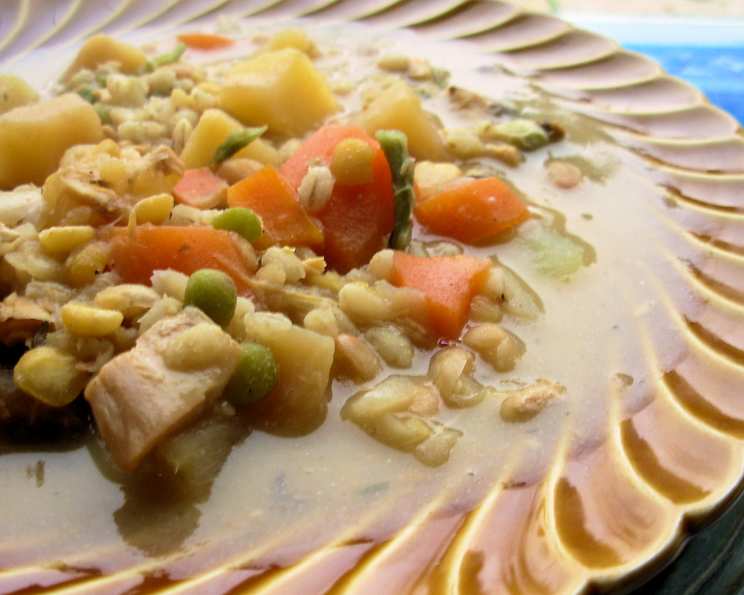
Old Thyme Turkey Scotch Broth With Barley, Beans and Lentils
There’s a particular kind of magic that happens when familiar flavors are transformed into something entirely new and comforting. For me, this Old Thyme Turkey Scotch Broth is that magic in a bowl. It’s a dish that whispers tales of cozy Sunday dinners and resourceful kitchens, a true testament to the beauty of making the most of every precious ingredient. The aroma alone, a fragrant blend of savory turkey, earthy pulses, and the gentle perfume of thyme, transports me back to my grandmother’s kitchen, where nothing was ever truly wasted, and every meal was a celebration of abundance.
Recipe Overview
- Prep Time: 20 minutes (plus overnight soaking)
- Cook Time: 1 hour 15 minutes to 1 hour 30 minutes
- Total Time: 26 hours 30 minutes (includes soaking time)
- Servings: 8
- Yield: Approx. 4-5 pints
- Dietary Type: Dairy-Free
Ingredients
- Leftover whole cold roast turkey, cut into small pieces (enough to yield about 13 ounces of meat)
- 4 pints water
- 1 bunch fresh thyme
- 2 onions, peeled and diced
- 2 large carrots, peeled and diced
- 1 small swede or 1 small rutabaga, peeled and diced
- 2 large potatoes, peeled and diced
- 6 ounces mixed dried pulses, such as split peas, dried beans, red lentils, green lentils, and brown lentils
- 2 ounces pearl barley
- Thyme, to taste (fresh or dried)
- Salt, to taste
- Pepper, to taste
OPTIONAL ADDITIONS:
- 1 large leek, cleaned and cut into small pieces
- 1 stalk celery, cleaned and diced
Equipment Needed
- Large stockpot or saucepan (for making stock)
- Sieve
- Another large stockpot or saucepan (for making the broth)
- Sharp knife and cutting board
- Measuring cups and spoons
Instructions
The true beauty of this Scotch Broth lies in its ability to transform humble leftovers into a deeply satisfying and nourishing meal. It’s a process that requires a little foresight, primarily the overnight soaking of your dried pulses, beans, and barley. So, the evening before you plan to make the broth, gather your mixed dried pulses and pearl barley. Place them in a large bowl and cover generously with cold water. Allow them to soak overnight.
The next morning, drain the soaking water and rinse the pulses and barley thoroughly under cool running water. Set them aside until ready to begin the broth-making process.
Making the Turkey Stock
The foundation of any great broth is a flavorful stock, and in this case, we’re going to extract every last drop of goodness from your leftover roast turkey. Take the leftover whole cold roast turkey, and cut it into small pieces. Place these pieces into a large stockpot or saucepan. Add the bunch of fresh thyme and cover with the 4 pints of water.
Bring this mixture to a gentle simmer over medium heat. Allow it to simmer slowly until the bones are quite clean and have released their essence. This usually takes about 1 to 1.5 hours. Once the stock has developed its flavor, carefully remove the turkey bones and any skin. Put all the turkey meat that has come away from the bones to one side; we’ll add this back to the broth later.
Next, carefully strain the stock through a sieve into a clean bowl or pot. It’s crucial to ensure there are no small bones left in the stock, as this can be a hazard. Once the stock has cooled slightly, skim off any excess fat from the top. You will now have a flavorful turkey stock and the reserved chunks of turkey meat, ready for the next stage.
Assembling and Cooking the Broth
Now, for the hearty part – the broth itself. Return the turkey stock to a large, clean stockpot or saucepan. Add the reserved turkey meat to the pot. If you have any other cold cuts of turkey, feel free to add those in too for extra flavor and texture.
Next, introduce the vegetables and pulses. Add the diced onions, diced carrots, diced swede (or rutabaga), and diced potatoes. Now, stir in all the soaked pulses and the rinsed pearl barley. Give everything a good mix to ensure the ingredients are evenly distributed.
Bring the broth to a gentle simmer once more. Cover the pot and let it cook for about 45 minutes to 1 hour. During this time, the vegetables will become wonderfully tender, and the pulses and barley will soften, absorbing the rich flavors of the stock. You’re looking for the vegetables to be soft and the pulses to be fully cooked, with no “bite” to them.
Once the vegetables and pulses are tender, add a little more fresh thyme (or dried thyme if fresh is unavailable) to the pot. Season generously with salt and pepper to your liking. Stir well and allow the broth to simmer gently for a further 10 to 15 minutes. The key here is to heat it through until it’s piping hot, but NOT boiling. A gentle simmer preserves the integrity of the ingredients and prevents the broth from becoming cloudy.
If you’re using the optional leek or celery, add them along with the other vegetables at the start of this step to ensure they cook through and soften.
Expert Tips & Tricks
- Pulse Perfection: The soaking and rinsing of your dried pulses are non-negotiable for achieving the best texture and digestibility. Don’t skip this step!
- Stock Clarity: For an even clearer stock, you can strain it twice, or even line your sieve with cheesecloth.
- Flavor Boost: If you have any turkey giblets, they can be simmered with the turkey bones to create an even richer stock. Just be sure to remove them before straining.
- Chunky is Key: This recipe is designed for a hearty, thick broth. If you prefer a thinner soup, you can reduce the quantity of pulses and barley or add more water or turkey stock.
- Prepping Ahead: The turkey stock can be made a day in advance. Once cooled, store it in the refrigerator. Skim the fat just before you plan to make the broth.
Serving & Storage Suggestions
This Old Thyme Turkey Scotch Broth is a meal in itself, but it truly shines when served with accompaniments that echo its comforting nature. Ladle generous portions into warm bowls. It is absolutely wonderful served with fluffy dumplings, a thick slice of fresh crusty bread for dipping, a selection of crackers, or warm assorted bread rolls.
For storage, allow the broth to cool completely before transferring it to airtight containers. It will keep well in the refrigerator for up to 3 days.
Freezing Note: This broth can be frozen, but ONLY if the turkey was fresh and not frozen before roasting. Once defrosted, it can only be reheated once. To freeze, portion the cooled broth into freezer-safe containers, leaving a little headspace for expansion. It will keep in the freezer for up to 3 months.
To reheat, thaw frozen broth overnight in the refrigerator. Gently reheat on the stovetop over low heat, stirring occasionally, until piping hot.
Nutritional Information
| Nutrient | Amount per Serving | % Daily Value |
|---|---|---|
| Calories | 123.8 kcal | N/A |
| Calories from Fat | 2 g | 2 % |
| Total Fat | 0.3 g | 0 % |
| Saturated Fat | 0.1 g | 0 % |
| Cholesterol | 0 mg | 0 % |
| Sodium | 28.9 mg | 1 % |
| Total Carbohydrate | 28.1 g | 9 % |
| Dietary Fiber | 4.6 g | 18 % |
| Sugars | 4.1 g | 16 % |
| Protein | 3.3 g | 6 % |
Nutritional values are estimates and can vary based on the specific ingredients and quantities used.
Variations & Substitutions
- Vegetable Medley: Feel free to add other sturdy vegetables that you have on hand, such as parsnips, turnips, or even a handful of peas or corn towards the end of cooking.
- Herbaceous Notes: Experiment with other herbs like rosemary or sage, which also pair beautifully with turkey.
- Bean Variety: If you can’t find a mixed pulse blend, you can create your own by combining individual dried beans, lentils, and split peas. Just ensure you follow the overnight soaking and rinsing instructions for each type.
FAQs
Q: Can I make this broth without leftover turkey?
A: Yes, you can substitute the turkey with chicken bones or even use a good quality vegetable stock as the base. The flavor profile will be different, but it will still be delicious.
Q: My pulses seem hard after cooking, what did I do wrong?
A: Ensure you have soaked the pulses overnight and that they have been rinsed thoroughly. Also, make sure they are simmered long enough in the broth until tender. Very old dried pulses can sometimes take longer to cook.
Q: How can I make this broth thicker?
A: To achieve a thicker broth, you can mash some of the cooked vegetables against the side of the pot, or add a cornstarch slurry (1 tablespoon cornstarch mixed with 2 tablespoons cold water) in the last 5 minutes of cooking.
Q: Can I use canned beans or lentils instead of dried?
A: While you can use canned pulses for convenience, the flavor and texture will be different. If using canned, rinse them well and add them during the last 15-20 minutes of cooking to heat through, rather than simmering them for the full duration.
Q: Is this broth suitable for a low-sodium diet?
A: You can significantly reduce the sodium content by omitting added salt and relying on the natural flavors of the turkey and vegetables.
Final Thoughts
This Old Thyme Turkey Scotch Broth is more than just a recipe; it’s a warm embrace on a chilly day, a celebration of culinary resourcefulness, and a delicious reminder that the best meals often come from the simplest ingredients. It’s the kind of dish that builds character and nourishes the soul. I encourage you to try it, to make it your own, and to share its comforting warmth with your loved ones. It’s truly a testament to the magic that happens in a pot, transforming leftovers into a culinary treasure.