
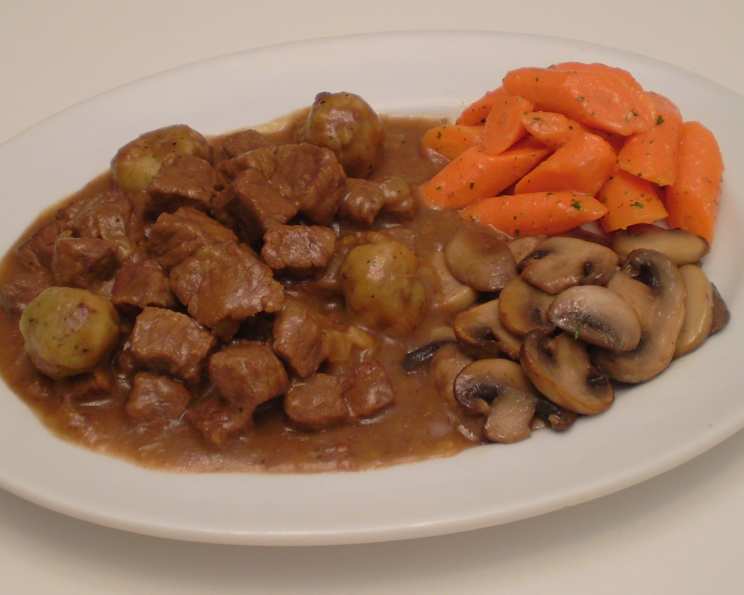
A Taste of Nostalgia: Old Recipe for Danish Stew (Stuvet Oksekød)
The scent of simmering meat, the comforting weight of a well-loved cast-iron pot, and the soft murmur of conversation around a warm kitchen table – these are the sensory anchors of my fondest memories. This particular Danish stew, Stuvet Oksekød, is more than just a recipe; it’s a culinary embrace, a direct line to a time when comfort food was king and every meal was a shared experience. I stumbled upon this gem, tucked away in a beloved, worn cookbook gifted to me by my mother, a woman who cherished her cookbook collection as much as I cherish these shared moments. It’s a recipe that speaks of patience, of simple, quality ingredients transformed by time and care into something truly extraordinary.
Recipe Overview
- Prep Time: Approximately 20 minutes (including chopping and ingredient preparation)
- Cook Time: Approximately 2 hours and 35 minutes
- Total Time: Approximately 2 hours and 55 minutes
- Servings: 6
- Yield: Generous stew for 6
- Dietary Type: Traditional Meat Stew
Ingredients
This is a recipe that calls for honest, wholesome ingredients, the kind that form the backbone of comforting, hearty meals. While substitutions are possible for some items, sticking to the original list will yield the most authentic flavor.
For the Stew:
- 3 tablespoons butter
- 2 onions, finely chopped
- 2 ½ lbs top round steaks or bottom round steaks, cut into small squares (about 1-inch cubes)
- 2 tablespoons vinegar (white vinegar or apple cider vinegar work well)
- 1 teaspoon salt
- ¼ teaspoon white pepper
- 2 cups beef broth or 2 cups beef stock
- ¼ teaspoon marjoram
- 1 pinch pepper
For the Dumplings:
- 1 cup flour (all-purpose)
- ¾ teaspoon baking powder
- ½ teaspoon salt
- 3 tablespoons butter, softened
- 1 tablespoon minced parsley
- 2 tablespoons ice water
Equipment Needed
- Large, heavy-bottomed pot or Dutch oven (essential for even cooking)
- Skillet (for browning the dumplings, if desired, though not specified in the original method)
- Mixing bowls
- Measuring cups and spoons
- Whisk
- Sharp knife and cutting board
Instructions
The magic of Stuvet Oksekød lies in its unhurried approach. This isn’t a dish you rush; it’s one you let develop its character slowly, coaxing out layers of deep, savory flavor.
-
Start the Base: Begin by melting the 3 tablespoons of butter in your heavy-bottomed pot or Dutch oven over low heat. Once the butter has melted and is shimmering gently, add the 2 chopped onions. Allow the onions to brown slowly for 10 minutes over this low heat. This gentle browning will sweeten the onions and build a foundational flavor for the stew. Stir occasionally to prevent sticking.
-
Build the Roux: After the onions have softened and begun to brown, add 3 tablespoons of flour to the pot. Stir the flour into the onions and butter, ensuring it’s fully incorporated. Continue to stir until smooth, creating a simple roux. This will help to thicken the stew later.
-
Introduce the Liquid: Slowly add the 2 cups of beef broth or beef stock to the pot, stirring continuously as you pour. Keep stirring until the mixture comes to a boiling point and has begun to thicken.
-
Prepare the Meat: While the sauce is coming to a boil, prepare your meat. In a separate heavy skillet, place the 2 ½ lbs of beef cut into small squares. Sprinkle the meat with the 2 tablespoons of vinegar. The vinegar helps to tenderize the meat during the long cooking process.
-
Combine and Simmer: Add the prepared sauce from the pot to the skillet with the meat. Add the 1 teaspoon of salt, the ¼ teaspoon of white pepper, and the ¼ teaspoon of marjoram. Mix everything well, ensuring the meat is evenly coated with the sauce and seasonings. Cover the skillet tightly and cook over low heat for 2 hours. This long, slow cooking period is crucial for tenderizing the beef and allowing the flavors to meld beautifully.
-
Prepare the Dumpling Dough: While the stew is simmering away, it’s time to make the dumplings. In a mixing bowl, sift together the 1 cup of flour, the ¾ teaspoon of baking powder, and the ½ teaspoon of salt. Add the 1 tablespoon of minced parsley and the 1 pinch of pepper to the dry ingredients. Mix well to distribute the seasonings evenly.
-
Cut in the Butter: Cut in the 3 tablespoons of softened butter using your fingertips, a pastry blender, or two knives until the mixture resembles coarse crumbs.
-
Form the Dough: Add the 2 tablespoons of ice water to the bowl. Toss lightly with a fork until a ball of dough is just formed. Be careful not to overwork the dough, as this can result in tough dumplings.
-
Shape and Cook the Dumplings: Shape the dough into small balls. You can make them roughly the size of a walnut or slightly larger. Carefully drop these dumpling balls into the simmering stew. Ensure they are mostly submerged in the liquid. Replace the lid on the pot and continue to cook over low heat for 35 more minutes. The dumplings will steam and cook through in the savory stew.
-
Serve: Once the 35 minutes of cooking for the dumplings have elapsed, your Stuvet Oksekød is ready. Arrange the meat on a warm platter, making sure to include some of the tender chunks. Place the dumplings around the meat. Pour the rich, savory liquid from the skillet over all and serve immediately.
Expert Tips & Tricks
- Meat Selection: While top round and bottom round are specified, a well-marbled chuck roast can also be used for an even richer flavor, though it might require a slightly longer braising time. Ensure the cubes are of a consistent size for even cooking.
- Browning the Onions: Don’t rush this step! The low and slow browning of the onions is key to developing a deep, caramelized sweetness that forms the foundation of the stew’s flavor profile.
- Dumpling Texture: For a slightly crispier exterior on the dumplings, you can optionally brown them briefly in a lightly buttered skillet after shaping, before adding them to the stew. However, the classic method yields soft, pillowy dumplings that are perfect for soaking up the sauce.
- Seasoning Adjustment: Taste the stew before adding the dumplings. You might find you want to adjust the salt and pepper slightly to suit your preference, though the initial measurements are a good starting point.
- Thickening the Sauce: If you prefer a thicker stew, you can create a slurry of 1 tablespoon of cornstarch mixed with 2 tablespoons of cold water and stir it into the stew during the last 10 minutes of cooking, before adding the dumplings.
Serving & Storage Suggestions
- Serving: Stuvet Oksekød is a complete meal in itself, but it pairs beautifully with a simple side of boiled potatoes, mashed potatoes, or even a dollop of lingonberry jam for a touch of tartness that cuts through the richness. A crisp green salad can also offer a refreshing contrast.
- Storage: Leftovers can be stored in an airtight container in the refrigerator for up to 3-4 days.
- Reheating: To reheat, gently warm the stew on the stovetop over low heat, stirring occasionally. You can also reheat it in the microwave. If the stew seems a bit too thick after refrigeration, add a splash of beef broth or water to loosen it up. The dumplings may become softer upon reheating, which is perfectly normal and still delicious. Freezing is not generally recommended as it can affect the texture of the meat and dumplings.
Nutritional Information
(Note: Nutritional information is an estimate and can vary based on exact ingredients and portion sizes.)
| Nutrient | Amount per Serving | % Daily Value |
|---|---|---|
| Calories | 541.4 kcal | |
| Calories from Fat | 277 g | |
| Total Fat | 30.8 g | 47% |
| Saturated Fat | 14.7 g | 73% |
| Cholesterol | 146.1 mg | 48% |
| Sodium | 996.1 mg | 41% |
| Total Carbohydrate | 19.9 g | 6% |
| Dietary Fiber | 1.1 g | 4% |
| Sugars | 1.6 g | 6% |
| Protein | 43.9 g | 87% |
Variations & Substitutions
- Vegetarian Version: While this recipe is deeply rooted in its beefy tradition, for a vegetarian twist, you could substitute the beef with hearty mushrooms (like portobellos or cremini) and firm tofu cubes, and use a rich vegetable broth instead of beef broth. Adjust the cooking time accordingly, as vegetarian ingredients won’t require the same long braising.
- Herb Variations: While marjoram is traditional, you could experiment with other earthy herbs like thyme or rosemary in small quantities.
- Dumpling Additions: For a bit of extra flavor and texture in the dumplings, consider adding a tablespoon of finely grated Parmesan cheese or a pinch of nutmeg to the dry ingredients.
FAQs
Q: Why is vinegar used in this Danish stew?
A: The vinegar acts as a tenderizer for the beef, helping to break down the connective tissues during the long, slow cooking process, resulting in a more tender stew.
Q: Can I use pre-cut stew meat for this recipe?
A: Yes, you can, but ensure the pieces are cut into roughly 1-inch cubes for consistent cooking.
Q: My stew sauce is too thin, what can I do?
A: You can thicken the sauce by making a slurry of 1 tablespoon of cornstarch mixed with 2 tablespoons of cold water. Stir this into the simmering stew during the last 10 minutes of cooking, before adding the dumplings.
Q: How do I prevent the dumplings from sticking to the bottom of the pot?
A: Ensure your pot is properly heated and the stew is at a gentle simmer before dropping in the dumplings. Stirring gently around the edges periodically can also help.
Q: What is the best way to reheat leftover Stuvet Oksekød?
A: Gently reheat the stew on the stovetop over low heat, stirring occasionally, or in the microwave. Add a splash of broth or water if it seems too thick.
Final Thoughts
There’s a profound satisfaction in recreating dishes from the past, in bringing a touch of culinary history to your own table. This Stuvet Oksekød is a testament to the enduring power of simple, honest cooking. It’s a dish that nourishes not just the body, but the soul, evoking warmth, comfort, and a sense of connection. I encourage you to embrace the slow cooking, to allow the aromas to fill your home, and to share this hearty Danish stew with loved ones. It’s a recipe that whispers stories of generations past and invites you to create your own delicious memories.