
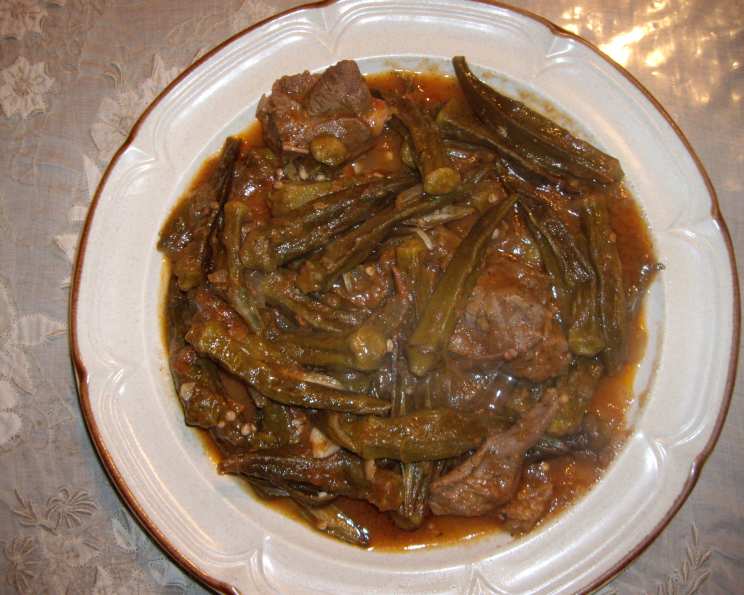
Okra Stew: A Taste of Home
The aroma of simmering okra, mingled with the savory depth of lamb and the bright tang of tomatoes, is a scent that instantly transports me back to my grandmother’s kitchen. On sweltering summer afternoons, when the air hung heavy and humid, this hearty Okra Stew, or “Bamee” as we affectionately call it, was her go-to dish. It was more than just a meal; it was a comforting embrace, a reminder of family gatherings and the simple, profound joy of sharing good food. I remember watching her deftly trim the okra, her movements precise and practiced, and the way she’d hum a quiet tune as the stew bubbled away, filling the house with its irresistible fragrance.
Recipe Overview
- Prep Time: 20 minutes
- Cook Time: 1 hour 15 minutes
- Total Time: 1 hour 35 minutes
- Servings: 6-8
- Yield: A generous pot of stew
- Dietary Type: Can be adapted for dairy-free
Ingredients
- 2 lbs fresh okra (or 2 lbs frozen okra)
- 1 – 1 ½ lbs lamb, cut into stew meat size pieces
- 1 large chopped tomato (or one 28-ounce can diced tomatoes)
- 1 large chopped onion
- 6 diced garlic cloves
- ¼ cup olive oil (or ¼ cup vegetable oil)
- 2 cups water
- 3 teaspoons salt
- 1 teaspoon black pepper
- ½ teaspoon allspice
- ½ cup chopped fresh cilantro (optional) OR 1 teaspoon ground coriander (optional)
Equipment Needed
- A large, heavy-bottomed pot or Dutch oven
- A skillet (for browning okra, if not using the broiler)
- A broiler (if browning okra under the broiler)
- Cutting board and knife
- Measuring cups and spoons
Instructions
- Begin by preparing the okra. If using fresh okra, wash it thoroughly and carefully trim off the stems. It’s crucial to avoid cutting into the pods themselves, as this can release a slimy texture. After trimming, ensure the okra is completely dry. You can achieve this by patting it dry with paper towels or allowing it to air dry for a bit.
- Next, brown the okra. You have a couple of options here. The first is to sprinkle the prepared okra with oil and place it under a hot broiler until it is lightly browned. Keep a close eye on it to prevent burning. Alternatively, you can fry the okra in vegetable oil in a skillet until lightly browned. It’s important to note that if you choose to fry the okra in oil, you should not use the same oil for browning the meat later on.
- In your large pot or Dutch oven, heat the olive oil (or vegetable oil) over medium-high heat. Add the chopped onion and diced garlic cloves and sauté until the onions are translucent and fragrant, about 5-7 minutes.
- Add the lamb meat to the pot along with the salt, black pepper, and allspice. Stir occasionally and sauté until the meat is lightly browned on all sides. This step builds a foundational flavor for the stew.
- Pour in the water and stir to deglaze the pot, scraping up any browned bits from the bottom. Bring the mixture to a boil, then reduce the heat to low, cover the pot, and simmer gently until the meat is tender. This can take anywhere from 45 minutes to 1 hour, depending on the cut of lamb.
- Once the meat is tender, add the browned okra to the pot. If you are using canned tomatoes, add the entire 28-ounce can of diced tomatoes. If you are using fresh tomatoes, add your chopped large tomato. If you are incorporating the optional cilantro or coriander, now is the time to add it. Add the ½ cup of chopped fresh cilantro or the 1 teaspoon of ground coriander.
- Mix all the ingredients well, ensuring the okra and tomatoes are evenly distributed within the stew. Cover the pot again and simmer on low heat until the okra is tender. This will typically take another 20-30 minutes. Taste and adjust seasoning if necessary.
- This meal is excellent when served hot with plain rice. I highly recommend pairing it with my recipe for perfectly cooked plain rice, which complements the rich flavors of the stew beautifully.
Expert Tips & Tricks
- Preventing Sliminess: The key to a great okra stew is managing the okra’s natural mucilage, or slime. Trimming the stems carefully without cutting into the pods is the first defense. Browning the okra before adding it to the stew also helps significantly in reducing this characteristic. For extra insurance, some cooks suggest a quick soak in vinegar water before rinsing and drying, but the browning method is usually sufficient.
- Tender Lamb: For the most tender lamb, ensure you are simmering it gently over low heat for the required time. Don’t rush this process. If you find your lamb is still a bit tough after the initial simmering period, simply continue to cook it, covered, until it yields easily to a fork.
- Tomato Choice: While fresh tomatoes offer a brighter flavor, a good quality canned diced tomato provides consistent texture and sweetness. The choice often comes down to personal preference and what’s readily available.
- Herb Power: Fresh cilantro adds a burst of freshness right at the end, brightening the entire dish. Ground coriander offers a warmer, earthier note. Experiment to see which you prefer, or even use a combination.
Serving & Storage Suggestions
Okra Stew is best served piping hot, its rich aroma beckoning. It is traditionally served alongside fluffy, plain white rice, which acts as a perfect canvas to soak up the flavorful broth. A dollop of plain yogurt or a squeeze of fresh lemon can add a delightful contrast for those who enjoy it.
Leftovers can be stored in an airtight container in the refrigerator for up to 3 days. The flavors often meld and deepen beautifully overnight, making it just as delicious, if not more so, on the second day. Reheat gently on the stovetop over low heat, adding a splash of water or broth if the stew has become too thick. Freezing is also an option, though the texture of the okra may soften slightly upon thawing.
Nutritional Information
Here’s an approximate nutritional breakdown per serving, assuming 8 servings:
| Nutrient | Amount per Serving | % Daily Value |
|---|---|---|
| Calories | 272.2 kcal | |
| Calories from Fat | 56 % | |
| Total Fat | 16.9 g | 25 % |
| Saturated Fat | 4.5 g | 22 % |
| Cholesterol | 40 mg | 13 % |
| Sodium | 1212.7 mg | 50 % |
| Total Carbohydrate | 18.1 g | 6 % |
| Dietary Fiber | 6.5 g | 25 % |
| Sugars | 5.3 g | 21 % |
| Protein | 14.9 g | 29 % |
Note: Nutritional values are estimates and can vary based on specific ingredients and preparation methods.
Variations & Substitutions
- Vegetarian/Vegan Option: For a plant-based version, omit the lamb and use a hearty vegetable broth. Consider adding chickpeas or cubes of firm tofu for protein. You can also incorporate a medley of vegetables like diced zucchini, bell peppers, or carrots for added texture and nutrients.
- Spicy Kick: If you enjoy a bit of heat, add a pinch of red pepper flakes or a finely chopped chili pepper along with the garlic and onions.
- Lemon Zest: A touch of fresh lemon zest added in the last few minutes of cooking can brighten the stew beautifully, offering a subtle citrus note that complements the lamb and okra.
- Thicker Stew: If you prefer a thicker stew, you can mash a portion of the cooked okra against the side of the pot or dissolve a tablespoon of cornstarch in a little cold water and stir it into the simmering stew during the last 10 minutes of cooking.
FAQs
Q: What is Okra Stew called in Arabic?
A: This dish is commonly known as “Bamee” or “Bamya” in various Arabic-speaking regions.
Q: How do I prevent okra from becoming slimy in the stew?
A: The key is to trim the stems carefully without cutting into the pods and to brown the okra before adding it to the main stew. Ensure the okra is dry before browning.
Q: Can I use frozen okra instead of fresh?
A: Yes, absolutely! Frozen okra is a convenient alternative. Ensure it is thawed and patted dry before browning.
Q: What kind of meat is traditionally used in Okra Stew?
A: Lamb is the traditional choice, prized for its rich flavor that stands up well to the other ingredients. However, beef stew meat can also be used.
Q: How long does Okra Stew typically take to cook?
A: The total cooking time is around 1 hour and 35 minutes, with about 1 hour and 15 minutes dedicated to simmering the meat and then the stew itself.
Final Thoughts
This Okra Stew is a testament to the beauty of simple, honest cooking. It’s a dish that comforts, nourishes, and connects us to culinary heritage. I encourage you to gather your ingredients, embrace the process, and bring this fragrant, flavorful stew to your table. Share it with loved ones, savor each spoonful, and let it transport you to a place of warmth and tradition. It’s a dish that, once tasted, will undoubtedly become a cherished favorite.