
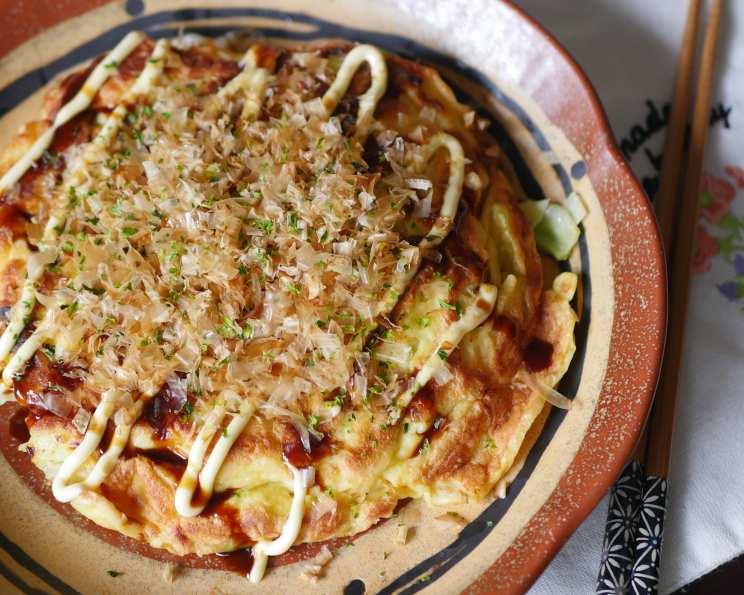
Okonomiyaki: A Taste of Osaka’s Soulful Street Food
There’s a certain magic that happens on the bustling streets of Osaka, a symphony of sizzling sounds and tantalizing aromas that always leads me back to one dish: Okonomiyaki. I remember my first encounter with it, a vibrant, savory pancake cooked right before my eyes on a massive griddle. The sheer artistry of the chef, deftly swirling batter, layering ingredients, and fanning it with an infectious enthusiasm, was captivating. That first bite – a harmonious blend of tender cabbage, savory pork, and a medley of tangy sauces – was an epiphany, a flavor bomb that perfectly encapsulated the warmth and spirit of Japanese street food. It’s a dish that feels both humble and incredibly satisfying, a culinary hug in pancake form.
Recipe Overview
- Prep Time: 15 minutes
- Cook Time: 10 minutes
- Total Time: 25 minutes
- Servings: 2-3
- Yield: 1 Okonomiyaki
- Dietary Type: Customizable (Vegetarian adaptable)
Ingredients
-
For the Okonomiyaki Batter:
- 1 ¼ cups all-purpose flour
- ½ teaspoon baking powder
- ¼ teaspoon salt
- 1 cup soy milk (non-adjusted)
- 2 eggs
- 1 tablespoon red pickled ginger (beni shoga), finely chopped
-
For the Filling and Toppings:
- ¼ head cabbage, thinly sliced
- ⅓ piece scallion, thinly sliced diagonally
- 100 g thinly sliced pork belly (or other thinly sliced meat of choice)
- 2 tablespoons vegetable oil
- Tonkatsu sauce
- Japanese mayonnaise
- Dried bonito flakes (katsuoboshi)
- Aonori (dried green seaweed flakes) (optional, but highly recommended for authentic flavor)
Equipment Needed
- Large mixing bowl
- Whisk
- Sharp knife and cutting board
- Large non-stick skillet or griddle
- Spatula (preferably wide and sturdy for flipping)
- Lid for the skillet
Instructions
-
Prepare the Vegetables: Begin by carefully cutting out the tough core from the cabbage. Then, slice the cabbage thinly along its length. Once shredded, slice these pieces further along their width to achieve small, bite-sized pieces. For the scallions, slice them thinly diagonally. This ensures they distribute evenly throughout the batter and cook beautifully.
-
Make the Batter: In a large mixing bowl, combine the all-purpose flour, baking powder, and salt. Whisk these dry ingredients together to ensure even distribution of the leavening agent and seasoning. Next, whisk the eggs in a separate small bowl until lightly beaten. Add the whisked eggs to the dry ingredients in the large bowl. Then, stir in the finely chopped red pickled ginger (beni shoga). Gradually add the soy milk while whisking continuously until a smooth, lump-free batter forms. It should have a consistency similar to thick pancake batter.
-
Incorporate the Filling: Once the batter is well-mixed, add the prepared sliced cabbage and scallions directly into the bowl. Using a spatula or your hands, gently mix all the ingredients together, ensuring that the cabbage and scallions are thoroughly coated with the batter. Avoid overmixing, as this can toughen the cabbage.
-
Cook the First Side: Heat a large non-stick skillet or griddle over medium heat. Add 2 tablespoons of vegetable oil and allow it to heat up until shimmering. Carefully pour a generous portion of the cabbage mixture into the skillet to form a round pancake, about ¾-inch thick. The size will depend on your skillet and desired serving portion. Immediately arrange a few pieces of the thinly sliced pork belly on top of the uncooked batter. Cover the skillet with a lid and fry for approximately 5 minutes. You are looking for the bottom part to turn a deep golden brown and become firm to the touch.
-
Flip and Cook the Second Side: After 5 minutes, remove the lid. This is the moment of truth for flipping! Using a sturdy spatula, carefully flip the okonomiyaki over to cook the other side. It’s essential to be confident and swift here to avoid breaking it. Replace the lid of the pan and cook for another 5 minutes, or until the second side and the pork slices have become nicely browned and cooked through.
-
Serve and Garnish: Once the bottom part is perfectly cooked and the pork is rendered and crispy, carefully transfer the okonomiyaki onto a serving plate. Now comes the fun part of dressing it up! Drizzle generously with Tonkatsu sauce and then artfully add Japanese mayonnaise in stripes or swirls over the top. Finally, finish with a liberal sprinkling of dried bonito flakes (katsuobushi), which will dance and undulate from the heat, and aonori for that unmistakable oceanic aroma and umami.
Expert Tips & Tricks
- Cabbage Cut: The key to a tender okonomiyaki is how you cut the cabbage. Thin, uniform shreds ensure it cooks through evenly without becoming mushy.
- Batter Consistency: If your batter seems too thick, add a splash more soy milk. If it’s too thin, a tablespoon more flour should do the trick.
- Pork Placement: Placing the pork on top allows it to cook and crisp up beautifully, rendering its delicious fat into the pancake.
- The Flip: Don’t be intimidated by the flip! A wide, flat spatula is your best friend. If you’re nervous, you can always cook it in smaller, more manageable portions.
- Customization: While pork is traditional, feel free to experiment with thinly sliced chicken, shrimp, or even omit the meat entirely for a vegetarian version. Just be sure to cook any seafood thoroughly.
- Topping Artistry: Have fun with the toppings! The criss-cross pattern of mayonnaise over Tonkatsu sauce is classic, but don’t be afraid to get creative.
Serving & Storage Suggestions
Okonomiyaki is best enjoyed immediately after cooking, while it’s hot and the toppings are still vibrant. Serve it directly from the skillet or plated for a more refined presentation. For leftovers, allow the okonomiyaki to cool completely before wrapping it tightly in plastic wrap or placing it in an airtight container. It can be stored in the refrigerator for up to 2 days. To reheat, place it in a non-stick skillet over medium-low heat with a touch of oil, or gently warm it in a toaster oven until heated through. Avoid reheating in the microwave, as it can make the texture soggy.
Nutritional Information
| Nutrient | Amount per Serving | % Daily Value |
|---|---|---|
| Calories | 614.3 kcal | N/A |
| Calories from Fat | 232 kcal | N/A |
| Total Fat | 25.8 g | 39% |
| Saturated Fat | 5.2 g | 26% |
| Cholesterol | 228 mg | 76% |
| Sodium | 563.6 mg | 23% |
| Total Carbohydrate | 62.5 g | 20% |
| Dietary Fiber | 5.3 g | 21% |
| Sugars | 8.8 g | 35% |
| Protein | 31.9 g | 63% |
(Note: Nutritional values are estimates and can vary based on specific ingredients and portion sizes.)
Variations & Substitutions
- Vegetarian Okonomiyaki: Omit the pork belly and consider adding finely chopped shiitake mushrooms, corn, or edamame to the batter for a delicious vegetarian alternative.
- Gluten-Free Okonomiyaki: Substitute the all-purpose flour with a gluten-free all-purpose flour blend. Ensure your baking powder is also gluten-free.
- Soy-Free Okonomiyaki: Use a good quality unsweetened almond milk or oat milk instead of soy milk.
- Kansai-Style Okonomiyaki: This recipe leans towards the Kansai (Osaka) style, which incorporates most ingredients directly into the batter. Another popular style is the Hiroshima-style, which involves layering ingredients and noodles.
- Spicy Kick: Add a pinch of shichimi togarashi (Japanese seven-spice blend) to the batter for a touch of heat.
FAQs
Q: What is Okonomiyaki?
A: Okonomiyaki is a savory Japanese pancake, often described as “as you like it,” due to its customizable ingredients. It’s a popular street food and casual dining option.
Q: What does “Okonomiyaki” mean?
A: The name translates to “grilled as you like it” or “what you like, grilled,” highlighting the dish’s versatility and ability to be customized with various ingredients.
Q: Is Okonomiyaki healthy?
A: While it can be a balanced meal with plenty of vegetables, the additions of sauces and fried pork can increase its calorie and fat content. Using lean meats and being mindful of sauce portions can make it a healthier option.
Q: Can I make Okonomiyaki without pork?
A: Absolutely! Okonomiyaki is highly adaptable. You can easily substitute pork with thinly sliced chicken, shrimp, bacon, or skip the meat altogether for a vegetarian version.
Q: What is Katsuobushi?
A: Katsuobushi refers to dried, fermented, and smoked bonito fish flakes. When heated, they “dance” on the hot okonomiyaki, adding a unique smoky, umami flavor.
Final Thoughts
Okonomiyaki is more than just a meal; it’s an experience, a culinary canvas that invites you to play and personalize. Whether you’re a seasoned home cook or just venturing into the world of Japanese cuisine, this recipe offers a delightful journey. The satisfaction of creating this savory masterpiece from scratch, followed by the sheer joy of savoring its complex flavors and textures, is truly rewarding. Serve it with a crisp Asahi beer or a calming cup of green tea for the ultimate Japanese comfort food experience. Don’t hesitate to experiment with your favorite fillings and share your delicious creations with loved ones. It’s a dish that’s meant to be shared and enjoyed!