
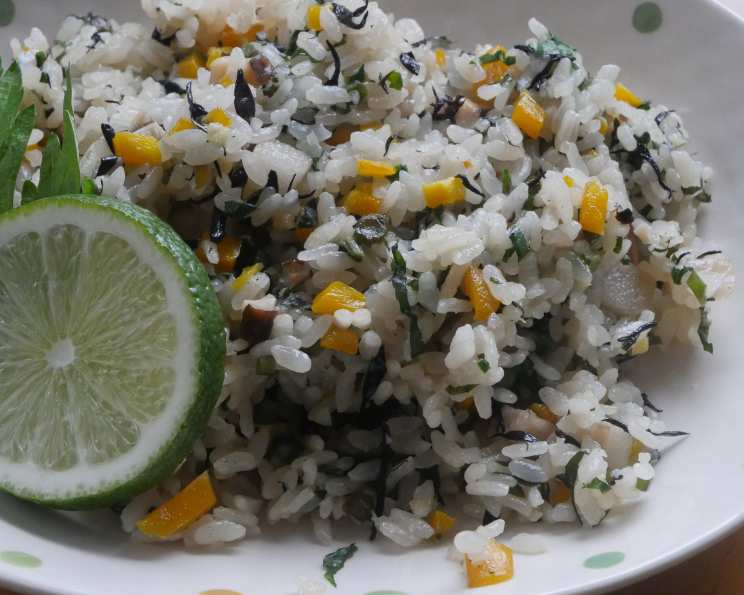
Okinawa Mixed Rice with Japanese Mugwort (Yomogi Gohan)
The scent of yomogi, or Japanese mugwort, always transports me back to my childhood summers spent in Okinawa. It wasn’t just the vibrant green fields it carpeted, but the way my grandmother would pluck it with such reverence, her hands stained a faint green. She’d tell me stories of its medicinal properties, its ability to ward off colds and bring good fortune, while she meticulously prepared it for our meals. The unique, slightly peppery and earthy aroma of yomogi infusing into the rice, mingling with the savory notes of shiitake and the subtle sweetness of Okinawan carrots, was a culinary signature of those cherished days. It’s a simple dish, born from the earth and tradition, yet it holds a depth of flavor and a comforting warmth that’s truly unforgettable.
Recipe Overview
- Prep Time: 50 minutes (includes soaking time)
- Cook Time: 20 minutes
- Total Time: 1 hour 10 minutes
- Servings: 2-3
- Yield: Serves 2-3
- Dietary Type: Vegetarian-adaptable (if pork is omitted)
Ingredients
- 2 cups Japanese rice
- 2 pieces dried shiitake mushrooms, soaked in water for 20 minutes
- 2 tablespoons hijiki seaweed, hydrated
- 75 g salt pork, chopped into small pieces
- 50 g Okinawan carrots, thinly sliced and finely chopped
- 2 teaspoons fresh ginger, finely minced
- 1/2 tablespoon sake
- 1/2 tablespoon soy sauce
- 1/4 teaspoon salt
- 1 cup shiitake soaking water
- 1 cup dashi stock
- 1/2 cup Japanese mugwort (yomogi), finely chopped
Equipment Needed
- Medium-sized pot with a lid
- Strainer
- Measuring cups and spoons
- Sharp knife
- Cutting board
Instructions
- Begin by preparing the Japanese rice. Wash the rice 1 to 2 times to remove excess starch. Next, soak the rice in fresh water for approximately 30 minutes. This step is crucial for ensuring the rice cooks evenly and achieves a tender texture.
- While the rice is soaking, prepare the Japanese mugwort (yomogi). Wash the yomogi thoroughly and then chop it finely. Set this aside for later use after the rice has been cooked.
- Address the dried shiitake mushrooms. Soak them in water for about 20 minutes until they are rehydrated and pliable. Once softened, squeeze out any excess water from the shiitake mushrooms and reserve the soaking liquid. This flavorful liquid will be used in the rice seasoning. Cut out the tough stem part of the mushroom and then mince the cap portion.
- Prepare the Okinawan carrots. Slice them thinly, then chop them finely.
- For the aromatics, peel the fresh ginger and then mince it finely.
- If you are using dried hijiki seaweed, soak it in water to rehydrate for about 20 minutes. Drain it well before using. If you are using canned hijiki, it can be used immediately.
- Prepare the salt pork. Chop the salt pork into small, bite-sized pieces.
- In a small bowl, combine the sake, soy sauce, salt, the reserved shiitake soaking water, and the dashi stock. Mix these liquid ingredients thoroughly to create the seasoning base.
- Now, it’s time to assemble the rice mixture. Drain the soaked rice using a strainer and place it into your cooking pot. Add the chopped salt pork, minced shiitake mushrooms, hydrated hijiki seaweed, chopped carrots, minced ginger, and the prepared liquid seasoning mixture to the pot. Mix all the ingredients well to ensure they are evenly distributed throughout the rice.
- Place the lid securely on the pot. Turn the heat to medium-high and bring the contents of the pot to a boil.
- Once the rice begins to boil, reduce the heat to low. Cook the rice, covered, until all the liquid has evaporated. This process typically takes about 10 minutes.
- After the liquid has evaporated, turn off the heat completely. Keep the pot covered for an additional 10 minutes. It is imperative not to open the lid during this resting period. This steaming process allows the rice to cook through completely, resulting in a fluffy and perfectly cooked texture.
- After the 10-minute rest, remove the lid. Add the finely chopped Japanese mugwort (yomogi) to the pot. Mix gently to incorporate the yomogi evenly throughout the cooked rice.
- Serve the Okinawan Mixed Rice hot, transferred to a serving plate.
Expert Tips & Tricks
The beauty of this dish lies in its simplicity and the ability to cook everything in one pot, minimizing cleanup. For an even more intense mushroom flavor, consider using a good quality kombu dashi. If you find the salt pork a bit too salty for your preference, you can rinse it under cold water after chopping to reduce some of the saltiness. For a vegetarian version, simply omit the salt pork and increase the amount of dashi stock or use a vegetarian dashi alternative. Ensure your yomogi is fresh; if it seems a bit wilted, a quick blanch in boiling water before chopping can revive its vibrant green color and flavor.
Serving & Storage Suggestions
This fragrant Okinawan Mixed Rice is best served immediately while piping hot, allowing the aromas to fully captivate. It makes a wonderful main dish for a light meal or a substantial side dish to accompany grilled fish, tempura, or other Japanese delicacies. Garnish with a sprinkle of toasted sesame seeds or a few extra sprigs of fresh yomogi for an added visual appeal and fresh herbaceous note.
Leftovers can be stored in an airtight container in the refrigerator for up to 2 days. To reheat, gently warm it on the stovetop over low heat with a splash of water or dashi to prevent drying out, or microwave it until heated through. Be mindful not to overcook when reheating, as this can make the rice mushy.
Nutritional Information
(Please note: This is an estimated nutritional breakdown. Actual values may vary based on specific ingredients and preparation.)
| Nutrient | Amount per Serving | % Daily Value |
|---|---|---|
| Calories | 1012.8 kcal | – |
| Calories from Fat | – | 28% |
| Total Fat | 31.6 g | 48% |
| Saturated Fat | 11.4 g | 56% |
| Cholesterol | 32.2 mg | 10% |
| Sodium | 1101 mg | 45% |
| Total Carbohydrate | 160.1 g | 53% |
| Dietary Fiber | 4.2 g | 16% |
| Sugars | 1.8 g | 7% |
| Protein | 16.1 g | 32% |
Variations & Substitutions
While the classic preparation features salt pork, you can explore other proteins. Finely diced chicken thigh or even a firm tofu for a vegetarian option can be substituted. If Okinawan carrots are unavailable, regular carrots will work, though they may have a slightly less pronounced sweetness. For a touch of sweetness, a tiny pinch of sugar can be added to the seasoning mix, though this deviates from the traditional preparation. Some variations also include small amounts of edamame or snap peas for added color and texture.
FAQs
Q: Can I use fresh mugwort if I can’t find dried?
A: Yes, absolutely! Fresh yomogi is ideal. Ensure it’s well-washed and finely chopped, and you can use it in the same quantity as specified.
Q: My rice turned out mushy. What went wrong?
A: This often happens if the lid was lifted during the initial boiling or resting phase, or if the heat was too high. Ensure the lid is sealed and resist the urge to peek until the resting period is complete.
Q: Is it essential to soak the rice?
A: Soaking the rice helps it absorb moisture evenly and cook to a tender, fluffy consistency, which is key for mixed rice dishes. It’s highly recommended.
Q: What is dashi stock and where can I find it?
A: Dashi is a fundamental Japanese soup stock made from kombu (kelp) and katsuobushi (bonito flakes). You can find instant dashi powder or liquid dashi in most Asian grocery stores.
Q: Can I make this dish ahead of time?
A: While it’s best enjoyed fresh, you can prepare the ingredients (chop vegetables, rehydrate seaweed) ahead of time. However, cooking the rice and mixing in the yomogi should be done just before serving for optimal texture and flavor.
This Okinawan Mixed Rice with Japanese Mugwort is more than just a meal; it’s a culinary journey that encapsulates the spirit of island cooking. It’s a testament to how humble ingredients, when treated with care, can create dishes of profound depth and comfort. I encourage you to try this recipe and experience the unique, earthy charm of yomogi. Perhaps you’ll find yourself transported to a sun-drenched Okinawan afternoon with every fragrant bite. Enjoy!