
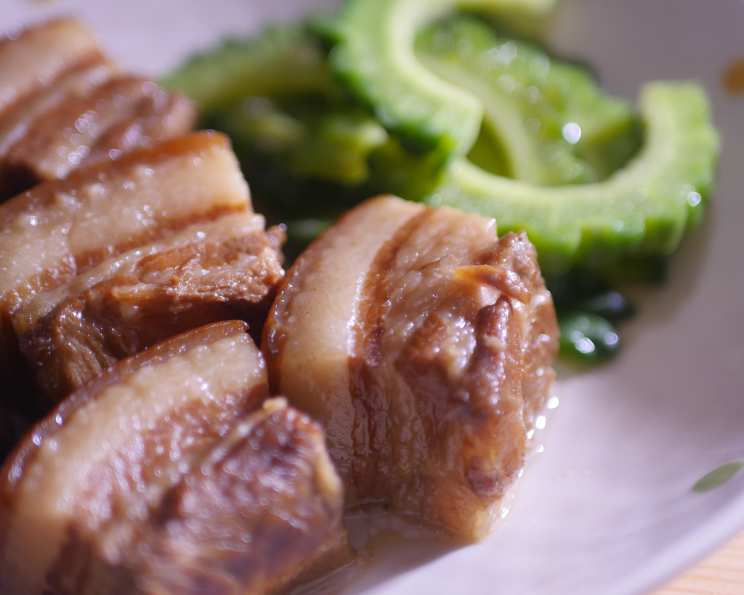
Okinawa Braised Pork Belly (Rafute): A Taste of Island Comfort
There are certain dishes that, once tasted, etch themselves into your memory, their aroma and flavor a siren call to recreate that experience. For me, Okinawa Braised Pork Belly, or Rafute, is one such culinary revelation. I first encountered it on a trip to the islands, served in a humble izakaya where the air buzzed with local chatter and the comforting scent of simmering pork. Each impossibly tender morsel melted on the tongue, a perfect balance of savory, sweet, and a hint of earthy bitterness from the accompanying melon. It was a dish that spoke of tradition, patience, and the profound satisfaction of slow-cooked comfort. The sheer depth of flavor, achieved with seemingly simple ingredients and a long, gentle simmer, was a masterclass in turning humble pork belly into something truly extraordinary.
Recipe Overview
- Prep Time: 20 minutes
- Cook Time: Approximately 3 hours 10 minutes (includes initial boiling, simmering, and final braising)
- Total Time: 3 hours 30 minutes (approximately, allowing for cooling and fat separation)
- Servings: 3-4
- Yield: Sufficient for 3-4 servings
- Dietary Type: Not specified, contains soy sauce
Ingredients
- 500g pork belly
- ½ cup awamori (Okinawan distilled spirit)
- 2 cups dashi (Japanese soup stock)
- 4 tablespoons sugar
- 4 tablespoons soy sauce
- 1 inch ginger, sliced
- 1 piece bitter melon (goya)
- 1 teaspoon salt
Equipment Needed
- Large pot or Dutch oven
- Small pot
- Sharp knife
- Cutting board
- Sieve or slotted spoon
- Measuring cups and spoons
- Pan (for searing)
Instructions
-
Begin by bringing the pork belly to room temperature. Allow it to sit out for approximately 20 minutes before you start the cooking process. This ensures more even searing and cooking.
-
Heat a pan over high heat. Add a small amount of oil and swirl it around to coat the bottom of the pan thinly. Place the pork belly in the hot pan, fat-side down initially, and sear its skin until it caramelizes and becomes beautifully browned. Searing the meat on all sides at this stage is crucial for enhancing the overall flavor of the final dish.
-
In a pot, bring a sufficient amount of water to a rolling boil. Carefully place the seared pork belly into the boiling water, ensuring the skin side is facing upwards. Boil it for about 10 minutes. This step helps to render some of the excess fat and prepares the pork for the braising process.
-
After boiling, remove the pork belly from the hot water and rinse it thoroughly under cool running water. Discard the water used for boiling.
-
In a clean pot, place the rinsed pork belly once more, again with the skin side facing upwards. Add two cups of dashi and half a cup of awamori. If the liquid does not completely cover the pork belly, add more dashi until it is mostly submerged.
-
Turn the heat to high and bring the liquid in the pot to a boil. Once boiling, reduce the heat to low, cover the pot, and simmer for at least one hour, or until the pork belly begins to soften.
-
After the initial simmering, remove the pork belly from the pot. Allow it to cool slightly, then slice it into approximately 5-centimeter cubes.
-
For the broth, let it cool in the refrigerator for about 2 hours. As it cools, the fat will solidify on the surface. Carefully remove this solidified fat from the broth using a sieve or a spoon and discard it. This step of fat removal is entirely optional but can result in a less greasy final dish.
-
Return the cubed pork belly to the pot with the reserved (and now defatted) broth. Add enough additional dashi to just cover the pork belly slices. Add the sliced ginger to the pot. Bring the liquid to a boil again.
-
Once boiling, add the sugar and soy sauce to the pot. Reduce the heat to low, cover, and simmer for another hour, or until the pork belly is exceptionally tender and the fat portions appear glossy and melt-in-your-mouth.
-
While the pork belly is undergoing its final braise, you can prepare the bitter melon, which serves as a traditional and refreshing accompaniment. Cut the bitter melon in half lengthwise. Using a spoon, carefully scoop out the white pith and seeds from the middle of each half.
-
Slice the hollowed-out bitter melon crosswise into approximately 2-centimeter thick rounds.
-
To mitigate some of the bitterness, soak the sliced bitter melon in a bowl with about 2-3 cups of water and 1 teaspoon of salt for 30 minutes.
-
Drain the bitter melon thoroughly. In a small pot, bring fresh water to a boil. Boil the drained bitter melon for 2-3 minutes, or until it just becomes tender. Remove the bitter melon from the boiling water and drain it well.
-
To serve, arrange the tender pieces of rafute on a plate. You can optionally pour a little of the flavorful broth used to cook the pork over the top. Place the prepared bitter melon on the side as a palate cleanser and a delightful contrast.
Expert Tips & Tricks
Achieving that perfect melt-in-your-mouth texture is the hallmark of exceptional Rafute. The initial searing is not just for flavor; it also helps to develop a beautiful crust on the pork, adding another layer of complexity. Don’t be tempted to rush the simmering stages. The long, slow cook is what breaks down the connective tissues in the pork belly, transforming it into that signature tender, gelatinous state. When removing the fat from the broth, a fine-mesh sieve is your best friend. If you’re feeling adventurous, you can also try adding a strip of kombu (dried kelp) to the initial braising liquid for an extra layer of umami.
Serving & Storage Suggestions
Rafute is best served warm, allowing its rich flavors to fully express themselves. It pairs wonderfully with steamed white rice, which acts as a perfect canvas to soak up the delicious braising liquid. The accompanying bitter melon provides a refreshing counterpoint to the richness of the pork. Leftovers can be stored in an airtight container in the refrigerator for up to a week. The flavors often deepen and improve with time. To reheat, gently warm the pork belly and its broth in a pot over low heat, or in the microwave. For an even more intense flavor, consider using the leftover braising liquid as a base for noodle soups or other braised dishes.
Nutritional Information
| Nutrient | Amount per Serving (approximate) | % Daily Value |
|---|---|---|
| Calories | 944.3 kcal | – |
| Calories from Fat | 796 kcal | – |
| Total Fat | 88.5 g | 136% |
| Saturated Fat | 32.3 g | 161% |
| Cholesterol | 120.2 mg | 40% |
| Sodium | 2169.4 mg | 90% |
| Total Carbohydrate | 18.1 g | 6% |
| Dietary Fiber | 0.2 g | 0% |
| Sugars | 17.2 g | 68% |
| Protein | 18.1 g | 36% |
(Note: Nutritional values are estimates and can vary based on specific ingredients and portion sizes.)
Variations & Substitutions
While awamori is traditional and imparts a unique flavor, if it’s unavailable, sake or even a dry white wine can be used as a substitute, though the authentic Okinawan essence might be slightly altered. For those who prefer a less sweet dish, you can slightly reduce the amount of sugar. If bitter melon is not to your liking or is unavailable, you can omit it entirely, or serve the rafute with blanched greens like bok choy or spinach. For a gluten-free option, ensure your soy sauce is gluten-free, and consider using tamari instead.
FAQs
Q: Why is the first boiling step necessary for the pork belly?
A: The initial boiling helps to render some of the excess fat and impurities from the pork belly, which contributes to a cleaner flavor and a less greasy final dish.
Q: Can I use a different type of Japanese cooking wine if I don’t have awamori?
A: Yes, while awamori is traditional, sake or even mirin (though mirin is sweeter) can be used as substitutes, though the flavor profile will be slightly different.
Q: How can I make the bitter melon less bitter?
A: Soaking the sliced bitter melon in salt water for at least 30 minutes, as described in the recipe, is the most effective way to reduce its bitterness. Blanching it briefly also helps.
Q: Is it essential to remove the solidified fat from the broth?
A: No, it’s optional. Removing the fat results in a lighter, less rich broth. Leaving it in will intensify the pork flavor but may make the dish feel heavier.
Q: How do I know when the pork belly is perfectly tender?
A: The pork belly should be easily pierced with a fork, and the layers of fat and meat should be distinct and almost falling apart. It should have a melt-in-your-mouth consistency.
Final Thoughts
Okinawa Braised Pork Belly, or Rafute, is more than just a meal; it’s an experience. It’s a testament to the beauty of patient cooking and the profound rewards it offers. The tender, succulent pork belly, bathed in a rich, savory-sweet broth, is pure comfort food that transports you with every bite. Serve it with a steaming bowl of rice and a crisp beer or a glass of sake for a truly authentic Okinawan feast. I encourage you to embark on this culinary journey, to embrace the slow simmer, and to savor the delightful results. May this recipe bring the warmth and soul of Okinawa right into your own kitchen.