
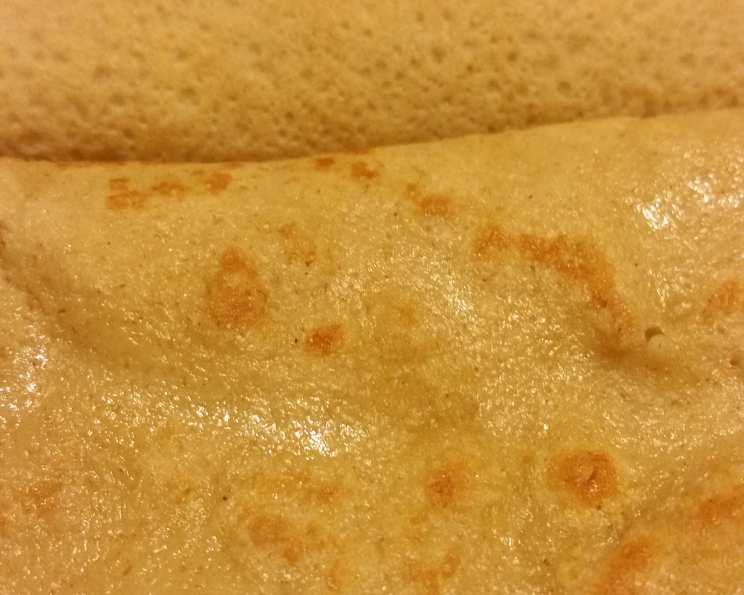
The Delicate Art of Oat Flour Crepes: A Wholesome Breakfast Revelation
There are certain dishes that transport you back in time with just a single bite, and for me, that’s a perfectly made crepe. I remember my grandmother, a woman whose kitchen was perpetually filled with the comforting aroma of baking, would sometimes surprise us with these impossibly thin pancakes. They were delicate, almost ethereal, a canvas for a dollop of crème fraîche and a sprinkle of fresh berries. Those childhood mornings, bathed in soft sunlight and the gentle sizzle of batter on a hot pan, are etched in my memory. Recreating that simple magic, with a wholesome twist, led me to discover the wonderful world of oat flour crepes. They offer that same delightful texture and versatility, but with an added layer of nutty flavor and nutritional goodness that feels both familiar and entirely new.
Recipe Overview
- Prep Time: 6 minutes
- Cook Time: approximately 10-15 minutes (total)
- Total Time: 16-21 minutes
- Servings: 4
- Yield: 4 medium-sized crepes
- Dietary Type: Gluten-Free (if certified gluten-free oats are used), Dairy-Free (with almond or soy milk)
Ingredients
At its heart, this recipe is a testament to simplicity and the power of minimal ingredients. You’ll only need a few pantry staples to bring these delightful crepes to life:
- 1 large egg
- 1/2 cup rolled oats (ensure they are certified gluten-free if needed)
- 1/2 cup almond milk (or 1/2 cup soymilk for a similar dairy-free option)
Equipment Needed
The beauty of oat flour crepes lies in their straightforward preparation, requiring only a few common kitchen tools:
- Food processor or high-powered blender
- Whisk
- Nonstick skillet or crepe pan
- Spatula (preferably thin and flexible)
- Measuring cups and spoons
Instructions
The process of making oat flour crepes is surprisingly quick, allowing you to enjoy a gourmet breakfast without a fuss. Follow these steps for perfect results every time:
-
Prepare the Oat Flour: Begin by placing the 1/2 cup of rolled oats into a food processor or a high-powered blender. Process the oats until they are ground into a fine, flour-like consistency. You want to achieve a texture similar to traditional all-purpose flour, free of any large oat flakes. This step is crucial for ensuring a smooth crepe batter.
-
Combine Wet Ingredients: To the ground oat flour in the food processor or blender, add the 1 large egg and the 1/2 cup of almond milk (or soymilk).
-
Blend the Batter: Secure the lid and blend the ingredients until the mixture is completely smooth and well combined. Scrape down the sides of the blender or processor bowl as needed to ensure all the oat flour is incorporated. The batter should have a thin, pourable consistency, similar to heavy cream. If it seems too thick, you can add a tablespoon or two of additional almond milk or soymilk until the desired consistency is reached.
-
Heat the Pan: Place your nonstick skillet or crepe pan over medium heat. Allow it to preheat thoroughly. A properly heated pan is key to preventing the crepes from sticking and achieving an even cook.
-
Grease the Pan (Optional but Recommended): For extra insurance against sticking and to enhance browning, you can lightly grease the pan with a small amount of neutral oil or butter. You can use a pastry brush or a paper towel dipped in oil to spread a very thin layer across the cooking surface.
-
Pour the Batter: Once the pan is hot and lightly greased, pour a thin layer of the oat flour batter onto the center of the pan. Immediately tilt and swirl the pan to distribute the batter evenly across the entire surface, creating a thin, round crepe. Aim for a consistent thickness for even cooking.
-
Cook the First Side: Let the crepe cook for about 1 to 2 minutes, or until the edges begin to look dry and slightly golden, and small bubbles start to appear on the surface. This indicates that the bottom is set and ready to be flipped.
-
Flip the Crepe: Using a thin and flexible spatula, carefully slide it under the crepe. Gently flip the crepe over to cook the other side. Be confident in your flip; a gentle but decisive motion works best.
-
Cook the Second Side: Cook the second side for an additional 30 seconds to 1 minute, or until it is lightly golden brown. This side cooks much faster as it’s already partially cooked from the heat of the pan.
-
Remove and Repeat: Carefully remove the cooked crepe from the pan and place it onto a plate. Repeat the process with the remaining batter, pouring a thin layer, swirling, cooking the first side, flipping, and cooking the second side, until all the batter is used up. You may need to lightly re-grease the pan between crepes if you notice any sticking.
Expert Tips & Tricks
To elevate your oat flour crepes from good to truly exceptional, consider these seasoned chef insights:
- Oat Flour Consistency is Key: Don’t rush the grinding of the oats. The finer the flour, the smoother and more delicate your crepes will be. A few seconds more in the food processor can make a significant difference.
- Batter Temperature Matters: While not explicitly stated as a separate step, allowing the batter to rest for a few minutes after blending can help the oat flour hydrate, leading to a more cohesive batter. However, given the quick nature of this recipe, it’s often made and used immediately with excellent results.
- Pan Temperature Control: The trick to perfect crepes is consistent pan temperature. If your crepes are cooking too quickly and browning too much on the outside before the inside is cooked, reduce the heat slightly. If they’re taking too long to set, increase it slightly. A medium heat is generally ideal.
- The “Swirl” Technique: Master the art of swirling. The batter should spread quickly and thinly. If it’s too thick and creates a pancake-like layer, it won’t cook evenly or have that signature crepe texture. Adjust with a touch more milk if necessary.
- Don’t Overcrowd the Pan: Make only one crepe at a time. Trying to cook more than one will lead to a crowded pan, uneven cooking, and a higher chance of tearing.
- Keep Them Warm: As you finish each crepe, you can stack them on a plate and cover them loosely with foil to keep them warm while you cook the rest. This also helps to steam them slightly, making them even more pliable.
Serving & Storage Suggestions
Oat flour crepes are wonderfully versatile and can be enjoyed in countless ways. For a classic presentation, stack them neatly on a plate and serve warm.
Serving Ideas:
- Sweet: Top with fresh berries, a drizzle of honey or maple syrup, a dollop of Greek yogurt or whipped cream, or a sprinkle of cinnamon sugar. They are also fantastic with fruit compotes or a light dusting of powdered sugar.
- Savory: While this recipe leans towards a slightly sweet batter due to the oats, they can be adapted for savory fillings. Consider serving them with scrambled eggs, smoked salmon and cream cheese, or sautéed mushrooms and spinach.
Storage:
- Room Temperature: Freshly made crepes are best enjoyed immediately. If you have leftovers and need to store them at room temperature, ensure they are completely cooled, then wrap them tightly in plastic wrap and consume within 24 hours. However, they will lose some of their delicate texture.
- Refrigerator: For longer storage, allow the crepes to cool completely. Stack them between sheets of parchment paper to prevent sticking and place them in an airtight container or wrap them tightly in plastic wrap and then in foil. They will keep in the refrigerator for 2-3 days.
- Freezer: For the longest storage, freeze cooled crepes by stacking them with parchment paper in between and wrapping them securely in plastic wrap and then in foil, or place them in a freezer-safe bag. They can be stored in the freezer for up to 1-2 months.
Reheating:
- From Refrigerator: Gently reheat crepes in a nonstick skillet over low heat for a minute or two per side until warmed through. Alternatively, you can microwave them for 15-30 seconds, but be mindful they may become slightly chewier.
- From Freezer: Thaw crepes overnight in the refrigerator or gently reheat them directly from frozen in a nonstick skillet over low heat, taking care not to burn them.
Nutritional Information
While the exact nutritional values can vary based on the type of milk used and any additions, here is an estimated breakdown for a single oat flour crepe based on the ingredients provided:
| Nutrient | Amount per Serving | % Daily Value |
|---|---|---|
| Calories | 94.2 kcal | |
| Calories from Fat | ||
| Total Fat | 2.6 g | 3% |
| Saturated Fat | 0.6 g | 3% |
| Cholesterol | 52.9 mg | 17% |
| Sodium | 17.9 mg | 0% |
| Total Carbohydrate | 13 g | 4% |
| Dietary Fiber | 2.1 g | 8% |
| Sugars | 0.1 g | 0% |
| Protein | 4.9 g | 9% |
Note: Nutritional values are approximate and may vary based on specific ingredients used (e.g., type of milk).
Variations & Substitutions
The beauty of this simple oat flour crepe recipe is its adaptability. Feel free to experiment with these variations and substitutions to suit your taste and dietary needs:
- Milk Options: While almond and soy milk are excellent dairy-free choices, you can also use other non-dairy milks like oat milk, cashew milk, or even coconut milk (for a subtle tropical flavor). If dairy is not an issue, regular milk can also be used.
- Sweetener: For a slightly sweeter crepe, you can add a teaspoon of maple syrup, honey, or agave nectar to the batter before blending.
- Flavor Infusions: Add a pinch of cinnamon, nutmeg, or cardamom to the batter for a warm, spiced flavor. A drop of vanilla extract can also enhance sweetness and aroma.
- Gluten-Free Assurance: If you require a strictly gluten-free crepe, ensure that your rolled oats are certified gluten-free to avoid cross-contamination.
FAQs (Frequently Asked Questions)
Q: Can I make oat flour crepes ahead of time?
A: Yes, you can make the batter a few hours ahead and store it in the refrigerator. However, it’s best to cook them fresh for optimal texture. Cooked crepes can be stored and reheated as described above.
Q: Why are my oat flour crepes sticking to the pan?
A: Ensure your pan is adequately preheated and properly greased. The batter consistency might also be too thick, preventing it from spreading thinly. A slightly thinner batter and a well-seasoned or nonstick pan are key.
Q: Can I use steel-cut oats instead of rolled oats?
A: It’s best to use rolled oats. Steel-cut oats have a different texture and require a longer cooking time to soften, making them unsuitable for grinding into a fine flour for crepes.
Q: What is the best way to flip a delicate crepe?
A: Use a thin, flexible spatula and slide it gently under the entire crepe. A confident and swift flip is usually more successful than a hesitant one.
Q: How do I store leftover crepes without them sticking together?
A: Always cool crepes completely before storing. Stack them with parchment paper or wax paper in between each layer to prevent them from sticking to each other.
Final Thoughts
These oat flour crepes are a delightful reminder that wholesome ingredients can yield remarkably elegant results. They offer a lighter, nuttier alternative to traditional crepes, proving that you don’t need complex ingredients for a truly satisfying breakfast or brunch. Whether you fill them with vibrant fruits and a touch of sweetness or embrace a savory direction, they are sure to become a cherished part of your culinary repertoire. I encourage you to give them a try, experiment with your favorite toppings, and savor the simple pleasure of a homemade crepe, made with goodness from the ground up. Happy cooking!