
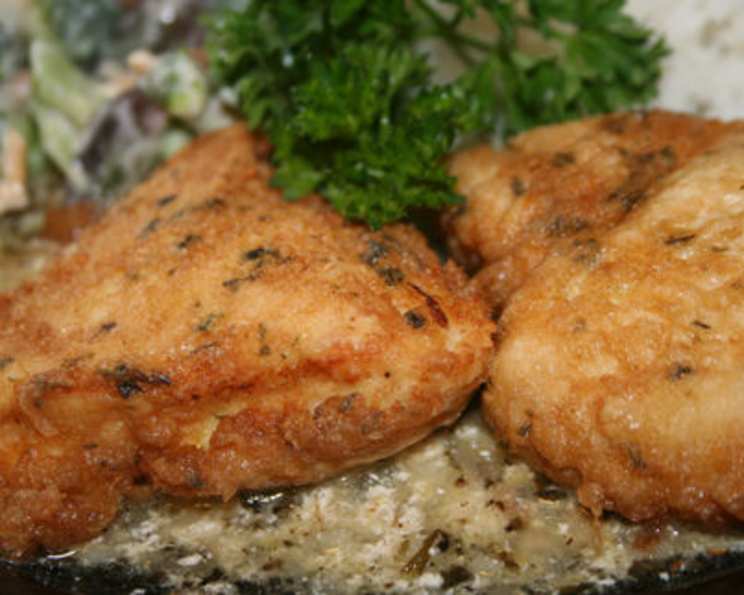
Olive Garden’s Chicken with Lemon Sage Sauce: A Taste of Italian Comfort
There are some dishes that just transport you. For me, the Olive Garden Chicken with Lemon Sage Sauce is one of those culinary magic tricks. I remember my first encounter with this dish vividly. It was on a chilly autumn evening, and the familiar, comforting aroma of Italian herbs and simmering sauce wafted from the kitchen, a promise of something truly special. That first bite – the tender, pan-fried chicken bathed in a bright, herbaceous, and creamy sauce – was a revelation. It wasn’t just dinner; it was an experience, a warm hug on a plate that has since become a cherished favorite for recreating at home.
Recipe Overview
- Prep Time: 30 minutes
- Cook Time: 35 minutes
- Total Time: 1 hour 5 minutes
- Servings: 4
- Yield: 4 servings
- Dietary Type: Contains Dairy, Gluten, and Eggs
Ingredients
This recipe brings together a few distinct components to create its signature flavor profile. Let’s gather everything you’ll need.
For the Piccata Batter:
- 6 whole eggs
- 1/4 cup fresh Parmesan cheese, grated
- 1/4 cup fresh Romano cheese, grated
- 2 tablespoons fresh parsley, chopped (or 2 teaspoons dried parsley)
- 2 tablespoons fresh basil, chopped (or 2 teaspoons dried basil)
For the Chicken:
- 4 (6-ounce) boneless, skinless chicken breasts, split horizontally to create thinner cutlets
- 2 cups all-purpose flour, seasoned generously with salt and black pepper
- 1/2 cup olive oil (or as needed for frying)
For the Lemon Sage Sauce:
- 1/4 cup shallot, finely chopped
- 1 tablespoon garlic, minced
- 2 tablespoons fresh sage, finely chopped
- 2 tablespoons fresh parsley, chopped (or 2 teaspoons dried parsley)
- 1/4 cup fresh lemon juice
- 1 tablespoon lemon zest
- 1/2 cup dry white wine (like Pinot Grigio or Sauvignon Blanc)
- 1 cup heavy cream
- 6 tablespoons unsalted butter, cold and cut into cubes
- Salt and black pepper to taste
Equipment Needed
To bring this delicious dish to life, you’ll want to have these tools on hand:
- Large mixing bowl (for the batter)
- Shallow dishes or plates (for flour and batter)
- Large skillet (preferably oven-safe if you have one, but not essential)
- Tongs
- Baking pan
- Whisk
- Measuring cups and spoons
- Sharp knife and cutting board
- Microplane or zester (for lemon zest)
Instructions
Crafting this Olive Garden favorite involves a few distinct steps, each building upon the last to create a symphony of flavors and textures. Let’s get cooking!
-
Preheat your oven to 350°F (175°C). This ensures that when the chicken is ready to finish baking, your oven will be at the perfect temperature.
-
Prepare the Piccata Batter: In a large mixing bowl, whisk together the whole eggs, grated Parmesan cheese, grated Romano cheese, chopped fresh parsley, and chopped fresh basil. Mix until thoroughly combined and set this bowl aside. This will be your coating for the chicken after it’s floured.
-
Prepare the Chicken: Take your boneless, skinless chicken breasts and, if they aren’t already, split them horizontally to create thinner cutlets, about 1/4-inch thick. This ensures even cooking. You can also gently pound them to this thickness if needed.
-
Dredge and Batter the Chicken: In a shallow dish, place your seasoned flour (seasoned with salt and black pepper). In another shallow dish, have your piccata batter ready. Take each chicken cutlet, coat it evenly in the seasoned flour, shaking off any excess. Then, dip the floured chicken into the piccata batter, ensuring it’s well-coated on both sides.
-
Pan-Fry the Chicken: Heat about 1/2 cup of olive oil in a large skillet over medium heat. Once the oil is shimmering, carefully place the battered chicken into the hot skillet. Fry the chicken for about 2-3 minutes per side, until the edges are golden brown. The goal here is to get a beautiful sear and a slightly crispy exterior.
-
Transfer to Baking Pan: Using tongs, carefully transfer the pan-fried chicken from the skillet into a baking pan.
-
Bake the Chicken: Place the baking pan with the chicken into the preheated 350°F (175°C) oven. Bake for 5 to 6 minutes, or until the chicken is cooked through and the juices run clear. This short bake ensures the chicken is perfectly cooked without overcooking.
-
Begin the Lemon Sage Sauce: While the chicken is baking, carefully drain about 3/4 of the olive oil from the skillet you used for frying. Leave about 1/4 cup of the oil and any browned bits from the chicken in the pan; these add great flavor. Return the skillet to medium heat.
-
Sauté Aromatics and Herbs: Add the finely chopped shallot and minced garlic to the skillet. Sauté for about 2-3 minutes, until the shallots become transparent and the garlic is fragrant. Stir in the finely chopped fresh sage and chopped fresh parsley. Cook for another minute until the herbs are also fragrant.
-
Deglaze and Reduce: Pour in the fresh lemon juice and the dry white wine. Bring the mixture to a simmer and allow the liquid to reduce by about half. This concentrates the flavors.
-
Add Cream and Thicken: Pour in the heavy cream. Bring the sauce to a gentle simmer and continue to cook until the sauce has thickened slightly. You want a luxurious, creamy consistency that will coat the chicken beautifully.
-
Emulsify with Butter: Remove the pan from the heat. Add the cold, cubed unsalted butter to the sauce, one cube at a time, whisking continuously until each piece of butter is fully incorporated and the sauce is smooth and glossy. This process, known as emulsification, gives the sauce its rich texture.
-
Season the Sauce: Season the sauce to taste with salt and black pepper. Taste and adjust as needed to achieve your desired flavor balance.
-
Serve: To serve, ladle about 1/4 cup of the warm Lemon Sage Sauce onto each plate. Place a piece of the baked chicken on top of the sauce. Serve immediately and enjoy this delightful taste of Olive Garden comfort.
Expert Tips & Tricks
- Uniform Chicken Thickness: For truly even cooking, consider using a meat mallet or the flat side of a heavy pan to gently pound the chicken breasts to an even 1/4-inch thickness. This prevents some parts from drying out while others remain undercooked.
- Don’t Overcrowd the Pan: When pan-frying the chicken, cook it in batches if necessary. Overcrowding the skillet will lower the oil temperature and result in steamed, rather than crispy, chicken.
- Cold Butter for Sauce: Using cold butter and whisking it into the sauce off the heat is crucial for achieving a smooth, emulsified, and glossy sauce. Warm butter can cause the sauce to break.
- Herb Freshness: While dried herbs can be used in a pinch, fresh parsley and sage truly elevate this sauce. Their bright, aromatic qualities are incomparable.
- Flour Seasoning: Don’t be shy with the salt and pepper in the flour for dredging. This is your first opportunity to season the chicken itself.
Serving & Storage Suggestions
This dish is best enjoyed immediately after preparation when the chicken is tender and the sauce is at its peak. Serve it alongside your favorite Olive Garden-inspired sides like Fettuccine Alfredo, a crisp Caesar salad, or their famous breadsticks.
Leftovers can be stored in an airtight container in the refrigerator for up to 2-3 days. When reheating, gently warm the chicken and sauce separately in a skillet over low heat or in the microwave. Be careful not to overcook the chicken when reheating, as it can become tough. You may need to add a splash of water or cream to the sauce to loosen it up.
Nutritional Information
Here’s an approximate nutritional breakdown for this dish. Please note that these values can vary based on specific ingredients and portion sizes.
| Nutrient | Amount per Serving | % Daily Value |
|---|---|---|
| Calories | 1250.5 kcal | |
| Calories from Fat | 84.3 g | |
| Total Fat | 84.3 g | 129% |
| Saturated Fat | 35.4 g | 176% |
| Cholesterol | 535.5 mg | 178% |
| Sodium | 602.1 mg | 25% |
| Total Carbohydrate | 56 g | 18% |
| Dietary Fiber | 2.5 g | 9% |
| Sugars | 1.5 g | 5% |
| Protein | 61 g | 122% |
Variations & Substitutions
- Gluten-Free Option: For a gluten-free version, you can substitute the all-purpose flour with a gluten-free all-purpose flour blend. Ensure your gluten-free flour blend contains xanthan gum for proper binding.
- Lighter Sauce: If you prefer a slightly lighter sauce, you can substitute half of the heavy cream with half-and-half or even whole milk, although the sauce may not be as rich.
- Herb Variations: While sage and parsley are classic, feel free to experiment with other fresh herbs like thyme or rosemary, used sparingly, to add different aromatic notes.
- Chicken Alternative: This sauce would also be delicious served over pan-seared shrimp or pork tenderloin.
FAQs (Frequently Asked Questions)
Q: Can I make the sauce ahead of time?
A: You can prepare the sauce up to the point of adding the butter and store it in the refrigerator. Reheat gently and whisk in the cold butter just before serving.
Q: What kind of white wine is best for the sauce?
A: A dry white wine like Pinot Grigio, Sauvignon Blanc, or a dry unoaked Chardonnay will work well. Avoid sweet wines, as they can overpower the delicate flavors of the sauce.
Q: My sauce seems a little thin. How can I thicken it?
A: If your sauce isn’t thickening enough after simmering, you can create a slurry with 1 tablespoon of cornstarch mixed with 2 tablespoons of cold water. Whisk this into the simmering sauce and cook for another minute until thickened. However, the butter emulsification usually provides a good consistency.
Q: Can I use dried herbs instead of fresh?
A: Yes, you can use dried herbs, but you’ll need to adjust the quantity. Use about 1 teaspoon of dried sage and 1 teaspoon of dried parsley for every tablespoon of fresh herbs. Add dried herbs earlier in the sautéing process to allow their flavor to bloom.
Q: Is it important to split the chicken breasts?
A: Yes, splitting the chicken breasts into thinner cutlets ensures they cook through evenly and quickly in both the skillet and the oven, preventing the exterior from overcooking before the interior is done.
Final Thoughts
This Olive Garden Chicken with Lemon Sage Sauce is more than just a recipe; it’s an invitation to create a memorable meal that feels both comforting and a little bit elegant. The balance of bright citrus, earthy sage, creamy richness, and perfectly cooked chicken is truly something special. I encourage you to gather your ingredients, embrace the process, and savor the incredible flavors that unfold. It’s a dish that’s perfect for a weeknight treat or a special occasion, and I have no doubt it will become a beloved staple in your culinary repertoire. Enjoy every delicious bite!