
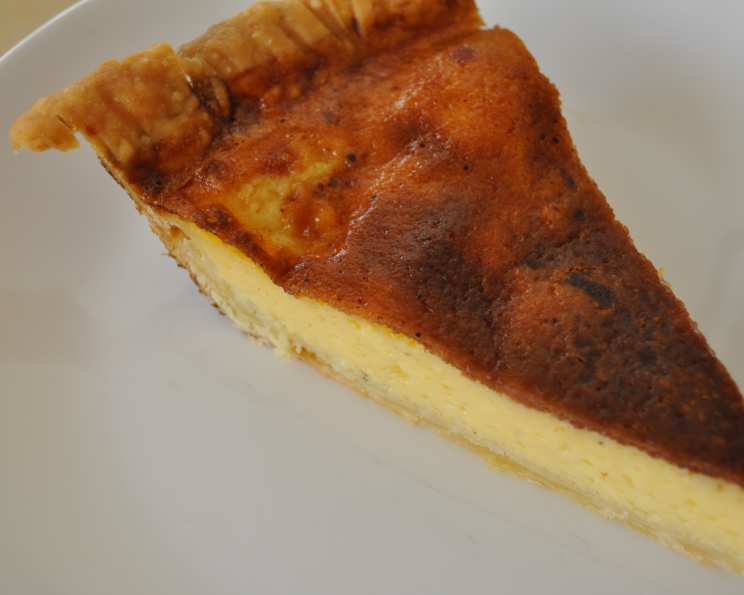
The Enduring Charm of Old-Fashioned Baked Egg Custard Tart with Nutmeg
There are certain aromas that, for me, are inextricably linked to moments of pure, unadulterated comfort. The scent of nutmeg warming gently, the sweet richness of cream and eggs coaxing into a velvety custard, all cradled within a buttery, crisp pastry crust – it’s a symphony of the senses that instantly transports me back to my grandmother’s kitchen. Her custard tart, a regular fixture on our Sunday tea table, wasn’t just a dessert; it was an embrace, a tangible expression of love. I remember watching her, her hands dusted with flour, expertly coaxing a perfect circle of pastry into a fluted tin, her movements practiced and serene. The way she’d grate the nutmeg directly over the wobbly filling just before it went into the oven, filling the air with its distinctive, almost spicy perfume, is a memory etched deep within my culinary soul. This isn’t just a recipe; it’s a portal to those cherished times.
Recipe Overview
- Prep Time: 1 hour 30 minutes (including chilling time)
- Cook Time: 20 minutes + 30-40 minutes
- Total Time: 1 hour 50 minutes – 2 hours 10 minutes
- Servings: 6
- Yield: 1 Large Custard Tart
- Dietary Type: Vegetarian
Ingredients
For the Shortcrust Pastry:
- 5 ounces plain flour, plus a little extra for dusting
- 1 pinch salt
- 1 ounce softened lard or 1 ounce white vegetable fat (see note below)
- 1 ½ ounces softened butter
Note on Fat: The original recipe specifies lard or white vegetable fat for crispness, explicitly advising against margarine. If you are vegetarian or prefer not to use lard, a good quality white vegetable shortening will yield similar results. The key is a solid fat that creates flakiness.
For the Filling:
- 3 large eggs, plus 2 large egg yolks, lightly beaten
- 1 pint single cream
- 2 ounces caster sugar
- ½ teaspoon vanilla extract
- 1 ½ whole nutmegs, freshly grated
- 1 teaspoon softened butter
Equipment Needed
- Large mixing bowl
- Sieve
- Measuring jug
- Baking sheet
- Rolling pin
- Tart tin (round, with sloping sides and a rim, approximately 8-9 inches in diameter)
- Sharp knife
- Fork
- Saucepan
- Heatproof jug
- Balloon whisk
- Foil
- Cooling rack
Instructions
Creating this classic Old-Fashioned Baked Egg Custard Tart is a two-part affair, beginning with the crucial pastry foundation. The magic lies in its simplicity and the traditional method of working the fat into the flour.
Crafting the Perfect Pastry:
- Sift and Combine: Begin by sifting the plain flour with the salt into a large mixing bowl. Hold the sieve up high as you do this; the aim is to aerate the flour, which contributes to a lighter pastry.
- Rub in the Fat: Add the softened lard (or white vegetable fat) and the softened butter to the flour. Using only your fingertips, gently and lightly rub the fats into the flour. Continue to lift the mixture high as you work, allowing air to circulate. The goal is to achieve a crumbly texture that resembles fine breadcrumbs.
- Bind the Dough: Once everything is nicely crumbly, sprinkle in about 1 tablespoon of cold water. Start to bring the mixture together with a knife. Once it begins to coalesce, finish by using your hands to form a smooth dough. Add a few more drops of cold water if necessary, just enough to ensure the dough comes together without being sticky. It should leave the sides of the bowl clean.
- Chill the Dough: Pop the pastry into a polythene bag and place it in the refrigerator to rest for at least 30 minutes. This chilling period is vital for relaxing the gluten, making the pastry easier to roll and ensuring a crispier bake.
Preparing for the Bake:
- Preheat the Oven: While the pastry chills, pre-heat your oven to gas mark 5, 375°F (190°C). Place a baking sheet on the centre shelf of the oven to pre-heat. This hot baking sheet will help to crisp up the base of your tart from the moment it goes in.
Shaping and Blind Baking the Tart Shell:
- Roll the Pastry: Lightly dust a clean surface with flour. Roll out the chilled pastry into a circle. As you roll, give the pastry quarter turns to help maintain its round shape. A good way to gauge the size is to place your tart tin lightly on top of the rolled pastry – you need to be able to cut a circle about 1 inch (2.5 cm) larger all around than the tin itself.
- Line the Tin: Carefully transfer the rolled pastry to your tart tin. Rolling the pastry over your rolling pin can make this easier. Gently press the pastry around the base, sides, and rim of the tin, ensuring it fits snugly without stretching.
- Trim the Excess: Use a sharp knife to trim away any overlapping pastry. Then, press the rim of the pastry so that about ¼ inch (5 mm) of it slightly overlaps the edge of the tin. This overhang helps to prevent shrinkage during baking.
- Decorate the Rim (Optional but Recommended): Roll out the pastry trimmings. Cut out about 24 small leaf shapes. Use the blunt side of a knife to impress veins onto these leaves.
- Egg Wash and Assemble: Lightly brush the entire surface of the pastry case with some of the lightly beaten eggs (from the filling ingredients). Arrange the pastry leaves all around the rim of the tart, overlapping them slightly. Brush these decorative leaves with beaten egg as well.
- Prick and Bake: Prick the base of the pastry tart all over with a fork. This prevents the base from puffing up during the initial bake. Carefully place the tart, on its pre-heated baking sheet, onto the centre shelf of the oven. Bake for 20 minutes, or until the pastry is crisp and golden.
- Check for Puffing: It’s crucial to check the pastry base after about 4 minutes of baking. If you notice it starting to rise in the centre, prick it again a couple of times and gently press it back down with your hands.
- Reduce Oven Temperature: Once the pastry shell is golden and crisp after 20 minutes, remove it from the oven. Leave the baking sheet in the oven and reduce the oven temperature to gas mark 3, 325°F (170°C).
Creating the Velvety Custard Filling:
- Warm the Cream: Place the single cream in a saucepan and bring it up to a gentle simmer over a low heat. Be careful not to let it boil.
- Whisk Eggs and Sugar: In a large heatproof jug, whisk together the 3 large eggs and 2 egg yolks with the caster sugar using a balloon whisk. Whisk them together, but not too vigorously, as you want to avoid incorporating too much air and creating bubbles.
- Temper the Mixture: Carefully and slowly pour the hot, simmering cream over the egg and sugar mixture in the jug. Whisk gently as you pour to temper the eggs and combine everything.
- Add Flavourings: Stir in the vanilla extract and half of the freshly grated nutmeg. Whisk briefly again to incorporate these aromatics.
Assembling and Baking the Custard Tart:
- Fill the Tart: Place the partially baked pastry tart back onto the baking tray, with the oven shelf still half-out. Have the remaining grated nutmeg ready on a piece of foil. Carefully pour the custard filling into the pastry case. It will be quite full, reaching almost to the rim.
- Top with Nutmeg and Butter: Scatter the remaining freshly grated nutmeg all over the surface of the filling. Then, dot the surface with the 1 teaspoon of softened butter.
- Bake the Custard: Carefully place the tart back into the oven. Bake for 30-40 minutes. The custard is ready when it is golden brown on top, firm in the centre (it should have a slight wobble but not be liquid), and slightly puffed up.
- Cool and Serve: Remove the tart from the oven and allow it to cool. It is delicious served warm or slightly cooled at room temperature.
Expert Tips & Tricks
- The Power of Airing: The instruction to “hold the sieve up high” and “lift the mixture up high” when making the pastry might sound quaint, but it’s a chef’s trick for incorporating air, leading to a lighter, crisper crust. Don’t skip this!
- Fat Matters for Pastry: The choice of fat for pastry is critical. Lard and butter create distinct layers of flakiness. White vegetable fat offers a neutral flavour and excellent crispness. Avoid soft fats like margarine as they can make the pastry greasy and less crisp.
- Preventing a Soggy Bottom: The pre-heated baking sheet and the initial blind bake for the pastry are your best defence against a soggy bottom. Pricking the pastry base also aids this.
- Nutmeg is Key: The original recipe stresses the importance of nutmeg, and rightly so. Freshly grated nutmeg has a far superior aroma and flavour to pre-ground. Grating it onto foil for quick sprinkling ensures it’s distributed evenly and doesn’t clump.
- Don’t Over-Whisk the Custard: When combining the hot cream with the eggs and sugar, avoid over-whisking. You don’t want to create a frothy mixture, as this can lead to an undesirable texture in the baked custard. Gentle whisking is all that’s needed.
- The Wobble Test: The definitive sign of a perfectly baked custard tart is that slight wobble in the centre. It indicates the custard is set but still retains a delightful creaminess.
Serving & Storage Suggestions
This Old-Fashioned Baked Egg Custard Tart is a versatile beauty. It’s wonderfully comforting served warm, but equally delightful at room temperature. For an extra touch of indulgence, serve with a dollop of lightly whipped cream or a drizzle of fresh cream. It can also be enjoyed “naked” – its simple elegance needs little adornment.
Leftovers can be stored in an airtight container. At room temperature, it’s best enjoyed within a day. Refrigerated, it will keep for 2-3 days. Reheat gently in a low oven (around 300°F/150°C) for about 10-15 minutes until warmed through, or enjoy it cold.
Nutritional Information
| Nutrient | Amount per Serving | % Daily Value |
|---|---|---|
| Calories | 449.4 kcal | |
| Calories from Fat | 285 kcal | 63 % |
| Total Fat | 31.7 g | 48 % |
| Saturated Fat | 17.4 g | 86 % |
| Cholesterol | 250.3 mg | 83 % |
| Sodium | 141.6 mg | 5 % |
| Total Carbohydrate | 32.6 g | 10 % |
| Dietary Fiber | 1 g | 3 % |
| Sugars | 10.3 g | 41 % |
| Protein | 8.9 g | 17 % |
Note: Nutritional values are estimates and can vary based on specific ingredients and portion sizes used.
Variations & Substitutions
While this recipe is a beloved classic, there’s always room for a touch of creativity:
- Citrus Zest: For a subtle hint of brightness, add the zest of half a lemon or orange to the custard filling.
- Spice Variations: Beyond nutmeg, a tiny pinch of ground cinnamon or cardamom can add an interesting dimension to the custard.
- Individual Tarts: If you prefer individual servings, this recipe can be adapted for smaller tartlet tins. Adjust the baking time accordingly, as they will cook more quickly.
- Dairy-Free Option: For a dairy-free version, you could experiment with a good quality unsweetened plant-based cream alternative and a dairy-free pastry fat. However, the traditional texture and flavour will be altered.
FAQs
Q: Why is my custard tart filling still liquid after baking?
A: This usually means it hasn’t baked long enough. The centre should have a slight wobble, but not be completely liquid. Return it to the oven for a further 5-10 minutes.
Q: My pastry base has puffed up in the centre. What went wrong?
A: This is a common issue. Ensure you prick the base thoroughly with a fork before blind baking, and check it after the first 4 minutes to press down any areas that are rising.
Q: Can I make the pastry in advance?
A: Yes, you can make the pastry dough a day ahead, wrap it well, and keep it in the refrigerator. Allow it to sit at room temperature for about 15-20 minutes before rolling.
Q: Is it important to use whole nutmegs?
A: Absolutely. Whole nutmegs are far more potent and aromatic than pre-ground nutmeg. Grating them just before use releases their full flavour.
Q: Can I use a different type of tin?
A: A round tin with sloping sides and a rim is ideal for achieving the characteristic depth and shape of this tart. A loose-bottomed tin can also work, but ensure it’s deep enough.
A Timeless Treasure
This Old-Fashioned Baked Egg Custard Tart with Nutmeg is more than just a dessert; it’s a culinary heirloom, a testament to the simple yet profound pleasures of home baking. It’s a recipe that invites you to slow down, to savour the process, and to create something truly special. Gather your ingredients, embrace the gentle art of pastry making, and let the warm, inviting aroma of nutmeg fill your kitchen. This tart is a celebration of tradition, a comfort for the soul, and a delightful addition to any table. Enjoy every wobbly, creamy, nutmeg-kissed bite.