
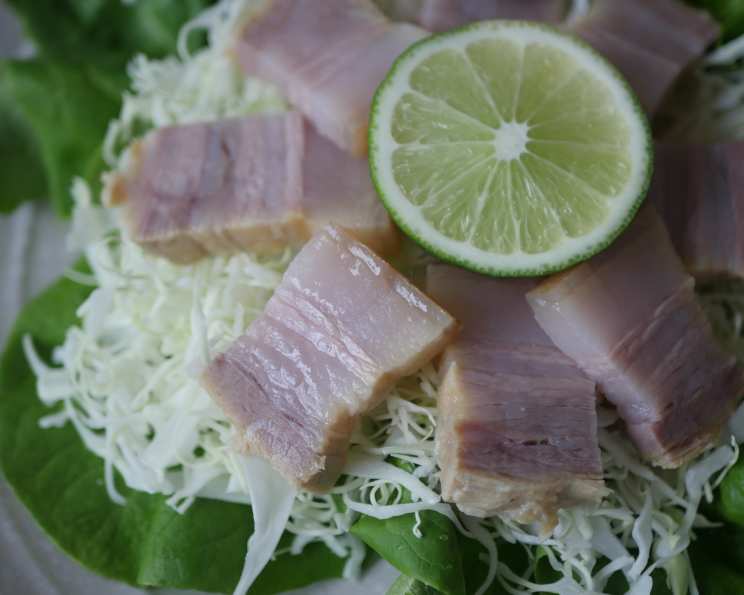
Okinawa Salted Pork: A Taste of Island Resilience
There’s a certain magic that happens when simple ingredients transform into something deeply satisfying, a culinary echo of a place and its history. For me, Okinawa Salted Pork (Shiozuke Buta) is precisely that. I first encountered it not in a bustling restaurant, but in a quiet home kitchen on the island itself, prepared by an elderly woman whose hands moved with a practiced grace honed over decades. The aroma, rich and deeply savory, filled the air as she meticulously sliced the glistening pork, a testament to a time when preserving food was a necessity, a skill passed down through generations. It was more than just a meal; it was a connection to Okinawa’s spirit of resourcefulness and its enduring love for pork.
Recipe Overview
- Prep Time: 20 minutes (plus 2-3 days for curing)
- Cook Time: 1 hour 30 minutes
- Total Time: 2-3 days 1 hour 50 minutes
- Servings: 4
- Yield: Approx. 800g cooked pork
- Dietary Type: Gluten-Free
Ingredients
- 800 g pork belly, skin on
- 2 tablespoons salt (for curing)
- 1 tablespoon thinly sliced ginger (for braising)
- 5 garlic cloves, crushed
- 1/4 cup awamori (Okinawan rice spirit, or sake/mirin as a substitute)
- 4 cups water (for initial boil)
- 4 cups water (for braising)
- 100 g green lettuce (like saladana or butter lettuce), for serving
- 50 g cabbage, shredded, for serving
- 1 lime, cut into wedges, for serving
Equipment Needed
- Paper towels
- Airtight container or heavy-duty resealable bag
- Large frying pan
- Medium-sized pot with a lid
- Sharp knife
- Serving platter
Instructions
The journey to perfectly tender and flavorful Okinawa Salted Pork begins with its careful preparation and a patient curing process. This method allows the salt to penetrate the meat, tenderize it, and infuse it with a foundational savoriness that makes this dish so unique.
-
Prepare the Pork Belly: Begin by thoroughly washing the pork belly. It’s crucial to pat it completely dry using paper towels. This step is vital for the salting process to adhere evenly and for achieving a good sear later on.
-
Cure the Pork: Generously spread the 2 tablespoons of salt all over the pork belly. Use your hands to gently rub the salt in, ensuring it covers every surface. Once salted, seal the pork by placing it in an airtight container or a heavy-duty resealable bag. Refrigerate for 2 to 3 days. This curing period is essential for developing the characteristic flavor and texture of Okinawa Salted Pork.
-
Bring to Room Temperature: After the curing period, take the pork out of the refrigerator. Allow it to sit at room temperature for about 20 minutes before proceeding to the cooking stages. This tempering helps the pork cook more evenly.
-
Sear the Skin: Heat a pan using high heat. Add a small amount of vegetable oil and let it get hot. Carefully place the salted pork into the hot pan with the skin side facing down. Fry until the surface of the skin turns brown. This step is key to achieving a slightly crispy, flavorful skin.
-
Initial Boil: Pour about 4 cups of water into a pot and bring it to a boil. Once boiling, carefully place the salted pork into the pot with the skin side facing up. Allow the water to boil again. Once it reaches a boil, reduce the heat to low and simmer for 30 minutes.
-
Drain and Cool: Turn off the heat and take the pork out of the pot. The broth from this initial boil is extremely salty and should be discarded.
-
Prepare Aromatics: While the pork is cooling slightly, slice the ginger thinly and crush the garlic cloves.
-
Braising the Pork: Place the salted pork back into a clean pot with the skin side facing up. Add the sliced ginger and crushed garlic cloves. Pour in the awamori and then add another 4 cups of water.
-
Simmer to Tenderness: Turn on the heat and bring the water to a boil. Once it boils, reduce the heat to low and simmer the pork for about an hour, or until it is very soft. The meat should be fork-tender.
-
Cool and Reserve Broth: Remove the pork from the pot and allow it to cool. The liquid used to braise the pork is now a flavorful broth. This broth can be reserved and used for other purposes, such as a delicious soup base for Okinawa soba.
-
Prepare Salad Vegetables: While the pork is cooling, prepare your salad vegetables. Tear the green lettuce into bite-sized pieces and shred the cabbage. You can also add other salad vegetables like cucumbers or tomatoes if desired.
-
Slice and Serve: Once the pork has cooled enough to handle, slice it thinly. Arrange the prepared vegetables on a serving plate. Place the thinly sliced salted pork on top of the vegetables.
-
Garnish and Enjoy: Serve the sliced Okinawa Salted Pork with the fresh vegetables, accompanied by a slice of lime for a bright, zesty finish.
Expert Tips & Tricks
The beauty of Okinawa Salted Pork lies in its simplicity, but a few chef-driven techniques can elevate it further. When selecting your pork belly, look for a piece with a good balance of meat and fat, as this will contribute to its succulence. Don’t be tempted to rinse off the salt after curing; that salt is integral to the flavor development. When searing the skin, a hot pan is your best friend. It will help render some of the fat and create that desirable crispy texture. If you don’t have awamori, a dry sake or even mirin can be used, though awamori provides a distinct Okinawan character. For an even richer broth after braising, consider adding a small piece of kombu (dried kelp) during the simmering process.
Serving & Storage Suggestions
Okinawa Salted Pork is traditionally served as a main dish, its rich, salty flavor a delightful contrast to fresh, crisp vegetables. The lime wedge is essential, its citrusy acidity cutting through the richness of the pork beautifully. It’s also a wonderful addition to bento boxes or can be used in other dishes, such as stir-fries or mixed into rice.
Storage:
- Room Temperature: Cooked and cooled Okinawa Salted Pork can be left at room temperature for a very short period, but it’s best to refrigerate it promptly.
- Refrigeration: Leftover cooked salted pork can be stored in an airtight container in the refrigerator for 3-4 days.
- Freezing: For longer storage, wrap the cooled pork tightly in plastic wrap and then in aluminum foil, or place it in a freezer-safe container. It can be kept in the freezer for several months.
- Reheating: To reheat, gently warm slices in a pan with a little water or broth, or steam them to maintain moisture and tenderness.
Nutritional Information
| Nutrient | Amount per Serving (approx.) | % Daily Value (approx.) |
|---|---|---|
| Calories | 1104.1 kcal | 55% |
| Total Fat | 106.8 g | 137% |
| Saturated Fat | 38.8 g | 194% |
| Cholesterol | 144.2 mg | 48% |
| Sodium | 3645.9 mg | 158% |
| Total Carbohydrate | 13.9 g | 5% |
| Dietary Fiber | 5.2 g | 19% |
| Sugars | 3.3 g | 7% |
| Protein | 23.7 g | 47% |
Note: Nutritional information is an estimate and can vary based on specific ingredients and portion sizes.
Variations & Substitutions
While this recipe is wonderfully traditional, there’s always room for culinary creativity.
- Aromatics: Feel free to experiment with other aromatics during the braising stage. A star anise, a few slices of dried orange peel, or even a small piece of dried chili can add subtle layers of complexity.
- Liquid for Braising: If awamori or sake is unavailable, a dry white wine or even a light mushroom broth can be used, though the flavor profile will shift.
- Vegetable Accompaniments: Beyond lettuce and cabbage, consider serving with blanched broccoli, steamed edamame, or a simple Okinawan-style potato salad.
FAQs
Q: Why is it called “Salted Pork” if it’s cured?
A: The term “salted pork” in this context refers to the process of preserving and flavoring the pork through salting and curing, rather than simply adding salt during cooking.
Q: Can I use a different cut of pork?
A: Pork belly is traditional due to its ideal fat-to-meat ratio, which results in tender and flavorful cooked pork. Other fattier cuts might work, but the texture will likely differ.
Q: How do I know if the pork is “very soft” after braising?
A: The pork is very soft when a fork can be easily inserted and removed from the meat with little resistance. It should feel tender and almost melt-in-your-mouth.
Q: Is the awamori necessary?
A: Awamori adds a unique Okinawan flavor and helps tenderize the meat. If unavailable, sake or mirin are good substitutes, but the resulting flavor will be slightly different.
Q: Can I skip the initial searing step?
A: While not strictly mandatory, searing the skin helps render some fat and creates a more appealing texture and flavor. Skipping it will result in a softer skin.
Final Thoughts
Okinawa Salted Pork is more than just a recipe; it’s an invitation to explore the culinary heritage of a unique island culture. The patient process of curing and braising yields a dish that is profoundly satisfying, a testament to the beauty of slow food. I encourage you to embark on this culinary journey, to feel the salt between your fingers as you cure the pork, and to savor the rich, comforting flavors that emerge. It pairs wonderfully with a simple bowl of steamed rice and a refreshing Okinawan tea, or as part of a larger Okinawan feast. Gather your ingredients, embrace the process, and let the taste of Okinawa transport you. Enjoy!