
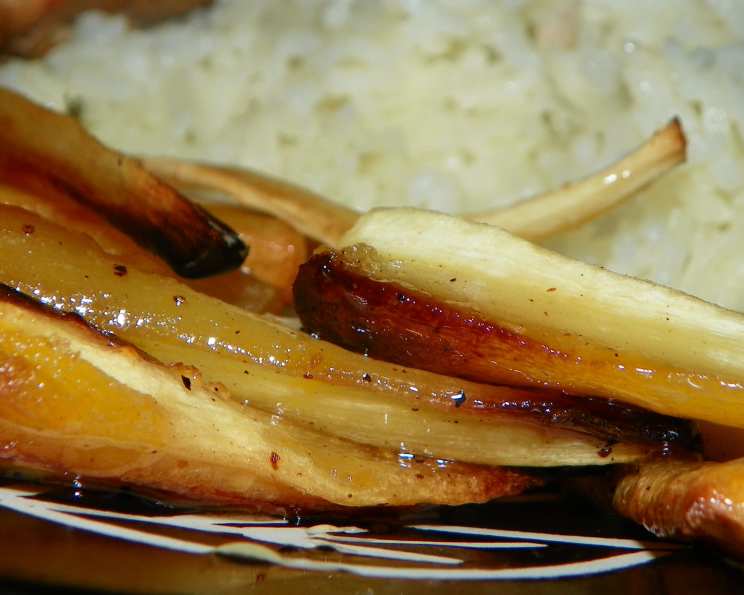
Golden Roots: The Sweet Embrace of Honey-Glazed Parsnips
There’s a certain rustic charm to root vegetables, a humble beauty that speaks of fertile earth and patient growth. Parsnips, often overlooked in favor of their more vibrant cousins, hold a special place in my culinary heart. I remember a particularly blustery autumn afternoon years ago, when I stumbled upon a recipe for roast parsnips with honey in an old, well-loved British cookbook. The simplicity of it, just a few core ingredients, promised to coax out the parsnip’s inherent sweetness. That first bite, a symphony of caramelized edges, tender flesh, and a delicate honeyed glaze, was a revelation – a perfect illustration of how restraint in the kitchen can yield the most profound flavors. It’s a dish that has since become a cherished staple, a comforting reminder of autumn’s bounty and the magic that can happen when humble ingredients are treated with respect.
Recipe Overview
- Prep Time: 15 minutes
- Cook Time: 25 minutes
- Total Time: 40 minutes
- Servings: 6
- Yield: A generous side dish
- Dietary Type: Vegetarian
Ingredients
- 2 pounds parsnips, peeled and quartered
- 2 tablespoons oil (a good quality olive oil or a neutral vegetable oil works well)
- 2 ounces butter
- 2 tablespoons clear honey
Equipment Needed
To create this delightful dish, you’ll want to have the following on hand:
- A sharp knife for peeling and quartering the parsnips.
- A sturdy cutting board.
- A large roasting pan or baking sheet that can withstand high heat.
- A stovetop for the initial browning.
- An oven, preheated to the correct temperature.
- Tongs or a spatula for turning the parsnips.
- A serving dish.
Instructions
Embarking on the journey to create these honey-glazed parsnips is straightforward, a testament to their uncomplicated charm. Follow these steps to unlock their golden potential:
-
Preheat your oven to 425 degrees Fahrenheit. This high temperature is crucial for achieving that beautiful caramelization on the parsnips. It’s also a good idea to place your roasting pan or baking sheet into the oven while it preheats; a hot pan will help sear the vegetables from the moment they enter.
-
Prepare the parsnips. Once you’ve peeled your parsnips, carefully inspect the quartered pieces. If you encounter any woody centers, which can sometimes be tough and fibrous, simply cut them out with your knife. This ensures that every bite is tender and delicious.
-
Begin the browning process. Remove the hot roasting pan from the oven and place it on your stovetop over medium heat. Add the oil and butter to the hot pan. Once the butter has melted and is beginning to sizzle, carefully add the prepared parsnips.
-
Sear for golden perfection. Fry the parsnips, turning them occasionally, until they are golden brown on all sides. This initial searing step on the stovetop is key to developing a rich flavor and a delightful exterior texture before they even hit the oven.
-
Roast to tender sweetness. Once the parsnips have achieved a good sear, carefully transfer the roasting pan back into your preheated oven. Roast them for 20 minutes, turning them occasionally with tongs or a spatula to ensure even cooking and browning.
-
The honey embrace. After the initial 20 minutes of roasting, remove the pan from the oven again. Pour the clear honey evenly over the parsnips. Carefully turn the parsnips, ensuring that each piece is coated with the sticky, sweet glaze. This step is where the magic truly happens, infusing the vegetables with that irresistible honeyed essence.
-
Final glaze. Place the pan back into the oven for an additional 5 minutes. This short burst of heat will allow the honey to caramelize further, creating a beautiful, glossy coating and ensuring the parsnips are perfectly tender.
-
Serve and savor. Once the time is up, remove the parsnips from the oven. They will now be wonderfully tender and infused with a delightful sweetness. Stir them gently in the serving dish and, for an extra touch of indulgence, spoon some of the honey glaze that has pooled at the bottom of the pan over the top to finish.
Expert Tips & Tricks
To elevate your honey-glazed parsnips from good to truly exceptional, consider these chef-tested insights:
- Uniformity is key: When quartering your parsnips, strive for pieces that are as similar in size as possible. This ensures that they cook evenly, preventing some from becoming mushy while others remain undercooked.
- Don’t overcrowd the pan: When searing the parsnips on the stovetop, make sure not to overcrowd your roasting pan. If the parsnips are too close together, they will steam rather than sear, which will hinder the development of that crucial golden-brown crust. You might need to work in batches if your pan is not sufficiently large.
- The power of a hot pan: The initial searing on the stovetop in a hot pan with butter and oil is non-negotiable. It creates the foundational caramelization and flavor that the oven roasting will then build upon.
- Clear honey is best: While any honey will work in a pinch, using a clear honey (like clover or acacia) will ensure the glaze is beautifully transparent and doesn’t obscure the lovely golden color of the parsnips. If your honey has crystallized, gently warm it in a small saucepan over low heat until it liquefies before using.
- Adjust for your oven: Oven temperatures can vary. Keep an eye on your parsnips, especially during the final stages, to prevent the honey from burning. If they are browning too quickly, you can always reduce the oven temperature slightly.
Serving & Storage Suggestions
These honey-glazed parsnips are a versatile side dish, perfectly complementing a wide range of main courses. They shine brightest when served warm, allowing their sweet and savory notes to be fully appreciated. They are a fantastic accompaniment to roasted meats like chicken, pork, or lamb, but also hold their own alongside hearty vegetarian stews or nut roasts. For a truly elegant presentation, arrange them artfully on a platter and drizzle any remaining glaze from the pan over the top.
If you find yourself with any delectable leftovers, they store remarkably well. Allow the parsnips to cool completely at room temperature. Then, transfer them to an airtight container and store them in the refrigerator for up to 3 days. To reheat, gently warm them in a moderate oven (around 325°F or 160°C) until heated through, or give them a quick sauté in a pan with a touch of butter or oil.
Nutritional Information
Here’s an estimated nutritional breakdown for a serving of Roast Parsnips with Honey:
| Nutrient | Amount per Serving | % Daily Value |
|---|---|---|
| Calories | 243 kcal | 12% |
| Total Fat | 13 g | 17% |
| Saturated Fat | 6 g | 30% |
| Cholesterol | 20 mg | 7% |
| Sodium | 83 mg | 4% |
| Total Carbohydrate | 33 g | 12% |
| Dietary Fiber | 7 g | 25% |
| Sugars | 13 g | 29% |
| Protein | 2 g | 4% |
Please note that these values are estimates and can vary based on ingredient brands, exact measurements, and preparation methods.
Variations & Substitutions
While this recipe is wonderfully classic, there’s always room for a touch of personal flair:
- Herbal Infusion: For an extra layer of complexity, toss the parsnips with a sprig of fresh thyme or rosemary during the roasting phase. Remove the herbs before serving.
- A Hint of Spice: Add a pinch of cayenne pepper or a tiny grate of fresh ginger along with the honey for a subtle warming kick.
- Maple Magic: If you prefer, you can substitute the honey with maple syrup for a different, equally delicious, caramelized sweetness.
- Nutty Crunch: Towards the end of the roasting time, sprinkle some toasted pecans or walnuts over the parsnips for added texture and nutty depth.
FAQs
Q: Why do my parsnips have woody centers?
A: Woody centers often occur in older or larger parsnips. Cutting them out before cooking ensures a tender eating experience.
Q: Can I skip the stovetop searing step?
A: While you can roast parsnips directly in the oven, skipping the initial stovetop sear will result in a less developed flavor and a softer texture, missing out on that desirable caramelized crust.
Q: What kind of oil is best for this recipe?
A: A neutral oil like vegetable oil or canola oil is excellent, as is a good quality olive oil. The key is an oil that can withstand higher heat.
Q: My honey is crystallized, can I still use it?
A: Absolutely! Gently warm the crystallized honey in a small saucepan over low heat until it becomes clear and pourable.
Q: How do I know when the parsnips are tender?
A: A parsnip is tender when a fork can be easily inserted into the thickest part of a piece with little resistance.
Final Thoughts
The beauty of roast parsnips with honey lies in its elegant simplicity. It’s a dish that celebrates the inherent sweetness of a humble root vegetable, enhanced by the golden embrace of honey and the magic of caramelization. Whether gracing your table as a comforting side or standing proudly as a star player in a vegetarian feast, this recipe is sure to become a cherished favorite. I encourage you to gather your ingredients, embrace the process, and discover the simple joy of perfectly roasted, honey-kissed parsnips. Share your creations, your triumphs, and any personal twists you add – the culinary journey is always richer when shared.