
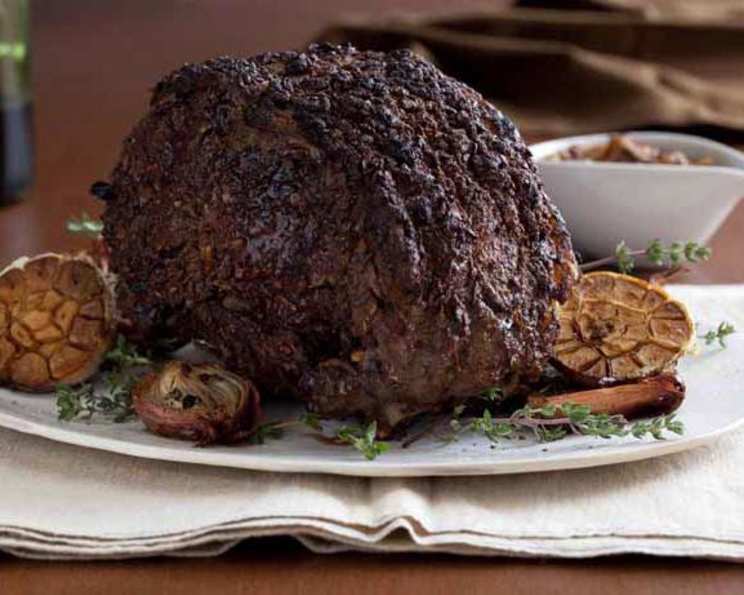
A Rib Roast Reimagined: The Magic of a Mushroom Crust
I still remember the first time I encountered a rib roast with a truly inspired crust. It wasn’t just about the perfectly cooked beef, though that was certainly paramount. It was the earthy, umami-rich shell that enveloped it, a symphony of savory notes that sang in harmony with the tender meat. This dish, particularly with its remarkable mushroom crust, has become a benchmark for special occasions in my own kitchen, transforming a classic into something truly extraordinary. It’s the kind of centerpiece that commands attention, not just for its visual appeal, but for the complex layers of flavor that unfold with every bite.
Recipe Overview
- Prep Time: 30 minutes
- Cook Time: 2 hours 15 minutes
- Total Time: 2 hours 45 minutes (plus resting time)
- Servings: 6-8
- Yield: 1 prime rib roast
- Dietary Type: Not specified (contains meat and dairy in sauce)
Ingredients
For the Rib Roast:
- 1 (3 rib) prime rib roast (approximately 6 pounds)
- Salt and freshly ground black pepper, to taste
- 3 tablespoons Dijon mustard
- 1 cup dried mushroom, finely ground (such as porcini or shiitake)
- 15 sprigs fresh rosemary
- 15 sprigs fresh thyme
- 3 shallots, halved
- 1 head garlic, halved
- 3 tablespoons olive oil
- 2 cups veal stock
For the Sauce:
- 3 tablespoons olive oil
- 1 shallot, finely chopped
- 1 cup mixed mushrooms, such as oyster and shiitake, coarsely chopped
- 2 cups veal stock
- 2 tablespoons butter, cubed
- Salt and freshly ground black pepper, to taste
Equipment Needed
- Large roasting pan with a rack (or an oven-proof skillet)
- Instant-read thermometer
- Aluminum foil
- Carving board
- Saucepan
- Whisk
Instructions
The journey to an unforgettable rib roast begins with a few crucial steps. To truly master this, you’ll want to ensure your oven is at the perfect temperature from the outset.
- Preheat the oven to a commanding 500 degrees F (260 degrees C). This high initial heat is key to developing a beautiful sear and locking in the juices.
- Prepare the Roast: Begin by generously sprinkling the roast with salt and freshly ground black pepper on all sides. Then, coat the entire surface of the roast with the Dijon mustard, ensuring an even layer.
- Create the Mushroom Crust: Set aside about 1 tablespoon of the finely ground mushroom powder for later use in the sauce. Now, press the remaining mushroom powder onto the mustard-coated meat, creating a thick, adhering crust. The mustard acts as a perfect binder, ensuring the mushroom coating stays put during cooking.
- Assemble for Roasting: In a heavy, oven-proof pan or roasting pan, lay the roast, bone-side down. Arrange a generous bed of rosemary sprigs, thyme sprigs, halved shallots, and halved garlic heads beneath and around the roast. Drizzle the entire setup with the olive oil. Finally, carefully pour the veal stock into the pan, ensuring it doesn’t wash away the mushroom crust.
- Initial High-Heat Sear: Place the pan in the preheated oven. Cook the beef for 15 minutes at 500 degrees F (260 degrees C). This initial blast of heat is vital for that coveted browned exterior.
- Lower the Temperature and Continue Cooking: After the initial 15 minutes, reduce the oven heat to 325 degrees F (160 degrees C). Continue to cook for a total of 2 hours for medium-rare, which equates to approximately 20 minutes per pound. Remember that cooking times can vary based on your oven and the exact thickness of the roast, so always rely on a thermometer for accuracy.
- Check for Doneness: To achieve your desired level of doneness, check the internal temperature of the roast in several thickest places with an instant-read thermometer. For a perfect medium-rare, the temperature should register 125 degrees F (52 degrees C).
- Resting is Crucial: Once the roast reaches the target temperature, remove the beef from the oven and carefully place it on a carving board. Cover it loosely with aluminum foil and allow it to rest for at least 20 minutes. This resting period is non-negotiable; it allows the juices to redistribute throughout the meat, ensuring a tender and succulent result. The internal temperature will continue to rise by about 10 degrees during this time.
- Prepare the Pan Juices: While the roast rests, remove the roasted vegetables (rosemary, thyme, shallots, and garlic) from the roasting pan and keep them warm. These aromatics have imparted wonderful flavor to the pan juices.
- Make the Sauce: In a saucepan, heat the 3 tablespoons of olive oil over medium heat. Add the finely chopped shallot and sauté for about 2 minutes, until softened.
- Cook the Mushrooms: Add the coarsely chopped mixed mushrooms to the saucepan and cook until they are slightly browned, which should take about 5 minutes.
- Incorporate Pan Juices and Stock: Strain the reserved juices from the rib roast pan into the shallot and mushroom mixture. Then, add the 2 cups of veal stock and let the sauce simmer and thicken for another 5 minutes.
- Finish the Sauce: Just before serving, whisk in the cubed butter, one piece at a time, until it’s fully incorporated and the sauce is glossy. Finally, stir in the reserved 1 tablespoon of mushroom powder. Season the sauce with salt and freshly ground black pepper to your taste.
Expert Tips & Tricks
When tackling a prime rib, a few seasoned tips can elevate your results from good to exceptional.
- Achieving the Perfect Crust: Ensure the Dijon mustard is applied evenly to create a sticky surface for the mushroom powder to adhere to. If the mustard seems too thick, a tiny splash of water can help.
- The Power of Resting: Don’t be tempted to carve the roast immediately after it comes out of the oven. Resting allows the muscle fibers to relax and reabsorb the juices, leading to a far more tender and flavorful roast.
- Temperature is Key: Invest in a good instant-read thermometer. It’s your most reliable tool for ensuring perfectly cooked beef, whether you prefer rare, medium-rare, or medium.
- Don’t Discard the Pan Aromatics: The roasted shallots and garlic, along with the herbs, have absorbed a tremendous amount of flavor. They can be served alongside the roast or finely chopped and added to other dishes.
Serving & Storage Suggestions
This magnificent Mushroom-Crusted Rib Roast is best served hot, allowing its full aromatic potential to be appreciated. Carve the roast against the grain into thick, juicy slices. The rich mushroom crust will provide a delightful texture and flavor contrast.
Serve it with the luscious pan sauce drizzled generously over each slice. For a complete meal, consider pairing it with creamy mashed potatoes, roasted root vegetables, or a simple green salad.
Leftovers can be stored in an airtight container in the refrigerator for up to 3 days. To reheat, gently warm the slices in a covered dish in a low oven (around 300 degrees F or 150 degrees C) with a splash of beef broth or water to help retain moisture. Avoid microwaving, as it can toughen the meat.
Nutritional Information
| Nutrient | Amount per Serving (Estimated) | % Daily Value (Estimated) |
|---|---|---|
| Calories | 182.8 kcal | N/A |
| Calories from Fat | N/A | 159 g (87%) |
| Total Fat | 17.7 g | 27% |
| Saturated Fat | 4.3 g | 21% |
| Cholesterol | 10.2 mg | 3% |
| Sodium | 122.5 mg | 5% |
| Total Carbohydrate | 6 g | 1% |
| Dietary Fiber | 0.5 g | 1% |
| Sugars | 0.2 g | 0% |
| Protein | 1.3 g | 2% |
Note: Nutritional values are estimates and can vary based on specific ingredients and portion sizes.
Variations & Substitutions
While this recipe shines with its classic approach, there’s always room for personalization.
- Mushroom Variety: Feel free to experiment with different types of dried mushrooms for the crust and sauce. A blend of porcini, shiitake, and even morel mushrooms can offer nuanced flavors.
- Herbal Notes: If rosemary or thyme aren’t your favorites, consider substituting with fresh sage or marjoram for a different aromatic profile.
- Stock Alternatives: While veal stock provides a rich foundation, a good quality beef stock can be used in its place for both the roast and the sauce.
- Mustard Variations: For a more robust flavor, a grainy Dijon mustard can be used, or a blend of Dijon and a touch of whole-grain mustard.
FAQs (Frequently Asked Questions)
Q: What is the best way to grind dried mushrooms for the crust?
A: A spice grinder or a food processor works best. Pulse until the mushrooms are a fine powder, similar in texture to coarse sand.
Q: Can I prepare the mushroom crust ahead of time?
A: Yes, you can grind the mushrooms and have them ready. However, it’s best to apply the mustard and press the mushroom crust onto the roast just before cooking for optimal adhesion.
Q: My roast seems to be cooking faster than expected. What should I do?
A: Always rely on an instant-read thermometer. If it’s cooking quickly, you can reduce the oven temperature slightly more than specified to prevent overcooking.
Q: How do I ensure the mushroom crust doesn’t burn during the initial high-heat cooking?
A: The 15-minute high-heat blast is crucial for searing. If you notice any scorching, you can tent the roast loosely with foil for the remainder of the initial period, but this is rarely necessary.
Q: What if I don’t have veal stock?
A: A high-quality beef stock will work well as a substitute for the veal stock in both the roasting pan and the sauce.
A Culinary Triumph
This Mushroom-Crusted Rib Roast is more than just a meal; it’s an experience. It’s a testament to how classic dishes can be elevated with thoughtful additions and a touch of culinary creativity. The deep, earthy notes of the mushroom crust, combined with the inherent richness of the prime rib, create a dish that is both comforting and sophisticated. I encourage you to gather your loved ones, embark on this culinary adventure, and savor every exquisite bite. May your table be filled with joy and deliciousness!