
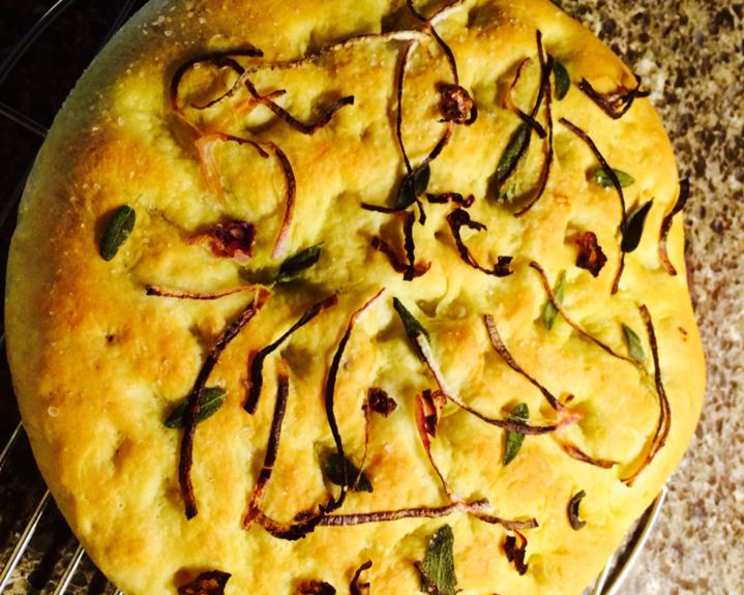
Red Onion & Sage Focaccia (Bread Machine Marvel)
There are some breads that just hug you with their aroma the moment they start to bake, and this Red Onion & Sage Focaccia is unequivocally one of them. I still remember the first time I pulled this golden, herb-flecked creation from the oven, the scent of caramelized red onion and earthy sage filling my kitchen. It wasn’t just a bread; it was an invitation to slow down, to savor, to appreciate the simple magic of flour, water, and a few well-chosen aromatics. Paired with good olive oil for dipping, it transformed a casual weeknight meal into something truly special, a testament to the power of a great cookbook and a reliable bread machine.
Recipe Overview
- Prep Time: 2 hours 20 minutes (includes machine time and rising)
- Cook Time: 20-25 minutes
- Total Time: Approximately 2 hours 40 minutes – 2 hours 45 minutes
- Yields: 1 focaccia
- Servings: 6-8 (depending on slice size)
- Dietary Type: Vegetarian
Ingredients
This focaccia strikes a beautiful balance between the sweetness of slow-cooked red onion and the robust, almost peppery notes of fresh sage. The bread machine handles the heavy lifting of kneading and initial proofing, leaving you to focus on the delightful finishing touches.
For the Bread Dough:
- 1 cup water
- 1 tablespoon olive oil
- 3 cups unbleached white flour
- ½ teaspoon salt
- 1 teaspoon granulated sugar
- 1 teaspoon fast-rising active dry yeast
- 1 tablespoon chopped fresh sage
- 1 tablespoon chopped red onion
For the Topping:
- 2 tablespoons olive oil
- ½ red onion, thinly sliced
- 5 fresh sage leaves
- 2 teaspoons coarse sea salt
- Coarse ground pepper
Equipment Needed
- Bread machine (with dough setting)
- 10-11 inch shallow round cake pan or pizza pan
- Oven
- Wire rack
- Plastic wrap
- Measuring cups and spoons
- Knife and cutting board (for onion and sage)
Instructions
Embarking on the journey of making this focaccia with your bread machine is wonderfully straightforward. The machine takes care of the intensive kneading and initial rise, allowing you to focus on the aromatic additions and final oven-baked perfection.
- Begin by pouring the water and olive oil into your bread pan.
- Next, sprinkle the flour over the liquid, ensuring that it covers the liquid completely.
- In separate corners of the flour, add the salt and granulated sugar.
- Create a shallow indentation in the center of the flour, and carefully add the fast-rising active dry yeast into this well.
- Set your bread machine to the dough setting. If your machine offers multiple options, the basic or pizza dough setting will work beautifully.
- Press Start and allow the machine to work its magic.
- While the dough is being prepared by the machine, lightly oil a 10-11 inch shallow round cake pan or pizza pan.
- Once the dough cycle has finished, remove the dough from the bread machine pan and place it onto a surface lightly dusted with flour.
- Punch the dough down gently to release any trapped air and flatten it slightly.
- Now, sprinkle over the chopped fresh sage and chopped red onion. Knead it gently by hand to incorporate these aromatics evenly throughout the dough.
- Shape the dough into a ball, then flatten it out. Roll it into a round that measures about 10-11 inches in diameter.
- Carefully place the shaped dough into your prepared pan.
- Cover the pan with oiled plastic wrap and let the dough rise in a warm place for 20 minutes.
- In the meantime, preheat your oven to 400°F (200°C).
- After the 20-minute rise, uncover the risen focaccia. Using your fingertips, poke deep dimples all over the surface of the dough. This classic focaccia technique creates those delightful pockets that hold the topping.
- Cover the pan again and let it rise for another 10-15 minutes, or until the dough has visibly doubled in bulk.
- Drizzle the 2 tablespoons of olive oil evenly over the dimpled focaccia.
- Sprinkle with the thinly sliced red onion, the fresh sage leaves, the coarse sea salt, and a good grinding of coarse ground pepper.
- Bake in the preheated oven for 20-25 minutes, or until the focaccia is golden brown and beautifully puffed.
- Once baked, turn the focaccia out onto a wire rack to cool slightly.
- Serve warm, allowing everyone to enjoy the incredible aroma and flavor.
Expert Tips & Tricks
The beauty of this focaccia lies in its simplicity, but a few chef-driven nuances can elevate it even further. When incorporating the fresh sage and red onion into the dough, try to distribute them as evenly as possible. This ensures that every bite carries that wonderful herby, sweet onion flavor. If you find your dough sticking to the surface when you turn it out, don’t be afraid to add a tiny bit more flour to your work surface or your hands. For the dimpling step, make sure your dimples are deep enough to catch the topping; they should almost reach the bottom of the pan. When baking, keep an eye on the focaccia. Ovens can vary, and you want that perfect golden hue without any burnt edges. If you notice the topping browning too quickly, you can loosely tent the focaccia with aluminum foil. For an extra layer of flavor, you can slightly caramelize the ½ red onion for the topping in a separate pan before adding it to the focaccia – this intensifies its sweetness and makes it even more delicious.
Serving & Storage Suggestions
This Red Onion & Sage Focaccia is at its absolute peak when served warm, straight from the oven. Tear off pieces and dip them generously into a good quality olive oil, perhaps with a pinch of flaky sea salt and a grind of black pepper. It’s also divine alongside a hearty soup, a fresh salad, or as a base for open-faced sandwiches. If you find yourself with any leftovers (which is unlikely!), they can be stored at room temperature in an airtight container for up to 2 days. To reheat, a quick few minutes in a moderate oven (around 300°F/150°C) will revive its wonderful crispness and aroma. For longer storage, you can wrap cooled focaccia tightly and freeze it for up to a month. Thaw at room temperature and reheat as desired.
Nutritional Information
While this focaccia is a treat for the senses, it’s good to have a general idea of its nutritional profile. The values below are approximate and can vary based on specific ingredients used.
| Nutrient | Amount per Serving | % Daily Value |
|---|---|---|
| Calories | 290-320 kcal | 15-16% |
| Total Fat | 9-11 g | 12-14% |
| Saturated Fat | 1-2 g | 5-10% |
| Cholesterol | 0 mg | 0% |
| Sodium | 600-800 mg | 26-35% |
| Total Carbohydrate | 45-50 g | 16-18% |
| Dietary Fiber | 2-3 g | 8-10% |
| Sugars | 2-3 g | 4-6% |
| Protein | 7-9 g | 14-18% |
Note: This information is an estimate. The majority of the sodium comes from the added coarse sea salt. Adjusting the salt can significantly alter this value.
Variations & Substitutions
The beauty of focaccia is its adaptability. While this Red Onion & Sage version is spectacular, don’t hesitate to experiment. If fresh sage is unavailable, you can use about 1 teaspoon of dried rubbed sage in the dough, and sprinkle a little more over the top. For an added layer of complexity, consider adding a sprinkle of rosemary alongside the sage. If you’re not a fan of red onion, yellow or sweet onions can be used, though they may not caramelize quite as deeply. For a touch of heat, a pinch of red pepper flakes can be incorporated into the dough or sprinkled on top.
FAQs
Q: My bread machine’s dough setting is longer than the time specified. What should I do?
A: Simply let your bread machine complete its cycle. The important part is that the dough is properly kneaded and has risen sufficiently before you proceed with the manual steps.
Q: Can I use whole wheat flour instead of white flour?
A: You can substitute some of the white flour with whole wheat, but be mindful that it can result in a denser loaf. Start by replacing up to 1 cup of white flour with whole wheat.
Q: What is the best way to ensure my focaccia rises properly?
A: A warm, draft-free environment is key. If your kitchen is cool, you can place the covered dough in a slightly warm (turned off) oven or near a sunny window.
Q: My focaccia seems a bit dry. What could have gone wrong?
A: This is often due to too much flour or insufficient liquid. Ensure your measurements are accurate, and if the dough feels too stiff in the machine, add a tablespoon of water at a time until it reaches a soft, slightly sticky consistency.
Q: Can I make this without a bread machine?
A: Absolutely! You can adapt this recipe for hand-kneading or a stand mixer. You’ll need to knead the dough for about 8-10 minutes until it’s smooth and elastic, then follow the rising and baking instructions.
Final Thoughts
This Red Onion & Sage Focaccia is more than just a recipe; it’s an experience. It’s the kind of bread that invites conversation, that pairs perfectly with a glass of crisp white wine or a robust red, and that brings a rustic elegance to any table. I encourage you to give it a try, let the aromas fill your home, and savor each delicious, herb-infused bite. If you make it, I’d love to hear about your creations! Perhaps you’ve found a new favorite herb to add, or a perfect soup to pair it with. Happy baking!