
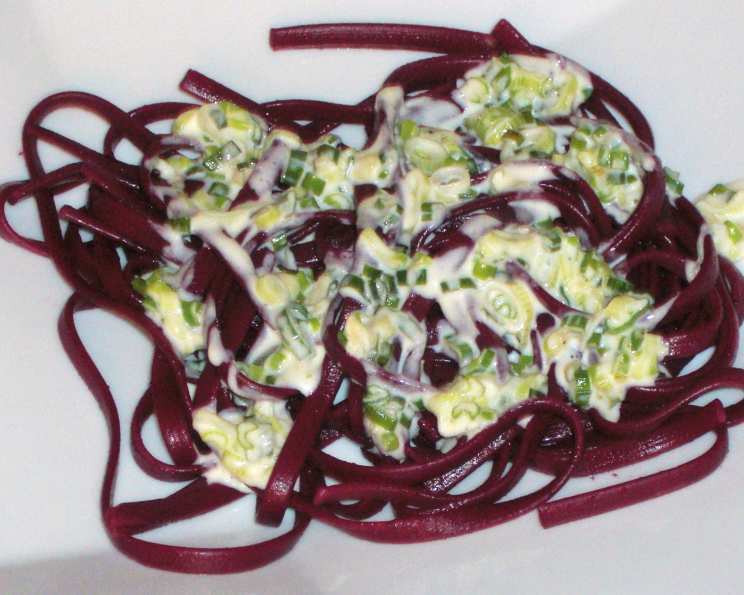
Rotwein-Nudeln: A Tuscan Sunset on a Plate
There are dishes that simply nourish the body, and then there are those that speak directly to the soul. Rotwein-Nudeln, or Red Wine Pasta with Spring Onions, falls firmly into the latter category for me. I first encountered this gem when I was living in Switzerland, a place brimming with culinary traditions from across Europe. A dear friend, with an innate talent for making the simplest ingredients sing, prepared this for me one crisp autumn evening. The deep, ruby hue of the pasta, infused with the essence of red wine, was as captivating as the stories we shared over the meal. It was a revelation – proving that profound flavor doesn’t always require a lengthy process or a pantry full of exotic ingredients. This dish became an instant favorite, a comforting embrace on a cool night, and a reminder of the joy found in sharing good food and good company.
Recipe Overview
- Prep Time: 15 minutes
- Cook Time: 25 minutes
- Total Time: 40 minutes
- Servings: 4
- Yield: 4 servings
- Dietary Type: Vegetarian
Ingredients
This recipe elegantly balances the richness of cream and Parmesan with the fresh, bright notes of spring onions, all while the pasta itself is transformed by the magic of red wine.
For the Sauce:
- 1 tablespoon butter or 1 tablespoon olive oil
- 2 bunches green onions, sliced (approximately 300g), trimmed and thinly sliced on the diagonal
- 1 pinch cinnamon (a surprising, but delightful, addition!)
- 1 1/4 cups heavy cream
- 1/2 cup freshly grated Parmesan cheese
For the Pasta:
- 1 liter Merlot or 1 liter other dry red wine (a good quality wine you’d enjoy drinking is key)
- 2 1/8 cups water
- 1 tablespoon salt
- 14-18 ounces fettuccine pasta or 14-18 ounces other dry pasta (spaghetti, linguine, or even a short pasta like penne would work)
Equipment Needed
- A large, heavy-bottomed saucepan or pot for the sauce
- A large pot for boiling the pasta
- A colander for draining the pasta
- A serving spoon or tongs for tossing and serving
Instructions
Crafting this dish is a delightful dance between two distinct but complementary processes: building a luscious sauce and, simultaneously, infusing the pasta with the vibrant character of red wine.
Preparing the Sauce:
- In your large saucepan, melt the butter or warm the olive oil over medium heat.
- Add the sliced green onions to the pan. Sauté them gently, stirring occasionally, until they begin to soften. This usually takes about 5-7 minutes. You’re looking for them to become tender and fragrant, not browned.
- Stir in the pinch of cinnamon. Let it toast for a few seconds until its aroma is released, then immediately add the heavy cream.
- Bring the mixture to a gentle boil. Once boiling, reduce the heat slightly and let it simmer for 5 minutes. This allows the cream to thicken slightly and the flavors to meld.
- Lower the heat to its lowest setting and stir in the freshly grated Parmesan cheese, stirring constantly until it is completely melted and the sauce is smooth and creamy.
- Season the sauce to taste with salt and pepper. Remember that the Parmesan cheese is salty, so taste before adding too much salt.
Cooking the Pasta:
- While the sauce is simmering, begin cooking the pasta. In your largest pot, combine the red wine and water.
- Bring this mixture to a rolling boil over high heat.
- Once boiling, carefully add the salt.
- Add the fettuccine pasta (or your chosen pasta) to the boiling liquid.
- Cook the pasta until al dente. This means it should be tender but still have a slight bite. Stir the pasta occasionally to prevent it from sticking together. The cooking time will vary depending on the type and brand of pasta you use, so check the package directions and test for doneness.
- Once the pasta is cooked al dente, drain it thoroughly in a colander.
Assembling and Serving:
- Return the drained pasta to the warm, empty pot, or transfer it to a large serving bowl.
- Pour the warm cream sauce over the pasta.
- Toss the pasta and sauce together gently using tongs or a large spoon until every strand of pasta is beautifully coated in the rich, ruby-hued sauce.
- Serve the Rotwein-Nudeln immediately, ensuring each portion is generously topped with the vibrant sauce.
Expert Tips & Tricks
- Wine Choice: While Merlot is specified, don’t be afraid to experiment with other dry red wines like Chianti, Sangiovese, or even a bold Cabernet Sauvignon. The key is a wine with good color and flavor that you enjoy drinking. Avoid sweet or overly fruity wines, as they can overpower the dish.
- Pasta Color: The magic of the red wine isn’t just in its subtle flavor infusion, but also in its ability to impart a beautiful, subtle rosy hue to the pasta. The salt in the cooking liquid actually helps the pasta absorb this color more readily. Don’t be alarmed if your pasta takes on a light pink or reddish tint – that’s part of its charm!
- Green Onion Prep: For a more uniform appearance and to ensure the green onions cook evenly, try to slice them to a similar thickness.
- Sauce Consistency: If your sauce seems a little too thick after simmering and adding the Parmesan, you can loosen it with a splash of reserved pasta cooking liquid (if you cooked the pasta in a separate pot from the wine/water mixture) or a touch more heavy cream. If it’s too thin, let it simmer gently for another minute or two until it reaches your desired consistency.
- Make-Ahead Sauce: The sauce can be made a little in advance, up to the point of adding the Parmesan. Reheat it gently over low heat, then stir in the Parmesan cheese just before tossing with the freshly cooked pasta.
Serving & Storage Suggestions
Rotwein-Nudeln are best enjoyed fresh, when the pasta is perfectly al dente and the sauce is at its most luscious. Serve immediately after tossing the pasta with the sauce. A sprinkle of extra grated Parmesan cheese and a few slivers of fresh green onion tops can add a lovely finishing touch for presentation.
Leftovers can be stored in an airtight container in the refrigerator for up to 2 days.
To reheat, gently warm the pasta and sauce in a saucepan over low heat, stirring frequently. You may need to add a splash of milk or a tablespoon of butter to loosen the sauce and restore its creamy texture. Alternatively, reheat in the microwave in short intervals, stirring between each, until heated through. Avoid overheating, as this can cause the sauce to break or the pasta to become mushy.
Nutritional Information
| Nutrient | Amount per Serving (approx.) | % Daily Value (approx.) |
|---|---|---|
| Calories | 858 kcal | N/A |
| Total Fat | 36.5 g | 47% |
| Saturated Fat | 21.5 g | 108% |
| Cholesterol | 196 mg | 65% |
| Sodium | 2033 mg | 88% |
| Total Carbohydrate | 70 g | 25% |
| Dietary Fiber | 1.6 g | 6% |
| Sugars | 3.1 g | 6% |
| Protein | 19.3 g | 39% |
(Note: Nutritional values are estimates and can vary based on specific ingredients used and portion sizes.)
Variations & Substitutions
- For a Richer Sauce: If you prefer an even richer sauce, you can substitute some of the heavy cream with half-and-half or even a touch of crème fraîche.
- Adding Protein: While the original recipe is wonderfully vegetarian, you could easily add some pan-seared chicken, shrimp, or even crumbled Italian sausage to make it a heartier meal. Add the cooked protein to the sauce just before tossing with the pasta.
- Herbaceous Notes: A pinch of dried oregano or a sprinkle of fresh parsley stirred into the sauce at the end can add another layer of flavor.
- Spicier Kick: For those who enjoy a little heat, a pinch of red pepper flakes added with the cinnamon can provide a subtle warmth.
FAQs
Q: Can I use a different type of red wine?
A: Absolutely! A dry red wine like Merlot is ideal, but you can experiment with other varieties such as Chianti, Sangiovese, or even a lighter-bodied Cabernet Sauvignon. The key is a wine with good color and flavor that you’d enjoy drinking.
Q: Why is salt added to the pasta water when cooking in red wine?
A: The salt helps the pasta absorb the red wine’s color more effectively, giving the dish its characteristic rosy hue. It also, of course, seasons the pasta itself.
Q: My sauce seems too thin. How can I thicken it?
A: If your sauce is too thin, you can let it simmer gently for a few extra minutes until it reaches your desired consistency. Alternatively, you can whisk together a teaspoon of cornstarch with a tablespoon of cold water to create a slurry, then stir it into the simmering sauce until thickened.
Q: Can I make the sauce ahead of time?
A: Yes, the sauce can be made up to the point of adding the Parmesan cheese. Gently reheat it over low heat and stir in the Parmesan just before tossing with the freshly cooked pasta.
Q: What kind of pasta works best for this dish?
A: Fettuccine is a classic choice, but longer pastas like spaghetti or linguine, or even short shapes like penne, will also work beautifully and hold the sauce well.
Final Thoughts
Rotwein-Nudeln is more than just a pasta dish; it’s an experience. It’s the embodiment of simple elegance, a testament to how a few well-chosen ingredients, treated with care, can create something truly memorable. The subtle warmth of the cinnamon, the creamy richness of the sauce, and the unique color imparted by the red wine all come together in a symphony of flavors and textures. I encourage you to try this recipe, to let its charm unfold in your own kitchen, and to share it with those you cherish. Serve it with a simple side salad and perhaps a glass of the same red wine you used in the cooking – a perfect pairing to complement the meal. I’d love to hear about your experience with this delightful dish!