
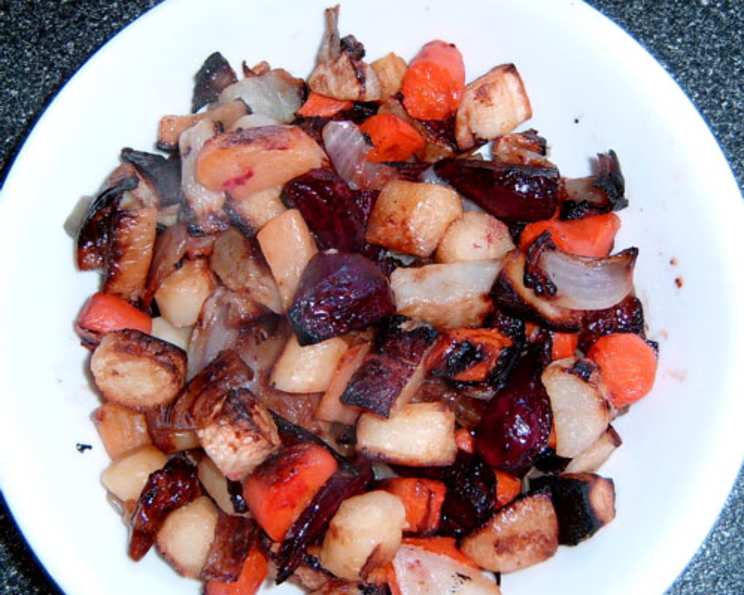
The Humble Magic of Roasted Root Vegetables: A Thanksgiving Cornerstone
For me, the aroma of roasted root vegetables is inextricably linked to the warmth and anticipation of Thanksgiving. I can still vividly recall helping my grandmother in her bustling kitchen, the air thick with the scent of sage and roasting turkey, and the sweet, earthy perfume of parsnips and carrots caramelizing in the oven. While the centerpiece turkey might steal the spotlight, it was always these humble roots, tossed with olive oil and salt, that truly grounded the meal for me. They transformed from tough, unassuming bulbs into tender, sweet treasures, a testament to the transformative power of heat and simple seasonings. It’s a dish that embodies comfort, seasonality, and the joy of shared meals, a tradition I’ve carried forward, adapting it slightly but always returning to its foundational, soul-satisfying essence.
Recipe Overview
- Prep Time: 20 minutes
- Cook Time: 60 minutes
- Total Time: 1 hour 20 minutes
- Servings: 6-8
- Yield: Large serving of roasted vegetables
- Dietary Type: Vegan, Gluten-Free, Dairy-Free
Ingredients
This recipe celebrates the bounty of root vegetables, and while the provided measurements are a guide, the true beauty lies in its adaptability. Feel free to adjust quantities based on your preferences and what’s freshest at your local market.
- 1 bunch beets
- 1 lb carrots
- 1 lb red potatoes
- 2 large red onions
- 1 lb parsnips
- 1 lb rutabaga
- 1/2 lb turnip
- Olive oil, enough to generously coat the vegetables
- Kosher salt, to taste
Equipment Needed
- Large roasting pans (you may need two depending on the quantity of vegetables)
- Vegetable peeler
- Sharp knife
- Cutting board
- Large bowl (optional, for tossing vegetables)
Instructions
The process of roasting root vegetables is wonderfully straightforward, relying on high heat to coax out their inherent sweetness and develop a delightful caramelized exterior. The key is to manage the different cooking times and textures of the various roots.
- Preheat your oven to a robust 500-550°F. This high temperature is crucial for achieving proper caramelization without the vegetables becoming mushy.
- Prepare the vegetables. Begin by peeling all the vegetables, except for the red potatoes, which can be left unpeeled.
- Cut the vegetables into uniform pieces. Aim for roughly 1-inch cubes or wedges. This ensures even cooking. Crucially, keep the beets separate from all other vegetables throughout this preparation stage. The vibrant pigment of beets can easily stain other ingredients.
- Season the vegetables. In a large bowl (or directly in your roasting pans if you prefer), coat the vegetables generously with olive oil. Ensure each piece is well-lubricated. Then, sprinkle liberally with kosher salt.
- Arrange for roasting. Place the prepared vegetables in roasting pans. Again, this is vital: keep the beets separate in their own pan or a distinct section of a larger pan. This prevents them from bleeding their color onto the other vegetables.
- Begin the roasting process. Roast the vegetables at 500-550°F.
- Stir periodically. Stir the vegetables every ten minutes or so. This action promotes even browning and prevents any single side from burning.
- Roast until tender. Continue roasting for up to an hour, or until the vegetables are tender when pierced with a fork. The exact time will depend on your oven and the size of your vegetable pieces. The beets might take a bit longer than some of the other roots.
- Combine and serve. Once the vegetables are tender, mix the roasted beets with the other roasted vegetables. Serve immediately, allowing the vibrant colors and rich aromas to delight your guests.
Expert Tips & Tricks
The beauty of roasted root vegetables is their inherent simplicity, but a few chef’s touches can elevate them further.
- Uniformity is Key: While I mentioned this in the instructions, it bears repeating. Cutting your root vegetables into similar-sized pieces is the most important factor for ensuring they all cook evenly. If you have some pieces that are much larger than others, they will likely be undercooked while the smaller ones are burnt.
- Don’t Crowd the Pan: Overcrowding your roasting pans is a common mistake that leads to steaming rather than roasting. If your vegetables are packed too tightly, they will release moisture and become soggy. Use multiple pans if necessary to give the vegetables ample space to breathe and caramelize.
- Embrace the High Heat: That 500-550°F range is your friend here. It might seem high, but it’s what creates those coveted crispy edges and sweet, caramelized interiors. Keep a close eye on them, as things can go from perfectly roasted to burnt quite quickly at this temperature.
- Beet Containment: The separate handling of beets is not just for aesthetics; it allows you to achieve perfectly tender beets without their color overpowering your other root vegetables. You can even roast them a touch longer if needed, as they tend to be denser.
- Seasoning is Crucial: Don’t be shy with the salt! Root vegetables have a natural sweetness, and salt not only balances that but also helps to draw out moisture, contributing to better caramelization. You can always add more salt at the table, but it’s hard to fix under-seasoned vegetables.
Serving & Storage Suggestions
Roasted root vegetables are wonderfully versatile and can be served in many ways. They are a stunning side dish for a festive meal, providing a colorful and flavorful counterpoint to richer main courses. They also make a fantastic addition to salads, grain bowls, or even pureed into a comforting soup.
Leftovers can be stored in an airtight container in the refrigerator for 3-4 days. They reheat beautifully in a moderate oven (around 350°F) until warmed through, or can be enjoyed cold in salads. While freezing is an option, the texture of the vegetables may change slightly upon thawing, becoming a bit softer.
Nutritional Information
| Nutrient | Amount per Serving (approximate) | % Daily Value |
|---|---|---|
| Calories | 99.3 kcal | 5% |
| Total Fat | 0.4 g | 1% |
| Saturated Fat | 0.1 g | 0% |
| Cholesterol | 0 mg | 0% |
| Sodium | 57.9 mg | 2% |
| Total Carbohydrate | 23.1 g | 7% |
| Dietary Fiber | 5.3 g | 21% |
| Sugars | 8 g | 32% |
| Protein | 2.4 g | 4% |
Note: Nutritional information is an estimate and will vary based on the exact types and quantities of vegetables used, as well as the amount of olive oil and salt added.
Variations & Substitutions
The beauty of this dish lies in its adaptability. Feel free to experiment with your favorite root vegetables. Some excellent additions or substitutions include:
- Sweet potatoes: Offer a lovely sweetness and creamy texture.
- Celeriac (celery root): Adds a subtle, earthy, and slightly herbaceous note.
- Parsnips: While already in the base recipe, ensure you embrace them if you love their distinct sweetness.
- Carrots: Even more carrots can never hurt!
- Garlic: Toss a few whole, unpeeled garlic cloves with the vegetables for a sweet, roasted garlic treat that can be squeezed out and spread on the vegetables.
- Herbs: Add fresh sprigs of rosemary or thyme to the roasting pan for an aromatic boost.
- Spices: A pinch of smoked paprika or a dash of cumin can introduce a different flavor profile.
FAQs
Q: Why do I need to keep the beets separate?
A: Beets have a very strong pigment that will bleed and color all the other vegetables, turning them a uniform pinkish-red hue. Keeping them separate ensures the other vegetables retain their natural colors.
Q: Can I use lower heat if I’m worried about burning?
A: While the recipe calls for high heat, you can reduce the temperature to 400-425°F (200-220°C). However, you will need to roast them for a longer period, and the caramelization might not be as intense. Be sure to stir more frequently to prevent sticking.
Q: What if my vegetables aren’t tender after an hour?
A: Ovens vary, and the size of your vegetable pieces can significantly impact cooking time. If your vegetables aren’t tender after an hour, simply continue roasting, checking every 10-15 minutes until they reach your desired tenderness.
Q: Can I prepare these vegetables ahead of time?
A: You can peel and chop the vegetables a day in advance and store them in an airtight container in the refrigerator. However, it’s best to toss them with olive oil and salt just before roasting for optimal results.
Q: Are there any vegetables I should not roast with roots?
A: For this specific method, stick to dense root vegetables and onions. Lighter, more delicate vegetables like asparagus or broccoli would overcook and burn at this high temperature. They are better suited for shorter roasting times at lower temperatures.
Final Thoughts
This roasted root vegetable dish is more than just a side; it’s a celebration of the earth’s bounty and the simple magic of transformation through heat. It’s a comforting, nourishing, and visually stunning addition to any meal, particularly during the cooler months. I encourage you to embrace the flexibility of this recipe, to make it your own by choosing your favorite roots and adjusting seasonings to your palate. Sharing this dish, with its deep flavors and vibrant colors, is a true culinary joy. Consider pairing it with a hearty lentil soup or a pan-seared chicken breast for a complete and satisfying meal. I’d love to hear about your own variations and how this humble dish graces your table.