
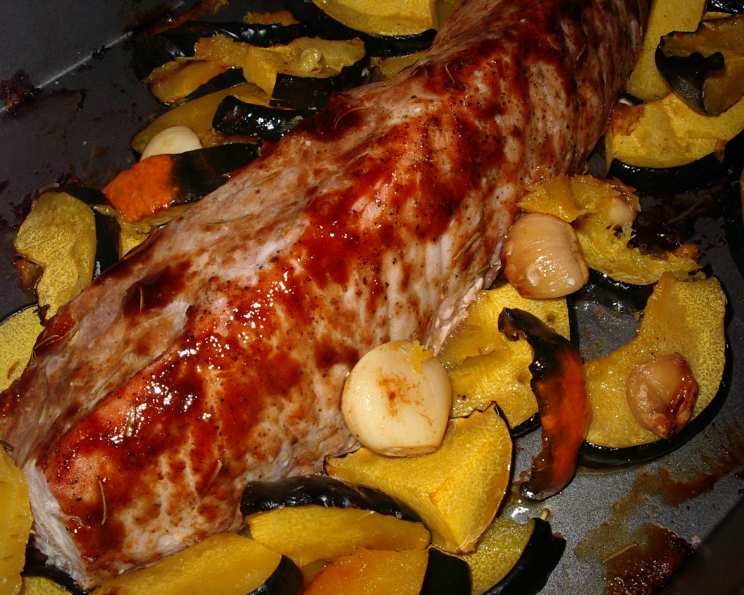
Roasted Pork Tenderloin with Acorn Squash: A Symphony of Autumn Flavors
There’s a particular comfort that settles in my kitchen when the air outside begins to carry the crisp scent of fallen leaves and woodsmoke. It’s during these months that my thoughts inevitably drift to heartier, more grounding meals. This roasted pork tenderloin with acorn squash is one such dish, a memory etched in my culinary journey not just for its delightful interplay of sweet and savory, but for the sheer joy it brought to a chilly November evening years ago. I remember sharing it with dear friends, the aroma filling every corner of the house, and the simple elegance of the presentation belied the deeply satisfying flavors that unfolded with each bite. It was a dish that felt both special enough for company and comforting enough for a quiet weeknight, a true testament to the magic of simple, quality ingredients.
Recipe Overview
- Prep Time: 20 minutes
- Cook Time: 40 minutes
- Total Time: 1 hour
- Servings: 4
- Yield: 1 dish
- Dietary Type: Unspecified
Ingredients
- 1 (2 lb) acorn squash, quartered, seeded, and sliced 1/2 inch thick, skin on
- 8 garlic cloves, peeled
- 1/2 teaspoon dried rosemary
- 1 1/2 teaspoons coarse salt
- 1/4 teaspoon ground pepper
- 1 (1 lb) pork tenderloin
- 4 teaspoons olive oil
- 2 tablespoons hoisin sauce
Equipment Needed
- Large roasting pan
- Oven
- Meat thermometer
Instructions
- Begin by preheating your oven to 375 degrees F (190 degrees C). This ensures the oven is at the optimal temperature for roasting, allowing for even cooking and a beautiful caramelization of the squash.
- In a large roasting pan, scatter the prepared acorn squash and the peeled garlic cloves. Distribute them evenly in a single layer, providing ample space for them to roast without steaming.
- Prepare the pork tenderloin. In a small bowl, mix together the dried rosemary, 1 1/2 teaspoons of the coarse salt, and 1/4 teaspoon of the ground pepper. Rub this fragrant mixture all over the pork tenderloin, ensuring it’s well-coated for maximum flavor infusion.
- Place the seasoned pork tenderloin directly into the roasting pan alongside the squash and garlic. Then, drizzle the entire contents of the pan, including the pork and vegetables, with the olive oil. This will help everything crisp up and develop a lovely golden hue.
- Roast the pan for 25 minutes. During this initial roasting period, the squash will begin to soften and the pork will start to cook through.
- After 25 minutes, carefully remove the roasting pan from the oven. Brush the pork tenderloin generously with the hoisin sauce. This sweet and savory glaze will caramelize beautifully in the remaining roasting time, adding a delightful depth of flavor.
- Continue roasting for another 15 minutes. This additional time will allow the hoisin sauce to set on the pork and ensure it reaches the perfect internal temperature. The total roasting time will be approximately 40 minutes.
- To confirm the pork is cooked through, insert a meat thermometer into the thickest part of the pork tenderloin. It should register an internal temperature of 140 degrees F (60 degrees C). This temperature indicates the pork is perfectly cooked, tender, and still juicy.
- Once the pork has reached the desired temperature, remove the roasting pan from the oven. Let the meat stand for 5 minutes before slicing. This crucial resting period allows the juices to redistribute throughout the pork, resulting in a more tender and flavorful final product.
- Finally, slice the pork tenderloin into 1 1/2 inch thick tenderloins. Serve the sliced pork with the roasted squash, the now-tender garlic cloves, and any delicious pan juices that have accumulated in the roasting pan.
A Note on the Squash Skin
The recipe specifically calls for leaving the skin on the acorn squash. My experience suggests this is a practical measure, helping the tender squash slices maintain their integrity and shape throughout the roasting process. While the skin is edible, I personally prefer to remove it before eating, as it can be a bit fibrous. Cooking it as specified, however, ensures you get the full benefit of the squash’s sweetness and texture without it disintegrating into a mush.
Expert Tips & Tricks
For an even more robust flavor, consider mincing two of the garlic cloves and incorporating them into the rosemary and salt rub for the pork. This will infuse the meat with a more intense garlic aroma. If you find your hoisin sauce is too thick to brush easily, a tablespoon of water or rice vinegar can help thin it to a more manageable consistency. When it comes to the acorn squash, ensure your slices are as uniform as possible in thickness. This guarantees they will all cook evenly and be perfectly tender at the same time as the pork.
Serving & Storage Suggestions
This dish is best served immediately, allowing you to enjoy the delightful contrast of the warm, roasted components. The tender pork, caramelized hoisin glaze, and sweet, yielding acorn squash create a beautifully balanced plate. For an elegant presentation, artfully arrange the sliced pork tenderloin atop a bed of the roasted squash and garlic on each plate, spooning over a generous amount of the flavorful pan juices.
Leftovers can be stored in an airtight container in the refrigerator for up to 3 days. Reheat gently in a low oven (around 300 degrees F / 150 degrees C) or on the stovetop over low heat, adding a splash of water or broth if needed to prevent drying out. While delicious the next day, this dish truly shines when enjoyed fresh.
Nutritional Information
| Nutrient | Amount per Serving | % Daily Value |
|---|---|---|
| Calories | 466.4 kcal | |
| Calories from Fat | 155 g | |
| Total Fat | 17.3 g | 26% |
| Saturated Fat | 5 g | 24% |
| Cholesterol | 149.9 mg | 49% |
| Sodium | 1120.4 mg | 46% |
| Total Carbohydrate | 29.3 g | 9% |
| Dietary Fiber | 3.9 g | 15% |
| Sugars | 2.2 g | 8% |
| Protein | 49.1 g | 98% |
Variations & Substitutions
While acorn squash is wonderfully suited for this dish, you could also experiment with other winter squash varieties like butternut or delicata squash, adjusting roasting times as needed for their density. For a spicier kick, a pinch of red pepper flakes can be added to the rosemary and salt rub. If hoisin sauce isn’t readily available, a combination of soy sauce, honey, and a touch of five-spice powder can create a similar flavor profile. For a vegetarian option, consider using firm tofu or large portobello mushrooms in place of the pork tenderloin, ensuring they are well-seasoned and roasted until tender.
FAQs
Q: Can I prepare the acorn squash ahead of time?
A: Yes, you can quarter, seed, and slice the acorn squash a day in advance. Store it in an airtight container in the refrigerator.
Q: How can I tell if the pork tenderloin is cooked without a thermometer?
A: While a thermometer is the most accurate method, you can check for doneness by making a small incision into the thickest part of the pork. If the juices run clear and the meat is no longer pink, it is likely cooked. However, a thermometer ensures you hit the perfect 140°F for optimal tenderness.
Q: My hoisin sauce is very thick. What can I do?
A: You can thin the hoisin sauce with a tablespoon of water or rice vinegar to make it easier to brush onto the pork.
Q: Is it important to let the pork rest?
A: Absolutely. Resting allows the juices to redistribute throughout the meat, making it more tender and moist. Skipping this step can result in a drier pork tenderloin.
Q: What can I serve with this dish?
A: This dish is quite complete on its own, but a simple green salad with a light vinaigrette or some steamed green beans would be excellent accompaniments.
This roasted pork tenderloin with acorn squash is a celebration of autumn’s bounty. It’s a dish that speaks to the soul, warming you from the inside out with its harmonious blend of flavors and textures. I encourage you to bring this simple yet elegant recipe into your own kitchen and create your own cherished culinary memories. Perhaps a crisp, unoaked Chardonnay or a light-bodied Pinot Noir would be a delightful pairing to complete this autumnal feast.