
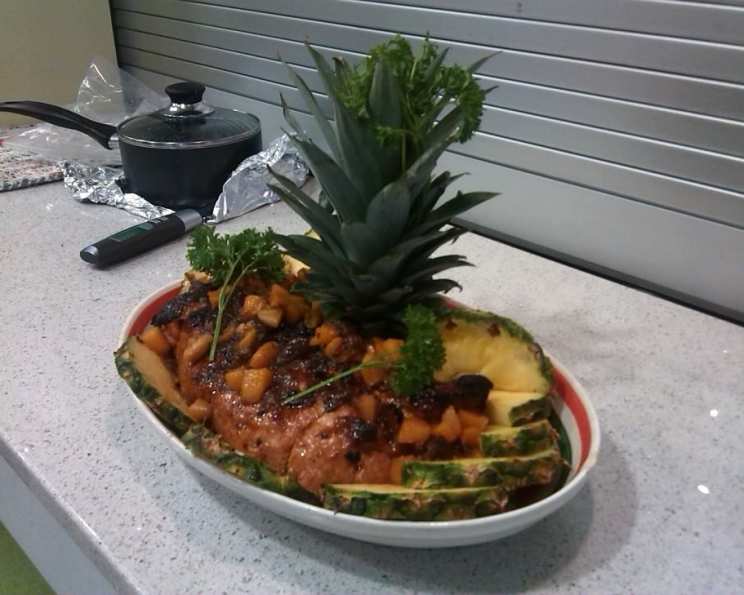
Roasted Pork Loin with Tropical Fruits
There’s a certain magic that happens when the rich, savory notes of roasted pork meet the bright, zesty kiss of tropical fruits. I remember a particular trip to Hawaii, where the local cuisine masterfully blends these seemingly disparate elements into something truly spectacular. It was at the Princeville Hotel on Kauai that I first encountered a dish that took this concept to heart – a roasted pork loin, generously filled with a fragrant medley of dried and fresh fruits. The idea of infusing the pork with these sweet and tangy flavors, intensified by slow roasting, was an epiphany. While I haven’t had the chance to recreate that exact dish myself yet, the memory of those vibrant aromas and the promise of such a harmonious pairing linger, inspiring this recipe.
Recipe Overview
- Prep Time: 1 day (including overnight marinating)
- Cook Time: 1 hour 15 minutes
- Total Time: 1 hour 30 minutes (plus marinating time)
- Servings: 6-8
- Yield: 1 roasted pork loin
- Dietary Type: Unspecified
Ingredients
This recipe calls for a thoughtful combination of pantry staples and fresh, vibrant fruits to create a truly memorable roast.
-
For the Fruit Marinade:
- 4 cups dry sherry
- 1 cinnamon stick, broken in half
- 2 tablespoons fresh lemon juice
- 1 ½ teaspoons lemon peel, grated
- ½ cup pitted prunes, chopped
- ½ cup dried apricot, chopped
- 6 whole black peppercorns
- 6 whole cloves
-
For the Pork and Filling:
- 3 ½ lbs boneless pork loin, trimmed
- 1 medium onion, finely chopped
- ⅓ cup peeled pitted mango, chopped
- ⅓ cup papaya, peeled and chopped
- 1 tablespoon golden brown sugar
- Salt and freshly ground black pepper, to taste
- 2 tablespoons vegetable oil
- Kitchen string
Equipment Needed
To bring this dish to life, you’ll want to have these essential kitchen tools at the ready:
- Medium saucepan
- Small saucepan
- Sharp knife
- 13x9x2-inch glass baking dish
- Large Dutch oven
- Large roasting pan
- Meat thermometer
- Aluminum foil
- Heavy small saucepan
Instructions
The beauty of this dish lies in the layers of flavor developed through marination and careful roasting. Begin this process the day before you plan to serve for optimal results.
- Prepare the Fruit Marinade Base: In a medium saucepan, combine 2 cups of the dry sherry, the cinnamon stick, fresh lemon juice, and grated lemon peel. Place this over medium-high heat and bring it to a simmer. Let it simmer for just 2 minutes.
- Infuse the Dried Fruits: Add the chopped prunes and dried apricots to the simmering sherry mixture. Continue to simmer, stirring occasionally, until the fruits become tender and the liquid begins to thicken slightly, which should take approximately 20 minutes. Set this aside.
- Prepare the Aromatic Marinade: In a separate small saucepan, combine the remaining 2 cups of dry sherry, the whole black peppercorns, and the whole cloves. Bring this to a simmer over medium heat and let it simmer for 2 minutes.
- Cool the Marinades: Remove both mixtures from the heat. Allow the fruit mixture to cool to room temperature. For the sherry and spice mixture, let it cool completely to room temperature; this will serve as your pork marinade.
- Prepare the Pork Loin: Using a sharp knife, carefully make a lengthwise cut down the center of the boneless pork loin. You want to cut about ¾ of the way through the meat, being careful not to cut all the way. Imagine you are opening a book; you should be able to lay the pork open flat.
- Begin Layering Flavors: Sprinkle some of the finely chopped onion onto the cut side of the opened pork loin.
- Close and Marinate: Gently close the pork loin, bringing the cut sides back together. Place the prepared pork loin into a 13x9x2-inch glass baking dish. Sprinkle the remaining onion over the top of the pork.
- Add the Marinade and Chill: Pour the cooled sherry and spice mixture over the pork. Cover the pork and the fruit mixture separately. Place both in the refrigerator and allow them to chill overnight. This overnight marination is crucial for infusing the pork with deep flavor.
- Preheat the Oven: On the day of cooking, preheat your oven to 375°F (190°C).
- Prepare the Fresh Fruit Filling: Drain any liquid from the cooked fruit mixture into a separate bowl. Reserve this liquid, and discard the cinnamon stick. Stir the chopped mango, papaya, and golden brown sugar into the drained fruit mixture.
- Prepare the Pork for Roasting: Discard the pork marinade that the pork has been sitting in. Pat the pork loin dry with paper towels; this step is important for achieving a good sear.
- Stuff the Pork: Open the pork loin again, as you did before. Season the inside generously with salt and pepper. Spoon approximately ⅔ cup of the prepared fruit mixture (the one with mango and papaya) evenly down the center of the pork loin. Reserve the remaining fruit mixture for the sauce.
- Enclose the Filling: Carefully fold the pork loin back over, enclosing the fruit filling. To ensure the filling stays securely in place during cooking, tie the pork securely in several places with kitchen string.
- Season the Exterior: Season the outside of the tied pork loin with salt and pepper.
- Sear the Pork: Heat the vegetable oil in a heavy large Dutch oven over medium-high heat. Carefully add the prepared pork loin to the hot oil and cook until browned on all sides, which should take about 5 minutes per side. This searing locks in juices and develops a beautiful crust.
- Transfer and Roast: Transfer the seared pork loin from the Dutch oven to a large roasting pan.
- Roast to Perfection: Place the roasting pan in the preheated oven. Roast until a meat thermometer inserted into the center of the pork registers 160°F (71°C). This will take approximately 1 hour and 15 minutes.
- Rest the Pork: Once the pork reaches the desired internal temperature, remove it from the oven. Carefully transfer the pork to a platter and reserve the pan juices. Tent the pork loosely with aluminum foil and let it stand for 20 minutes before slicing. This resting period allows the juices to redistribute throughout the meat, ensuring a tender and moist result.
- Prepare the Fruit Sauce: While the pork is resting, combine the reserved liquid from the fruit mixture (from step 10), the remaining fruit mixture (that you reserved from step 12), and the reserved pan juices in a heavy small saucepan. Bring this mixture to a simmer over medium heat, stirring gently.
- Serve: Slice the rested pork into portions. Serve the sliced pork immediately with the warm fruit sauce spooned over the top.
Expert Tips & Tricks
- Trimming the Pork: Ensure your boneless pork loin is well-trimmed of excess fat. While a little fat contributes to flavor, too much can make the roast greasy. Aim for a clean, even surface.
- Tying the Roast: Don’t underestimate the importance of kitchen twine. Properly tying the roast keeps the delicate fruit filling contained and helps the loin maintain its shape during cooking, ensuring an attractive presentation.
- Thermometer Accuracy: A reliable meat thermometer is your best friend for perfectly cooked pork. Overcooked pork can be dry, so investing in a good thermometer will prevent disappointment.
- Don’t Skip the Rest: Allowing the pork to rest is as important as the cooking itself. This step ensures that the juices, which have been driven to the center during cooking, have a chance to redistribute, resulting in a moister and more flavorful roast.
- Adjusting Fruit Quantities: While the recipe provides specific amounts, feel free to adjust the quantities of the fresh tropical fruits based on availability and your personal preference. Just ensure you maintain a balanced flavor profile.
Serving & Storage Suggestions
This Roasted Pork Loin with Tropical Fruits is a stunning centerpiece for any meal. Serve it hot, with generous spoonfuls of the vibrant fruit sauce drizzled over each slice. It pairs beautifully with a side of fluffy rice, creamy mashed sweet potatoes, or a light, crisp green salad.
Leftovers can be stored in an airtight container in the refrigerator for up to 3 days. The fruit sauce can also be stored separately. To reheat, gently warm the sliced pork and sauce over low heat on the stovetop or in a covered dish in the oven at a low temperature (around 300°F/150°C) until heated through. Avoid microwaving, as it can make the pork dry.
Nutritional Information
This information is an estimate and can vary based on specific ingredients and portion sizes.
| Nutrient | Amount per Serving | % Daily Value |
|---|---|---|
| Calories | 1259.9 kcal | |
| Calories from Fat | 320 g | |
| Total Fat | 35.7 g | 54% |
| Saturated Fat | 11.8 g | 59% |
| Cholesterol | 166.7 mg | 55% |
| Sodium | 174.8 mg | 7% |
| Total Carbohydrate | 35.2 g | 11% |
| Dietary Fiber | 1.4 g | 5% |
| Sugars | 17 g | 67% |
| Protein | 53.4 g | 106% |
Variations & Substitutions
While the tropical fruit combination is delightful, this recipe is also wonderfully adaptable. For a taste of the Mediterranean, consider substituting the tropical fruits with dried figs, chopped dates, and a touch of orange zest. If sherry is not your preference, a good quality dry white wine or even apple cider could be used as a substitute in the marinades, though this will alter the flavor profile. For those seeking a more robust spice, a pinch of ground ginger or a star anise could be added to the fruit simmer.
FAQs
Q: Can I prepare the fruit filling and marinate the pork a day in advance?
A: Yes, this recipe is designed for overnight marination, which is crucial for developing the flavors. The fruit filling can also be prepared and stored separately overnight.
Q: My pork loin is very thick. Will the cooking time change?
A: Cooking times are approximate. Always rely on a meat thermometer to ensure the pork reaches an internal temperature of 160°F (71°C). A thicker loin may require a slightly longer cooking time.
Q: What can I do if I don’t have a Dutch oven?
A: If you don’t have a Dutch oven, you can sear the pork in a heavy oven-safe skillet and then transfer it to a roasting pan for the oven portion of the cooking.
Q: Can I use fresh fruit instead of dried fruits?
A: While the recipe calls for dried fruits for their concentrated sweetness and chewiness, you could experiment with fresh fruits. You might need to adjust the simmering time to account for their higher water content.
Q: How do I prevent the pork from drying out during roasting?
A: Properly trimming the fat, searing the pork to lock in juices, and using a meat thermometer to avoid overcooking are key. Resting the pork after cooking is also essential for maintaining moisture.
Final Thoughts
This Roasted Pork Loin with Tropical Fruits is more than just a recipe; it’s an invitation to explore a delightful fusion of flavors. The succulence of the pork, enhanced by the fragrant spices and the sweet-tart burst of tropical fruits, creates a dish that is both comforting and exotic. I encourage you to embark on this culinary adventure and experience the harmonious interplay of these ingredients. Serve it with pride, and don’t hesitate to share your creations and any inspired variations you discover. Perhaps a chilled glass of Sauvignon Blanc or a light-bodied Pinot Noir would be a delightful accompaniment to this tropical-infused feast.