
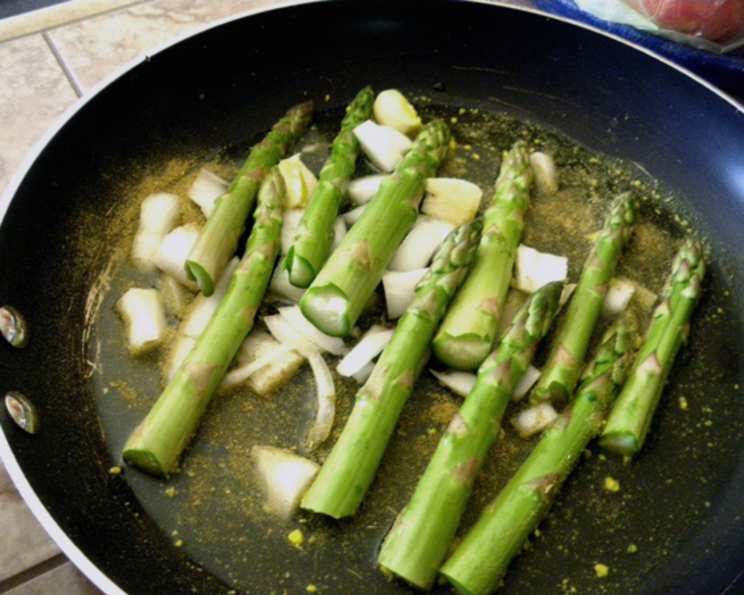
Rosemary Asparagus: A Verdant Delight from My Kitchen to Yours
There’s something inherently elegant about asparagus. Its slender, vibrant green stalks whisper of spring, of renewal, and of simpler pleasures. I remember a particular Easter brunch years ago, a lavish affair with my family that felt a little too formal, a little too…stuff. Then, amidst the towering roasts and intricate pastries, there was this simple side dish: Rosemary Asparagus. It was bright, fragrant, and utterly unpretentious, a breath of fresh air that cut through the richness. The earthy aroma of rosemary, subtly infused into the crisp-tender asparagus, was a revelation. It was a dish that spoke of the garden, of sun-warmed herbs, and a gentle hand in the kitchen. It’s a dish that has since become a staple in my repertoire, a testament to how a few quality ingredients, treated with care, can create something truly memorable.
Recipe Overview
- Prep Time: 10 minutes
- Cook Time: 3-5 minutes
- Total Time: 13-15 minutes
- Servings: 4
- Yield: Serves 4 as a side dish
- Dietary Type: Gluten-Free, Dairy-Free, Vegan
Ingredients
This recipe celebrates the purity of fresh ingredients, allowing each component to shine.
- 1 pound fresh asparagus, trimmed
- 1/3 cup onion, thinly sliced
- 1/2 cup chicken broth (for a vegan version, use vegetable broth)
- 1-2 teaspoons dried rosemary
- 1 clove garlic, halved
- 1 bay leaf
- Salt and freshly ground black pepper, to taste
- 1 tablespoon minced fresh parsley, for garnish
Equipment Needed
For this straightforward preparation, you won’t need an arsenal of specialized tools.
- A large skillet or sauté pan
- A sharp knife for trimming and slicing
- A cutting board
- Measuring cups and spoons
- A spoon or tongs for tossing and serving
Instructions
The beauty of this Rosemary Asparagus lies in its speed and simplicity. It’s a dish that can be prepared in mere minutes, making it perfect for weeknight meals or as a last-minute addition to a more elaborate spread.
- Begin by preparing your asparagus. Snap off the woody ends of each stalk; they will naturally break at their tender point. Alternatively, you can line up the spears and cut off the bottom inch or so. For uniformity, you can also peel the lower half of any particularly thick stalks.
- In a large skillet or sauté pan, combine the chicken broth (or vegetable broth for a vegan preparation), dried rosemary, the halved garlic clove, the bay leaf, and a generous pinch of salt and black pepper.
- Add the trimmed asparagus spears and the thinly sliced onion to the skillet.
- Place the skillet over medium-high heat and bring the liquid to a boil.
- Once boiling, reduce the heat to low, cover the skillet, and simmer for 3 to 5 minutes. The goal here is to achieve asparagus that is crisp-tender. You want it to retain a slight bite and its vibrant green color, not become mushy. The exact time will depend on the thickness of your asparagus spears; check them after 3 minutes.
- Once the asparagus has reached your desired tenderness, carefully discard the bay leaf. You can also remove the garlic halves if you prefer a less intense garlic flavor, although the softened garlic will have imparted a lovely aroma.
- Gently garnish the dish with minced fresh parsley just before serving. The bright green flecks add a lovely visual appeal and a burst of fresh flavor.
Expert Tips & Tricks
As a chef, I’ve learned that even the simplest dishes can be elevated with a few thoughtful touches.
- Broth Selection: While chicken broth provides a subtle savory depth, vegetable broth is an excellent choice for a fully vegan dish and offers a clean, herbaceous base. Ensure your broth is good quality, as it forms the flavor foundation of the sauce.
- Rosemary Potency: The potency of dried rosemary can vary. Start with 1 teaspoon and add the second teaspoon if you desire a more pronounced rosemary flavor. For an even more authentic and robust rosemary essence, consider using fresh rosemary sprigs, gently bruised, alongside or in place of the dried.
- Onion’s Role: The thin slices of onion will soften and become translucent during the brief simmer, adding a delicate sweetness and aroma without being overpowering. If you’re not a fan of onion pieces, you can omit them, but they do contribute a subtle aromatic complexity.
- The “Crisp-Tender” Balance: This is the key to perfect asparagus. Overcooked asparagus turns limp and loses its vibrant color. Under-cooked asparagus can be tough. Keep a close eye on it during the final minutes of simmering. A quick taste test is the best way to gauge doneness.
- Garlic Infusion: Halving the garlic clove allows its flavor to infuse the broth gently. If you prefer a stronger garlic presence, you can mince one clove and add it with the broth, being mindful that it might cook more intensely.
Serving & Storage Suggestions
Rosemary Asparagus is incredibly versatile and can grace any table, from a casual weeknight dinner to a celebratory feast.
This dish is best served immediately after preparation, allowing the asparagus to retain its ideal crisp-tender texture and vibrant color. It makes a wonderful accompaniment to grilled meats, roasted chicken, fish, or as a light yet flavorful side for pasta dishes. For an elegant presentation, arrange the spears neatly on a platter and sprinkle the fresh parsley over the top.
Leftovers can be stored in an airtight container in the refrigerator for up to 2 days. While the asparagus will soften slightly upon reheating, it will still retain much of its flavor. To reheat, gently warm in a skillet over low heat with a tablespoon of water or broth, or microwave for short intervals until just heated through. Avoid over-reheating, as this will lead to a mushy texture. This dish is not ideally suited for freezing, as the texture of the asparagus can be compromised upon thawing.
Nutritional Information
This information is an estimate and can vary based on specific ingredients and quantities used.
| Nutrient | Amount per Serving | % Daily Value |
|---|---|---|
| Calories | 35.6 | |
| Calories from Fat | 2.6 | |
| Total Fat | 0.4 g | 0% |
| Saturated Fat | 0.1 g | 0% |
| Cholesterol | 0 mg | 0% |
| Sodium | 98.9 mg | 4% |
| Total Carbohydrate | 6.4 g | 2% |
| Dietary Fiber | 2.7 g | 10% |
| Sugars | 2.8 g | 11% |
| Protein | 3.3 g | 6% |
(Note: Nutritional values are calculated using chicken broth and do not include potential added fats for cooking if any were used beyond what is stated in the recipe. Using vegetable broth for a vegan option will result in similar nutritional profiles.)
Variations & Substitutions
While this recipe is a classic for a reason, feel free to explore its potential for customization.
- Herbal Nuances: Don’t limit yourself to rosemary! Thyme, a hint of lemon zest, or even a pinch of red pepper flakes can add an exciting new dimension to the dish.
- Garlic Intensity: If you’re a garlic enthusiast, feel free to mince the clove instead of halving it for a more potent garlic infusion.
- Vegetable Broth Swap: As mentioned, vegetable broth is a perfect substitute for chicken broth to make this dish vegan-friendly.
- Citrus Brightness: A squeeze of fresh lemon juice over the finished dish adds a lovely, bright acidity that cuts through the earthy flavors beautifully.
FAQs
Q: Can I use fresh rosemary instead of dried?
A: Absolutely! If using fresh rosemary, you can add 1-2 sprigs to the simmering liquid. Gently bruise the sprigs to release their aroma. Remove them before serving.
Q: What kind of onion is best for this recipe?
A: A yellow or white onion, sliced thinly, works wonderfully. Their mild sweetness complements the asparagus and rosemary.
Q: My asparagus is very thick. How will that affect the cooking time?
A: Thicker asparagus spears will require a slightly longer simmering time to become crisp-tender. Check them after 5 minutes and continue cooking in 1-minute increments until they reach your desired texture.
Q: Is it okay to use frozen asparagus?
A: While fresh asparagus is preferred for its texture and vibrant color, you can use frozen asparagus. Thaw it completely and drain it very well before adding it to the skillet. Be mindful that frozen asparagus may cook slightly faster.
Q: How can I make this dish spicier?
A: For a touch of heat, add a pinch of red pepper flakes to the skillet along with the broth and herbs.
Final Thoughts
Rosemary Asparagus is a dish that exemplifies the joy of simple, well-executed cooking. It’s a reminder that elegance doesn’t always equate to complexity. The vibrant green of the asparagus, kissed by the aromatic embrace of rosemary and garlic, is a celebration of springtime freshness. I encourage you to try this recipe the next time you crave a dish that is both incredibly easy and delightfully flavorful. Serve it alongside a perfectly grilled steak or a flaky piece of baked salmon, or simply enjoy it on its own as a light and satisfying side. I’d love to hear how it turns out for you!