
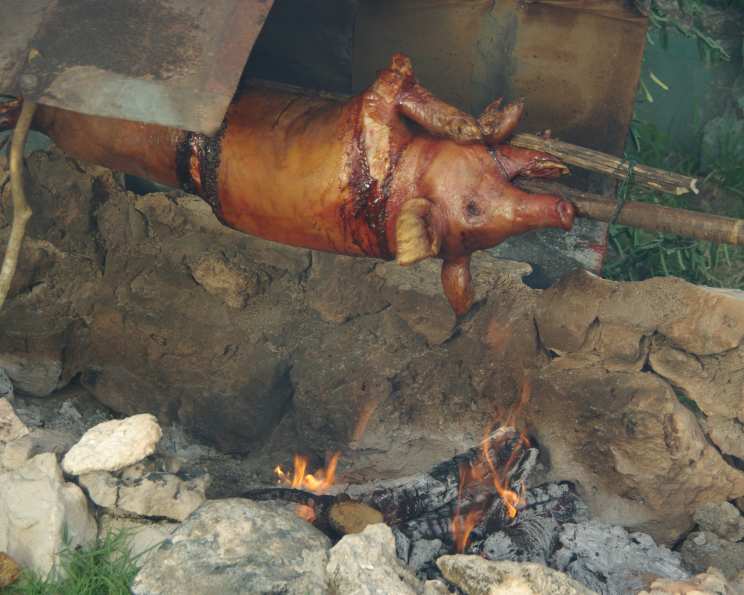
The Grand Spectacle: Mastering the Roast Suckling Pig
There are few culinary experiences that evoke as much primal joy and sheer theatrical wonder as carving into a perfectly roasted suckling pig. I remember one unforgettable Christmas Eve, years ago, when my family tradition was to have not just one, but two crackling beauties gracing our table. The air was thick with the aroma of rendered fat, sweet spices, and anticipation. As the golden-brown skin shattered with the slightest touch of the knife, revealing impossibly tender meat beneath, a collective gasp rippled through the room. It’s a memory etched in my mind, a testament to the power of this magnificent dish to transform an ordinary meal into an extraordinary celebration.
Recipe Overview
- Prep Time: Not explicitly stated in original data, assume significant for pig preparation and stuffing
- Cook Time: Variable, requires long, slow cooking
- Total Time: 12 hours 10 minutes (includes resting)
- Servings: 20
- Yield: 1 whole roasted suckling pig
- Dietary Type: Dairy-Free (as written, can be adapted)
Ingredients
- 1 whole suckling pig, weighing 30 to 35 pounds (ensure it’s cleaned by your butcher)
- 1 cup honey
- 1 cup orange concentrate
- 1 ounce soy sauce
- 2 pounds bread, cubed (for stuffing)
- 1 head celery, chopped (for stuffing)
- Salt and pepper, to taste (for stuffing)
- 1 tablespoon dried sage (or to taste, for stuffing)
Equipment Needed
- Large roasting pan or a specialized rotisserie setup
- Heavy-duty aluminum foil
- Aluminum foil caps (for ears and tail)
- Wooden skewers or butcher’s twine
- Basting brush
- Sharp carving knife
- Charcoal grill (optional, if following original grilling method)
- Foil drip pan (if using charcoal grill)
Instructions
The journey to a spectacular roast suckling pig begins with meticulous preparation. The sheer scale of this undertaking means attention to detail is paramount.
-
Prepare the Pig: Begin by thoroughly rinsing the cavity of the pig with water. Ensure it is well-drained and then patted completely dry, inside and out. Set the prepared pig aside.
-
Create the Marinade/Basting Liquid: In a saucepan, combine the honey, orange concentrate, and soy sauce. Bring this mixture to a simmer over medium heat and cook for 5 minutes. This brief cooking time will help to meld the flavors and slightly thicken the liquid, creating a beautiful glaze. Set aside to cool slightly.
-
Prepare the Stuffing: In a large bowl, combine the cubed bread, chopped celery, salt, pepper, and dried sage. Toss everything together until well mixed. This simple yet flavorful stuffing will add moisture and aromatics to the pig as it roasts.
-
Stuff the Cavity: Firmly stuff the abdominal cavity of the pig with the prepared bread and celery mixture. Be sure to pack it well, as this will prevent the stuffing from drying out during the long cooking process.
-
Seal the Cavity: Once stuffed, sew up the opening of the abdominal cavity using butcher’s twine or secure it tightly with wooden skewers. This ensures the stuffing stays contained and the pig retains its shape during cooking.
-
Protect the Extremities: To prevent the ears and tail from burning during the long cooking process, cover them with aluminum foil caps. These delicate parts can char much faster than the rest of the pig.
-
Begin the Roasting Process (Charcoal Grill Method as described in original):
- If using a charcoal grill, arrange briquettes only on the sides of the grill. It’s crucial that the briquettes are separated from the suckling pig.
- To achieve this separation, construct a foil drip pan. Use 3 sheets of heavy aluminum foil, molding them together to create a pan that is slightly larger than the pig. This pan will collect the rich drippings and act as a buffer between the direct heat of the coals and the pig.
- Place the cooking grill over the foil drip pan. This setup allows for the addition of more briquettes as needed during the cooking process and also collects the flavorful basting fluids.
- Carefully place the prepared suckling pig onto the cooking grill.
-
Long, Slow Cooking: The key to a marvelously tender product lies in long, slow cooking. The exact temperature and duration will depend on your specific cooking method (oven or grill) and the pig’s size, but aim for an internal temperature of around 170-175°F (77-79°C) in the thickest part of the shoulder and ham. For a 30-35 pound pig, this could easily take 6 to 8 hours or even longer, depending on the heat.
-
Basting for Perfection: Throughout the cooking process, liberal usage of marinade on the partially cooked suckling pig enhances the finished entree. Baste the pig frequently with the prepared honey, orange concentrate, and soy sauce mixture. This basting not only adds moisture but also helps to build a beautiful, caramelized crust.
-
The Final Flourish: About 30 minutes before the barbecue is completed, remove the aluminum foil caps from the ears and tail. This allows these areas to brown and crisp up, achieving a uniform baking color across the entire pig.
-
The Apple Finale: While the pig is in its final stages, you can prepare to insert a red apple into the pig’s mouth. This is a traditional flourish that adds a charming visual element. It’s best to leave a wooden block in the pig’s mouth initially to maintain its shape, then swap it for the apple as the cooking concludes.
-
Resting is Crucial: Once cooked to perfection, remove the suckling pig from the heat and let it rest for at least 1 hour, and ideally up to 2 hours. This resting period is critical for allowing the juices to redistribute throughout the meat, ensuring maximum tenderness and moisture.
Expert Tips & Tricks
- Butcher’s Best Friend: Don’t shy away from asking your butcher to do the heavy lifting. A well-cleaned and ready-to-cook pig saves considerable time and ensures proper preparation.
- Temperature Control is Key: For oven roasting, aim for a lower temperature, around 250-300°F (120-150°C), and allow for significantly longer cooking times. Use a reliable meat thermometer to monitor internal temperature.
- Crispy Skin Strategy: If your skin isn’t as crispy as you’d like after the initial roast, you can crank up the oven temperature to 400-450°F (200-230°C) for the last 30-45 minutes, or even use the broiler, watching very closely to prevent burning.
- Stuffing Variations: While the classic bread and celery stuffing is excellent, feel free to experiment with adding herbs like rosemary or thyme, or even some dried fruit for sweetness.
- Carving with Confidence: A sharp carving knife and a sturdy carving fork are essential. Start by carving off the legs and shoulders, then move to the loin. The skin should be incredibly crisp and easy to shatter.
Serving & Storage Suggestions
Serving a roast suckling pig is an event in itself. Present the entire, magnificent pig at the head of the table for a dramatic unveiling. Carve it tableside, allowing your guests to witness the beautiful contrast between the crackling skin and tender meat. It pairs wonderfully with a variety of side dishes, such as roasted root vegetables, a vibrant slaw, or fluffy mashed potatoes.
Leftovers are a treasure! Once cooled, carve any remaining meat off the bone and store it in an airtight container in the refrigerator for 3 to 4 days. Reheat gently in a low oven or a skillet with a little broth to maintain moisture. While delicious, suckling pig is best enjoyed fresh. Freezing is not recommended for the best texture, especially for the crackling skin.
Nutritional Information
| Nutrient | Amount per Serving | % Daily Value |
|---|---|---|
| Calories | 199.3 kcal | |
| Calories from Fat | 14 g | |
| Total Fat | 7 % | |
| Saturated Fat | 1.6 g | 2 % |
| Cholesterol | 0.3 g | 1 % |
| Sodium | 0 mg | 0 % |
| Total Carbohydrate | 408.4 mg | 17 % |
| Dietary Fiber | 43.2 g | 14 % |
| Sugars | 1.7 g | 6 % |
| Protein | 21.6 g | 86 % |
| 4.2 g | 8 % |
(Note: Nutritional information is an estimate and can vary based on exact ingredients and portion sizes.)
Variations & Substitutions
While the classic roast suckling pig is hard to beat, adventurous cooks might consider a few variations. For a more savory profile, incorporate ingredients like finely chopped onions, garlic, or even a bit of pork sausage into the stuffing. A spicier glaze could be achieved by adding a touch of chili paste or sriracha to the honey-orange mixture. For a touch of elegance, consider a stuffing that includes wild rice, mushrooms, and fresh herbs like parsley and chives.
FAQs
Q: What is the best way to ensure the pig’s skin is crispy?
A: Keeping the skin dry throughout the cooking process is paramount. Basting the meat, not the skin, during the initial hours and then exposing it to higher heat towards the end are key techniques.
Q: How do I know when the suckling pig is cooked through?
A: Use a reliable meat thermometer inserted into the thickest part of the thigh or shoulder, avoiding bone. It should register between 170-175°F (77-79°C).
Q: Can I roast a suckling pig in a conventional oven?
A: Absolutely. A large roasting pan and careful monitoring of temperature and basting will yield excellent results, though the smoky flavor of a charcoal grill will be absent.
Q: What if my pig is larger or smaller than 30-35 pounds?
A: Adjust cooking time accordingly. Larger pigs will require longer cooking times, and smaller pigs will cook faster. Always rely on internal temperature for doneness.
Q: Is it necessary to stuff the pig?
A: While not strictly mandatory, stuffing adds flavor and moisture to the meat. It also helps the pig maintain its shape during cooking.
A Feast for the Senses
Roast suckling pig is more than just a meal; it’s an experience that ignites the senses and creates lasting memories. The anticipation as it roasts, the mesmerizing crackle of the skin, and the unparalleled tenderness of the meat make it a dish truly worth celebrating. Gather your loved ones, embrace the occasion, and embark on this culinary adventure. The rewards are immeasurable, and the joy of sharing such a magnificent creation will undoubtedly be a highlight of any gathering.