
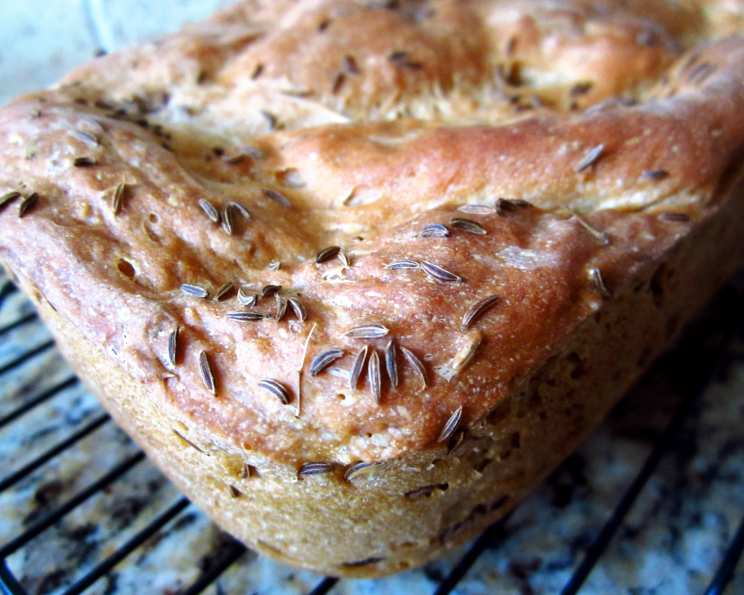
A Baker’s Reverie: Crafting the Perfect Rye Buttermilk Bread
There’s a certain magic that happens when the earthy aroma of rye flour mingles with the tangy promise of buttermilk. For me, it’s a scent that transports me back to brisk autumn mornings, the kind where you can see your breath in the air and the only thing better than a warm hearth is a freshly baked loaf waiting to be slathered with butter. This particular Rye Buttermilk Bread, with its subtle sweetness and complex, slightly nutty flavor, has become a staple in my culinary repertoire, especially when the craving for a truly satisfying sandwich strikes. It’s the kind of bread that doesn’t just accompany a meal; it elevates it.
Recipe Overview
- Prep Time: 2 hours 55 minutes
- Cook Time: 30 minutes (This is an estimate for baking in a bread machine, actual baking time will vary by machine and cycle.)
- Total Time: 2 hours 55 minutes (This includes rising time as per bread machine cycles.)
- Servings: 1 large loaf
- Yield: 1 large loaf
- Dietary Type: Contains Dairy
Ingredients
This recipe is designed for the convenience of a bread machine, simplifying the process while delivering a wonderfully textured loaf.
- 1 cup water, warmed to 90-110 degrees Fahrenheit
- 1/2 cup buttermilk
- 1 tablespoon balsamic vinegar
- 2 tablespoons butter or 2 tablespoons margarine, softened
- 2 tablespoons molasses
- 1 tablespoon honey
- 1 teaspoon salt
- 2 1/2 cups bread flour
- 1 cup rye flour
- 1 tablespoon fresh sage, minced
- 1 packet yeast (ensure it is not rapid rise yeast)
- 1 tablespoon caraway seed
Equipment Needed
- Bread Machine (any standard model will suffice)
- Measuring Cups and Spoons
- Spatula or Spoon (for scraping down the sides of the bread machine pan)
Instructions
The beauty of this recipe lies in its straightforward execution, largely thanks to the magic of the bread machine. Follow these steps precisely for a loaf that sings with flavor.
- Begin by preparing your bread machine pan. Ensure it is clean and free of any residue.
- Add the liquids first, following the specific instructions for your bread machine model. In this recipe, this means pouring in the 1 cup of warmed water, followed by the 1/2 cup of buttermilk, and the 1 tablespoon of balsamic vinegar.
- Next, add the softened butter (or margarine), the 2 tablespoons of molasses, and the 1 tablespoon of honey.
- Introduce the 1 teaspoon of salt to the pan.
- Now, it’s time for the flours. Add the 2 1/2 cups of bread flour and the 1 cup of rye flour to the pan. It’s helpful to create a small well in the center of the flours for the yeast.
- Sprinkle the 1 packet of yeast into the well you created. Ensure the yeast is not in direct contact with the liquids just yet.
- Finally, add the 1 tablespoon of minced fresh sage and the 1 tablespoon of caraway seed to the pan.
- Secure the lid of your bread machine and select the “Whole Wheat” cycle, with the “Medium” crust setting.
- Your bread machine will begin its cycle. At the designated beep, which signals the dough-kneading stage, open the lid and check the dough’s consistency. The dough should form a smooth, elastic ball that is slightly tacky but not overly sticky.
- If the dough appears too dry and crumbly, add bread flour, 1 tablespoon at a time, until it reaches the desired consistency. If the dough seems too wet and sticky, add a touch more bread flour, 1 tablespoon at a time. Be patient and add incrementally, allowing the machine to knead briefly after each addition.
- Once the dough has achieved the correct consistency, close the lid and allow the bread machine to complete its cycle. This includes the kneading, rising, and baking phases.
- When the bread machine has finished baking, carefully remove the loaf from the pan. You may need to use a heat-resistant spatula to gently loosen the sides if it seems stuck.
- Place the loaf on a wire cooling rack to cool completely before slicing. This is crucial for the texture and allows the internal structure of the bread to set properly.
Expert Tips & Tricks
The success of this bread machine loaf hinges on a few key details. Paying attention to the water temperature is paramount; too hot and it can kill the yeast, too cold and it won’t activate properly. The “beep” check is your most valuable tool. Don’t be afraid to intervene slightly if the dough needs a gentle nudge towards perfection. Adding the ingredients in the correct order as instructed by your machine is also vital for proper gluten development and yeast activation. Lastly, always let the bread cool completely before slicing. Slicing hot bread can lead to a gummy texture as the steam hasn’t fully escaped.
Serving & Storage Suggestions
This Rye Buttermilk Bread is incredibly versatile. Its robust flavor makes it an ideal foundation for hearty sandwiches. Think classic Reuben sandwiches, where the tang of the sauerkraut and the richness of corned beef are perfectly complemented by the rye. It’s also phenomenal for patty melts, the slightly sour notes cutting through the richness of the cheese and burger. Beyond sandwiches, a slice toasted and buttered is a simple pleasure, and it’s an excellent accompaniment to soups and stews.
To store, allow the bread to cool completely. Once cool, wrap it tightly in plastic wrap or place it in an airtight container. At room temperature, it will stay fresh for 2-3 days. For longer storage, you can refrigerate it for up to a week. If you wish to freeze it, wrap it well in plastic wrap followed by a layer of aluminum foil or place it in a freezer-safe bag. It will keep its best quality in the freezer for up to 3 months. To reheat, you can toast slices directly, or gently warm a whole loaf wrapped in foil in a 350°F (175°C) oven for about 10-15 minutes.
Nutritional Information
| Nutrient | Amount per Serving (approx.) | % Daily Value |
|---|---|---|
| Calories | 1992 (total loaf) | |
| Calories from Fat | 274 | 14% |
| Total Fat | 30.6 g | 47% |
| Saturated Fat | 16.2 g | 80% |
| Cholesterol | 66 mg | 21% |
| Sodium | 2696.6 mg | 112% |
| Total Carbohydrate | 378.7 g | 126% |
| Dietary Fiber | 25.8 g | 103% |
| Sugars | 49.8 g | 199% |
| Protein | 52.3 g | 104% |
(Note: Nutritional values are estimates and can vary based on specific ingredients used.)
Variations & Substitutions
While this recipe shines in its current form, feel free to experiment! If buttermilk is unavailable, you can create a substitute by mixing 1/2 cup of milk with 1/2 tablespoon of white vinegar or lemon juice and letting it sit for 5-10 minutes. For a deeper rye flavor, you could slightly increase the rye flour and decrease the bread flour, but be mindful that this may affect the dough consistency. Herbs are also a wonderful addition; consider adding dill or caraway seed in place of or in addition to the sage for a different aromatic profile.
FAQs
Q: Why should I use non-rapid rise yeast?
A: Non-rapid rise yeast allows for a slower, more controlled fermentation, which develops better flavor and a more desirable texture in the finished loaf.
Q: Can I use all bread flour instead of rye flour?
A: You can substitute the rye flour with bread flour if preferred, but you will lose the characteristic flavor and texture that rye provides.
Q: What is the best way to check if the bread is fully baked in the bread machine?
A: Most bread machines have an internal thermometer and timer. You can also gently tap the bottom of the loaf; it should sound hollow when fully baked.
Q: How long does it take for the dough consistency check beep to occur?
A: This varies by bread machine model and cycle. Consult your bread machine’s manual for the specific timing of the dough cycle.
Q: Can I add seeds like sunflower or pumpkin seeds to the dough?
A: Yes, you can add other seeds along with the caraway seed. About 1-2 tablespoons total would be a good starting point.
A Final Flourish
There’s a profound satisfaction in pulling a perfectly baked loaf of Rye Buttermilk Bread from your bread machine. The rich, slightly sweet, and deeply savory notes are a testament to the simple, honest ingredients and the magic of fermentation. Whether it’s gracing your breakfast table, serving as the foundation for a gourmet sandwich, or simply enjoyed with a smear of good butter, this bread is a celebration of baking at its finest. I encourage you to give this recipe a try, and I’m confident it will quickly become a treasured part of your baking repertoire. Enjoy every warm, fragrant slice!