
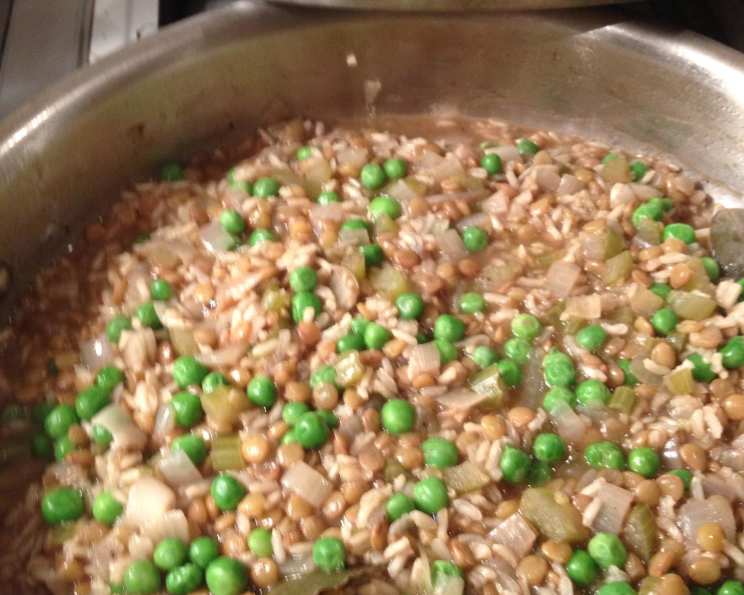
A Hearty Hug in a Bowl: Rice Pilaf with Lentils and Split Peas
There’s something profoundly comforting about a dish that sings of the earth and nourishes the soul. For me, this rice pilaf with lentils and split peas is one such creation. I remember a particular winter evening, the kind where the wind howls with a chill that seeps into your bones, and all you crave is warmth and sustenance. The pantry was looking a little sparse, but a keen eye spotted bags of dried green lentils and split peas, just waiting for their moment. Inspired by their humble promise, I decided to transform them into something magical, a dish that would fill the kitchen with an aroma of spices and chase away the gloom. The resulting pilaf, rich with the earthy depth of legumes and the fragrant whisper of whole spices, was exactly the culinary embrace I needed, and it’s been a staple in my repertoire ever since.
Recipe Overview
- Prep Time: 15 minutes
- Cook Time: 30 minutes
- Total Time: 45 minutes
- Servings: 12
- Yield: Approximately 8-10 cups
- Dietary Type: Vegan, Dairy-Free, Gluten-Free
Ingredients
This recipe relies on a foundational mix of aromatics, grains, legumes, and a symphony of warming spices to create its distinctive flavor profile.
- 2 cups diced onions
- 6 garlic cloves, minced
- 1/2 teaspoon salt
- 1 1/2 cups brown rice
- 1/2 cup lentils (green or brown work beautifully)
- 1/2 cup dried split peas (green or yellow)
- 2 tablespoons fennel seeds
- 1 tablespoon coriander seeds
- 1 teaspoon black pepper
- 1/2 teaspoon cinnamon
- 1 teaspoon nutmeg
- 1/4 teaspoon turmeric
- 1 teaspoon allspice
- 2 teaspoons ground ginger
- 6 cups water
- 1 tablespoon sesame oil
- 6 vegetable bouillon cubes
- 3 bay leaves
- 1/4 cup pine nuts, toasted
- 1 cup celery, diced
Notes on Ingredients:
- For the onions, a medium-sized yellow or white onion will provide a good base.
- The garlic cloves can be finely minced or pressed.
- Brown rice offers a nutty flavor and a satisfying chew that complements the legumes.
- Both lentils and split peas are crucial for texture and earthiness; ensure they are well-rinsed.
- The spice blend is key! Feel free to adjust the amounts slightly to your preference, but this combination creates a wonderfully aromatic depth.
- Vegetable bouillon cubes add an umami richness. You can substitute with low-sodium vegetable broth if preferred, adjusting the liquid quantity as needed.
- Toasting pine nuts enhances their flavor and brings out their buttery notes.
Equipment Needed
This recipe is quite straightforward and doesn’t require any specialized equipment.
- A heavy, wide pot or Dutch oven with a tight-fitting lid is essential for even cooking and moisture retention.
Instructions
The process is designed to build layers of flavor, starting with the aromatics and culminating in a beautifully tender and fragrant pilaf.
- Begin by preparing your cooking vessel. Spray a heavy, wide pot or Dutch oven with a tight-fitting lid with non-stick cooking spray. This ensures nothing sticks and makes cleanup a breeze.
- Add the diced onions and minced garlic cloves to the pot, along with the 1/2 teaspoon of salt. Sweat these aromatics over medium heat until they are fragrant and softened, stirring constantly. This step helps to release their sweet, pungent flavors without browning them.
- Next, introduce the 1 1/2 cups of brown rice to the pot. Stir the rice to coat each grain with the softened onions and garlic. Continue stirring and toasting the rice for a few minutes, until it smells wonderfully nutty. This toasting process adds another dimension of flavor to the finished dish.
- Now, it’s time to add the liquids and the stars of the dish. Pour in the 6 cups of water, the 1 tablespoon of sesame oil, and dissolve the 6 vegetable bouillon cubes. Add the 1/2 cup of lentils, the 1/2 cup of dried split peas, all the spices (2 tablespoons fennel seeds, 1 tablespoon coriander, 1 teaspoon pepper, 1/2 teaspoon cinnamon, 1 teaspoon nutmeg, 1/4 teaspoon turmeric, 1 teaspoon allspice, and 2 teaspoons ginger), and the 3 bay leaves.
- Bring the mixture to a rolling boil. Once boiling, immediately reduce the heat to low, cover the pot tightly with its lid, and let it simmer gently for 30 minutes.
- After 30 minutes of simmering, remove the pot from the heat. Let it stand, covered, for an additional 5 to 10 minutes. This resting period allows the steam to continue cooking the rice and legumes, ensuring they are perfectly tender and the liquid is fully absorbed.
- Carefully remove and discard the bay leaves. They have imparted their subtle aroma and should not be consumed.
- Using a fork, gently fluff the pilaf, separating the grains of rice and legumes. Gently mix in the toasted pine nuts and diced celery.
- Serve immediately.
Expert Tips & Tricks
- Toasting the Spices: While the recipe calls for adding ground and whole spices directly, for an even deeper flavor, you could lightly toast the fennel seeds and coriander seeds in a dry skillet over medium heat for about a minute until fragrant before adding them to the pot. Be careful not to burn them!
- Rice Rinsing: While brown rice doesn’t always require rinsing, giving the brown rice a quick rinse under cold water can remove excess starch, potentially leading to fluffier grains, though for this hearty pilaf, it’s not strictly necessary.
- Legume Prep: Ensure your lentils and split peas are free of any small stones or debris before adding them to the pot. Rinsing them under cool water is a good practice.
- Lid Fit: A tight-fitting lid is crucial for proper simmering. If your lid has a steam vent, consider covering it with a piece of foil to trap more moisture.
- Doneness Check: After the resting period, test a grain of rice and a legume. They should be tender but not mushy. If there’s still too much liquid or the grains are undercooked, you can return the pot to very low heat, covered, for a few more minutes.
Serving & Storage Suggestions
This Rice Pilaf with Lentils and Split Peas is a complete meal on its own, but it also makes an excellent side dish.
Serving:
Serve hot, garnished with a sprinkle of fresh parsley or cilantro for a pop of color and freshness, if desired. The toasted pine nuts add a delightful crunch. It pairs wonderfully with grilled vegetables, a simple salad, or as a hearty accompaniment to roasted meats or fish.
Storage:
- Room Temperature: Leftovers should not be left at room temperature for more than two hours due to the presence of legumes.
- Refrigeration: Store cooled leftovers in an airtight container in the refrigerator for up to 3-4 days.
- Freezing: This pilaf freezes well. Allow it to cool completely, then transfer to freezer-safe containers or bags. It can be stored in the freezer for up to 2-3 months.
- Reheating: Reheat gently on the stovetop with a splash of water or vegetable broth to prevent drying, or microwave until heated through.
Nutritional Information
Here’s an estimated nutritional breakdown per serving, assuming 12 servings from the total yield.
| Nutrient | Amount per Serving | % Daily Value |
|---|---|---|
| Calories | 172.4 kcal | N/A |
| Total Fat | 4.2 g | 6% |
| Saturated Fat | 0.5 g | 2% |
| Cholesterol | 0 mg | 0% |
| Sodium | 112.7 mg | 4% |
| Total Carbohydrate | 29.1 g | 9% |
| Dietary Fiber | 4.9 g | 19% |
| Sugars | 2.5 g | 9% |
| Protein | 5.6 g | 11% |
| Calories from Fat | N/A | 37% |
Note: Nutritional values are estimates and can vary based on specific ingredients and brands used.
Variations & Substitutions
While this recipe is wonderful as is, here are a few ways to adapt it:
- Grains: For a quicker cooking time, you could substitute brown rice with white rice, adjusting the cooking time accordingly (white rice usually cooks in about 15-20 minutes). For a gluten-free option, quinoa or millet could also be used, though they will alter the texture and flavor profile.
- Legumes: If you don’t have split peas, you could use an additional 1/2 cup of lentils, or a mix of red and green lentils for a slightly different color and texture.
- Aromatics: Add a diced bell pepper (any color) along with the onions for an extra layer of flavor and nutrients.
- Spice Level: For a touch of heat, add a pinch of red pepper flakes along with the other spices.
- Herbs: Stir in fresh chopped parsley, cilantro, or dill at the very end for a burst of freshness.
FAQs
Q: Can I use pre-cooked rice instead of raw brown rice?
A: This recipe is designed for raw brown rice to absorb the flavors as it cooks. Using pre-cooked rice would require a different approach, as you would essentially be reheating it.
Q: My rice seems undercooked, and there’s still liquid. What should I do?
A: Ensure your heat is truly on low and the lid is tightly sealed. If it’s still undercooked after the resting time, return to very low heat, covered, for another 5-10 minutes. Add a tablespoon or two more water if it seems dry.
Q: What kind of lentils and split peas are best for this recipe?
A: Green or brown lentils and green or yellow split peas are ideal as they hold their shape well during cooking and provide the desired texture.
Q: Can I omit the sesame oil?
A: Yes, you can omit the sesame oil. The vegetable bouillon cubes and spices will still provide plenty of flavor.
Q: How can I make this dish more visually appealing?
A: Garnish with freshly chopped herbs like parsley or cilantro, and a sprinkle of the toasted pine nuts just before serving.
A Taste of Home
This Rice Pilaf with Lentils and Split Peas is more than just a recipe; it’s an experience. It’s a dish that speaks of warmth, generosity, and the simple pleasure of good food made with love. Whether you’re seeking a hearty vegetarian main course or a comforting side, this pilaf delivers. I encourage you to gather these humble ingredients, fill your kitchen with their fragrant aromas, and savor the comforting goodness that emerges. Share it with loved ones, or enjoy it as a moment of quiet nourishment for yourself. I’d be delighted to hear about your culinary adventures with this dish!