
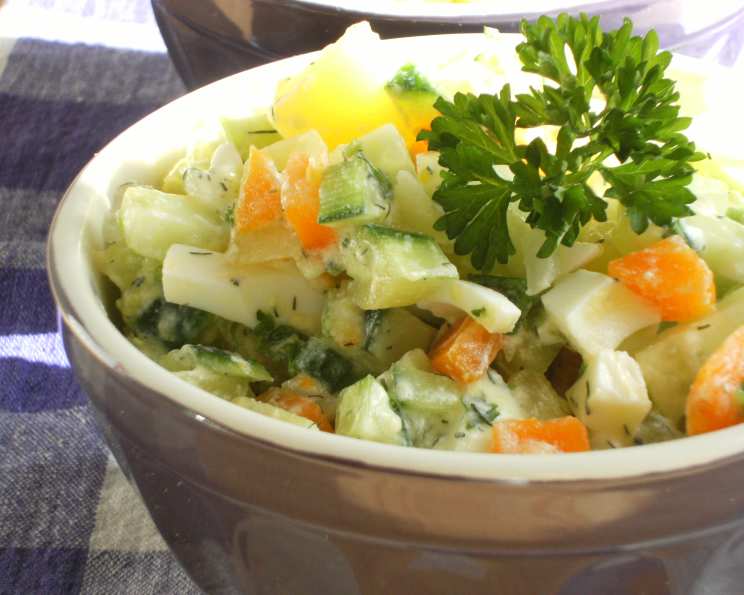
Salad Olivier: A Taste of Russian Hospitality
There’s a particular magic that happens when you’re invited into a Russian home for the first time, and often, that magic is served in a large, elegant bowl. Salad Olivier, or as it’s more commonly known, “Salat” in my household, was always the centerpiece of these gatherings. I remember one New Year’s Eve, a blizzard raging outside, when my grandmother, Baba Anya, meticulously diced every ingredient for the Olivier. The anticipation in the air was palpable, as we knew this iconic salad, a symbol of comfort and shared joy, was about to grace our table, its creamy, savory aroma a promise of good times to come.
Recipe Overview
- Prep Time: 45 minutes
- Cook Time: 30 minutes
- Total Time: 1 hour 15 minutes (plus chilling time)
- Servings: 6-8
- Yield: Approximately 8 cups
- Dietary Type: Vegetarian (can be adapted to vegan)
Ingredients
To create this beloved Russian classic, you’ll need a selection of finely diced, fresh, and preserved ingredients, all brought together by a creamy dressing.
- 2 medium waxy potatoes, cooked and cooled
- 3 carrots, trimmed, cooked and cooled
- 1/4 cup sweet onion, finely chopped
- 1 cucumber, seeded and diced
- 1 large deli-style pickle, diced
- 1/2 cup frozen peas, thawed (or canned, drained peas)
- 2 large hard-boiled eggs, peeled and diced
- 4 sprigs fresh dill, chopped (or 1 tsp dried dill)
- 6 sprigs fresh parsley, chopped
- 1/2 cup mayonnaise
- 2 tablespoons white wine vinegar
- Salt, to taste
- Black pepper, to taste
Equipment Needed
- Medium saucepan
- Large mixing bowl
- Sharp knife
- Cutting board
- Serving dish
Instructions
Crafting Salad Olivier is a process that rewards patience and precision. Each step, from cooking the vegetables to the final delicate toss, contributes to the harmonious blend of flavors and textures.
-
Prepare the Root Vegetables: Place the waxy potatoes and carrots into a medium saucepan. Cover them completely with cold water. Bring the water to a gentle boil over medium heat. Allow the potatoes to cook until tender, which usually takes about 30 minutes, and the carrots until tender, about 20 minutes. The key here is tenderness, but not mushiness. You should be able to easily pierce them with a fork.
-
Cool the Vegetables: Once cooked, carefully move the potatoes and carrots to a plate or a clean surface. Allow them to cool completely. This step is crucial to ensure that when you dice them, they hold their shape and don’t disintegrate into the salad.
-
Discard Cooking Water: Once the vegetables have cooled sufficiently, discard the cooking water from the saucepan.
-
Dice the Cooled Vegetables: Begin by peeling the cooled potatoes and carrots. Then, using a sharp knife and a steady hand, cut each vegetable into a uniform 1/4-inch dice. Consistency in size is vital for Salad Olivier, as it ensures that each bite offers a balanced combination of flavors.
-
Combine Ingredients: Transfer the diced potatoes and carrots to a large mixing bowl. To this, add the finely chopped sweet onion, the diced cucumber, the diced deli-style pickle, the thawed frozen peas (or drained canned peas), and the diced hard-boiled eggs.
-
Incorporate Fresh Herbs: Add the chopped fresh dill and chopped fresh parsley to the bowl. The fresh herbs are essential for adding brightness and a distinct aromatic quality to the salad.
-
Dress the Salad: Gently dollop the mayonnaise over the ingredients in the bowl. Drizzle the white wine vinegar over the top. The mayonnaise provides the creamy base, while the vinegar adds a touch of acidity to cut through the richness and awaken the palate.
-
Stir to Combine: Using a large spoon or spatula, gently stir all the ingredients together until they are thoroughly combined and evenly coated with the mayonnaise and vinegar dressing. Be careful not to overmix, which can lead to a mushy texture. The goal is to gently fold everything together.
-
Season to Taste: Season the salad generously with salt and freshly ground black pepper. Taste the salad and adjust the seasoning as needed. It’s important to season in stages, as the pickles can also contribute saltiness.
-
Chill Thoroughly: Cover the bowl tightly with plastic wrap or a lid. Refrigerate the Salad Olivier for at least 1 to 2 hours, or preferably longer, to allow the flavors to meld and the salad to become thoroughly chilled. This chilling period is critical for the salad to reach its optimal flavor profile.
-
Adjust Seasonings (Again): Before serving, give the salad a gentle stir and taste it once more. Cold dishes often require a bit more seasoning than warm ones, so don’t hesitate to add more salt or pepper if necessary.
-
Serve: Transfer the chilled Salad Olivier to a beautiful serving dish. You can garnish it with a few extra sprigs of fresh dill or parsley for a fresh, inviting presentation.
Expert Tips & Tricks
- Vegetable Uniformity: The key to a visually appealing and texturally pleasing Salad Olivier is the uniformity of the dice. Aim for 1/4-inch cubes for all your vegetables and eggs. This ensures a harmonious bite every time.
- Potato Choice: For this salad, waxy potatoes are preferred over starchy varieties like Russets. Waxy potatoes hold their shape better when boiled and diced, preventing the salad from becoming a mushy mess.
- Cooling is Crucial: Do not rush the cooling process of the boiled vegetables. Dicing warm ingredients will inevitably lead to them breaking down and creating a less desirable texture. Patience here pays dividends.
- Deli-Style Pickle: The “deli-style pickle” refers to a firm, crisp dill pickle, often found in larger sizes at delis or as whole dills. Avoid sweet pickles or gherkins, as their flavor profile is not suited for this dish.
- Mayonnaise Quality: Use a good quality, full-fat mayonnaise. This is the backbone of the dressing, and a superior mayonnaise will elevate the entire salad.
- Don’t Skimp on Chilling: The chilling time is not just for temperature; it’s for flavor development. The ingredients need time to marry and for the dressing to permeate them.
Serving & Storage Suggestions
Salad Olivier is a wonderfully versatile dish. It’s traditionally served as a cold appetizer or side dish, especially during festive occasions like New Year’s and birthdays. It pairs beautifully with dark rye bread, a dollop of sour cream (if not strictly adhering to the base recipe), or as part of a larger zakuski (appetizer) spread.
For storage, keep Salad Olivier tightly covered in the refrigerator. It will remain fresh and delicious for 2-3 days. Due to the mayonnaise, it’s best not to leave it at room temperature for extended periods; aim for no more than 2 hours. Freezing is not recommended, as the texture of the mayonnaise and vegetables can be compromised upon thawing.
Nutritional Information
| Nutrient | Amount per Serving | % Daily Value |
|---|---|---|
| Calories | 287 kcal | |
| Total Fat | 24.9 g | 32% |
| Saturated Fat | 3.7 g | 19% |
| Cholesterol | 101 mg | 34% |
| Sodium | 594 mg | 26% |
| Total Carbohydrate | 10.3 g | 4% |
| Dietary Fiber | 1.8 g | 6% |
| Total Sugars | 2.3 g | |
| Protein | 5.7 g | 11% |
Note: Nutritional values are estimates and can vary based on specific ingredients and portion sizes used.
Variations & Substitutions
While the classic recipe is beloved, there are many ways to personalize Salad Olivier:
- Adding Protein: For a non-vegetarian version, you can add 6-8 ounces of cooked, diced chicken breast or cooked, diced ham. Some variations also include cooked sausage or canned tuna. Ensure any added meats are also diced to the same size as the vegetables.
- Vegetarian/Vegan Adaptation: To make this salad vegan, substitute the mayonnaise with a high-quality vegan mayonnaise and omit the hard-boiled eggs, or replace them with firm tofu that has been pressed and diced.
- Apple Crunch: For a touch of sweetness and a delightful textural contrast, finely diced tart apple (like Granny Smith) can be added.
- Pickle Variety: While deli-style pickles are traditional, some prefer the tang of cornichons for a more refined acidity.
- Herbal Twists: Experiment with adding a pinch of fresh chives or a very small amount of finely minced celery for an added layer of flavor and crunch.
FAQs
Q: What is the key to the authentic flavor of Salad Olivier?
A: The balance of the creamy mayonnaise with the subtle tang of vinegar and the fresh bite of dill and parsley, combined with perfectly cooked and diced vegetables, is crucial for that authentic flavor.
Q: Can I use pre-cooked vegetables from the grocery store?
A: While convenient, pre-cooked vegetables may not have the optimal texture and flavor. Boiling your own potatoes and carrots allows you to control their doneness perfectly for dicing.
Q: Why is it important to seed the cucumber?
A: Seeding the cucumber removes the watery core, preventing the salad from becoming diluted and ensuring a better texture.
Q: How finely should I chop the onion?
A: The onion should be very finely chopped, almost minced. This allows its flavor to distribute evenly without overwhelming the other ingredients.
Q: Is Salad Olivier typically served on special occasions?
A: Absolutely! Salad Olivier is a quintessential dish for celebrations, holidays, and family gatherings in Russia and many other Eastern European countries, often considered a symbol of hospitality and festivity.
Final Thoughts
Salad Olivier is more than just a salad; it’s a culinary hug, a dish steeped in tradition and memory. It’s a testament to how simple, humble ingredients, prepared with care and attention, can create something truly extraordinary. Whether you’re recreating a taste of your heritage or exploring new culinary horizons, I encourage you to embrace the process, savor the aromas, and most importantly, enjoy the act of sharing this delightful creation with loved ones. Perhaps serve it alongside some hearty borscht or a crisp vodka for a truly authentic experience.