
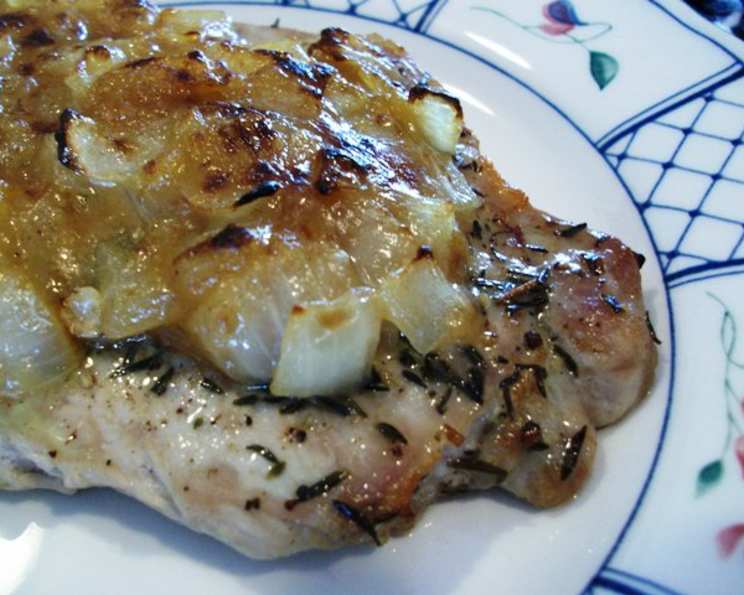
Roast Pork with Creamy Onion Stuffing: A Comfort Food Classic Reimagined
There’s a certain magic that happens when the aroma of roasting pork, infused with the sweet, savory perfume of slowly cooked onions, begins to fill the house. For me, it’s more than just a meal; it’s a nostalgic embrace, a culinary hug that transports me back to Sunday dinners at my grandmother’s table. She always had a way of coaxing the most incredible flavors from simple ingredients, and this roast pork with its luscious onion stuffing is a testament to that talent. The creamy texture of the stuffing, elevated by the subtle warmth of fresh nutmeg, is truly unforgettable, and the accompanying gravy, built from the rich pan drippings, is the perfect finale. It’s a dish that embodies comfort, warmth, and the joy of sharing a truly delicious meal with loved ones.
Recipe Overview
Here’s a quick look at what you’ll need and how much time to set aside for this comforting creation:
- Prep Time: 20 minutes
- Cook Time: 2 hours 30 minutes
- Total Time: 2 hours 50 minutes
- Servings: 6-8
- Yield: 1 roast pork with stuffing
- Dietary Type: Not Vegetarian/Vegan (Contains Pork, Dairy, Chicken Base)
Ingredients
To bring this delightful dish to life, gather the following:
For the Roast Pork:
- 4 lbs pork loin
- 1 tablespoon olive oil
- 1 teaspoon thyme leaves (fresh or dried)
- Salt and pepper to taste
For the Creamy Onion Stuffing:
- 1/4 cup butter
- 4 large onions, chopped (approximately 4 cups total – Vidalia or Texas Sweet onions are excellent choices for their natural sweetness)
- 1/4 cup all-purpose flour
- 1 teaspoon chicken base (or a good quality chicken bouillon cube/powder)
- 1/4 teaspoon ground nutmeg (freshly ground is highly recommended for its superior aroma and flavor, but pre-ground will work in a pinch)
- 1 cup water
- 1 tablespoon lemon juice
For the Pan Gravy:
- 1 cup water
- 1 tablespoon cornstarch, mixed with 1 tablespoon water (this creates a slurry for thickening)
Equipment Needed
- Roasting pan (large enough to comfortably hold the pork loin)
- Medium frying pan or skillet
- Whisk
- Measuring cups and spoons
- Sharp knife
- Cutting board
- Meat thermometer
- Aluminum foil (for tenting the roast)
Instructions
Let’s embark on the journey of creating this flavorful roast pork with its irresistible onion stuffing.
-
Preheat Your Oven and Prepare the Pork: Begin by preheating your oven to a steady 325°F (160°C). This lower temperature is key to ensuring the pork cooks through evenly without drying out. Take your 4 lb pork loin and place it in your roasting pan. Rub the entire surface of the roast with 1 tablespoon of olive oil. This helps the herbs adhere and promotes a beautiful golden-brown crust. Next, generously sprinkle the roast with 1 teaspoon of thyme leaves, along with salt and pepper to your personal preference.
-
Initial Roasting: Place the prepared pork loin into the preheated oven. Allow it to roast until the meat registers an internal temperature of 170°F (77°C). This will take approximately 2 hours. A meat thermometer inserted into the thickest part of the loin, avoiding any bone if present, is your best friend here. Resist the urge to open the oven door too frequently, as this can cause temperature fluctuations and prolong the cooking time.
-
Prepare the Creamy Onion Stuffing: While the pork is in its first phase of roasting, let’s focus on the star of the stuffing. Melt 1/4 cup of butter in a medium frying pan over medium heat. Add the 4 cups of chopped onions (about 4 large onions). Cook them gently for about 10 minutes, stirring occasionally, until they are softened and translucent. You want them to be tender, but not deeply caramelized at this stage; we’re coaxing out their sweetness.
-
Develop the Stuffing Base: To the softened onions, add 1/4 cup of flour. Stir this into the onions and cook for about 1 to 2 minutes, allowing the flour to toast slightly. This step will help thicken the stuffing. Next, stir in 1 teaspoon of chicken base (or your preferred bouillon), 1/4 teaspoon of ground nutmeg, and 1 cup of water. Bring this mixture to a gentle simmer, stirring constantly.
-
Achieve Creamy Consistency: Continue to cook the onion mixture, stirring frequently, until it thickens into a creamy consistency. This usually takes another 5 to 7 minutes. The nutmeg will begin to release its warm, aromatic essence, and the mixture will take on a beautiful, rich color. Finally, stir in the 1 tablespoon of lemon juice. The brightness of the lemon juice will cut through the richness of the onions and butter, adding a wonderful balance to the stuffing. Remove the pan from the heat.
-
Stuff the Roast: Once the pork loin has reached 170°F (77°C) and has been removed from the oven, it’s time to stuff it. Using a sharp knife, carefully slice the roast almost all the way through. The slices should be about 3/4 inch thick, creating pockets for the stuffing. You can adjust the thickness to your preference, but this thickness allows for easy stuffing and even cooking. Gently spoon the creamy onion stuffing into each of these slices. Then, spread any extra onion filling over the top of the entire roast, creating a decadent layer.
-
Second Bake for Browning: Return the stuffed roast to the 325°F (160°C) oven. Bake for approximately 30 minutes more. This second baking period is crucial for allowing the flavors to meld together and for the top of the roast to develop a beautiful, golden-brown crust.
-
Rest the Roast and Prepare Gravy: After the second bake, remove the roast from the oven. Transfer the roast to a clean plate or carving board and tent it loosely with aluminum foil. This resting period is vital for the juices to redistribute throughout the meat, resulting in a more tender and moist final product. While the roast is resting, turn your attention to the pan drippings left in the roasting pan.
-
Make the Pan Gravy: Place the roasting pan on the stovetop over low heat (if your pan is oven-safe and designed for stovetop use). Stir in 1 cup of water, scraping up any browned bits from the bottom of the pan; these bits are pure flavor! Once the water is incorporated, whisk in the cornstarch and water mixture (the slurry). Continue to stir until the gravy thickens to your desired consistency. If it’s too thick, add a splash more water; if it’s too thin, you can create another small cornstarch slurry to thicken it further. Season the gravy with salt and pepper to taste.
Expert Tips & Tricks
- Onion Choice Matters: While any onion will technically work, using sweet onions like Vidalia or Texas Sweet not only simplifies the stuffing preparation (less need for added sugar) but also lends a delightful natural sweetness that truly shines.
- Fresh Nutmeg’s Prowess: I cannot overstate the impact of freshly grated nutmeg. It releases a far more complex and aromatic flavor profile than pre-ground. A microplane or a fine grater will make quick work of it.
- Resting is Non-Negotiable: Don’t skip the resting period for the pork. It might seem tempting to carve immediately, but allowing the meat to rest for at least 10-15 minutes is crucial for a juicy, tender roast.
- Gravy Nuances: If you find your pan drippings have a lot of fat, you can skim off most of it before adding the water and cornstarch to the roasting pan. Alternatively, if you have a fat separator, that’s an even easier method.
Serving & Storage Suggestions
This Roast Pork with Creamy Onion Stuffing is best served hot, straight from the oven. Arrange the stuffed pork slices on a platter, ensuring some of the glistening onion stuffing is visible. Drizzle generously with the rich pan gravy. It pairs wonderfully with simple sides like mashed potatoes, steamed green beans, or a crisp green salad.
Leftovers can be stored in an airtight container in the refrigerator for 2-3 days. Reheat gently in the oven at 300°F (150°C) until warmed through, or in the microwave, being careful not to overheat, which can dry out the pork. The gravy can also be reheated separately on the stovetop. Freezing is not generally recommended for this dish, as the texture of the stuffing and pork can be compromised upon thawing.
Nutritional Information
| Nutrient | Amount per Serving (approx.) | % Daily Value |
|---|---|---|
| Calories | 793.1 kcal | |
| Calories from Fat | (Estimated) | |
| Total Fat | 52.5 g | 80% |
| Saturated Fat | 19.9 g | 99% |
| Cholesterol | 201.8 mg | 67% |
| Sodium | 190.8 mg | 7% |
| Total Carbohydrate | 15.6 g | 5% |
| Dietary Fiber | 1.6 g | 6% |
| Sugars | 4.4 g | 17% |
| Protein | 61.8 g | 123% |
Note: Nutritional values are estimates and can vary based on specific ingredients and portion sizes.
Variations & Substitutions
- Herb Variations: While thyme is classic, consider adding a pinch of rosemary or sage to the pork rub for a different aromatic profile.
- Chicken Broth Base: If chicken base isn’t readily available or you prefer not to use it, a good quality chicken bouillon cube or powder will work effectively in its place.
- Dairy-Free Adaptation: For a dairy-free version, substitute the butter in the stuffing with a plant-based butter alternative. Ensure your chicken base is also dairy-free.
FAQs
Q: Can I use a different cut of pork?
A: A bone-in pork loin roast or even a pork tenderloin could work, but you may need to adjust cooking times significantly. Pork loin is ideal for creating those stuffing pockets.
Q: My onions are burning before they soften, what am I doing wrong?
A: Ensure your heat is set to medium and stir them frequently. If they start to brown too quickly, reduce the heat further or add a tablespoon of water to help them steam.
Q: How can I make the gravy thicker if it’s too thin?
A: The easiest way is to make another small cornstarch slurry (1 tablespoon cornstarch mixed with 1 tablespoon water) and whisk it into the simmering gravy. Cook for another minute or two until thickened.
Q: Can I prepare the onion stuffing ahead of time?
A: Yes, you can prepare the onion stuffing a day in advance. Store it in an airtight container in the refrigerator. You may need to warm it slightly before stuffing the roast.
Q: What if I don’t have a meat thermometer?
A: While a thermometer is the most accurate way to check doneness, you can test the pork by cutting into the thickest part. The juices should run clear, and the meat should be opaque white, not pink. However, for consistent results, investing in a meat thermometer is highly recommended.
Final Thoughts
This Roast Pork with Creamy Onion Stuffing is a dish that truly embodies the spirit of home cooking. It’s hearty, flavorful, and comforting, making it perfect for a special family gathering or a cozy weeknight meal. Don’t be afraid to experiment with herbs or serve it with your favorite seasonal vegetables. I encourage you to try this recipe, savor every delicious bite, and perhaps even create some cherished memories of your own around its welcoming aroma.